

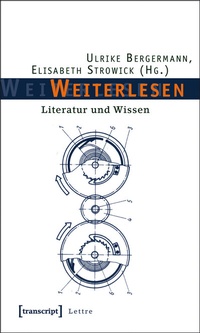
Weiterlesen
Literatur und Wissen
1st Edition
Published on 15. July 2015
332 pages
978-3-8394-0606-9 (ISBN)
Description

Der Band analysiert das Verhältnis von Literatur und Wissen ausgehend von einer Auffassung von Literatur, die diese nicht als zu erkennenden Gegenstand oder zu definierendes Objekt, sondern als ihrerseits Theorie und Wissen produzierende Rede betrachtet, welche sich immer schon im Austausch mit anderen Feldern des Wissens befindet.Angesichts des spezifischen epistemologischen Status ihres »Gegenstandes« ist Literaturwissenschaft zu unablässiger Selbstreflexion aufgefordert. »Literatur und Wissen« wird hier als Formel für eine theoretische und methodische Unruhe verstanden - als eine Praxis des konsequenten In-Frage-Stellens des Gegenstandsbereiches, der Verfahren, Darstellungsweisen und Situierung von Literaturwissenschaft.Anhand literarischer Texte und anderer medialer Inszenierungen unternehmen die Beiträge des Bandes je singuläre Grenzgänge zwischen Literatur und Wissen. Sie behandeln Themen wie Intellektualität, Entortung von Sprache, theatralische Rede, Inszenierungsformate, Institutionalisierungen von Wissen, Dialoge und Dialogizität, Wunder und Macht sowie Text-Bild-Verhältnisse - und in allen geht es um das Wissen von und der Literatur.»Weiterlesen« insistiert dabei auf Konstellationen, Verschiebungen, Unterbrechungen, Fortsetzungen der Lektüre, die weniger auf das Finden einer neuen Stelle aus sind als auf die nochmalige Lektüre derselben, die eben damit nicht mehr dieselbe wäre. Es ist dies ein rhythmisiertes, von Literatur affiziertes Lektüreverfahren, wie es Marianne Schuller in ihren Arbeiten entwickelt hat. Der Band ist ihr als Festschrift gewidmet.
More details
Other editions
Additional editions
Book
09/2007
1st Edition
transcript
€29.80
Article exhausted; check different version
Persons
Editor
Ulrike Bergermann, HBK Braunschweig, Deutschland
Ulrike Bergermann (Prof. Dr.), geb. 1964, lehrt Medienwissenschaft an der HBK Braunschweig. Ihre Forschungsschwerpunkte sind Medientheorie, Wissenschafts-/Fachgeschichte, Gender Studies und Postcolonial Studies. Sie ist u.a. Redaktionsmitglied der ZfM - Zeitschrift für Medienwissenschaften.
ISNI:
Elisabeth Strowick, Universität Basel und Universität Zürich/ETH, Schweiz
Elisabeth Strowick (PD Dr. phil.) lehrt neuere deutsche Literatur an der Universität Basel. Sie ist geschäftsführende Assistentin des Zentrums »Geschichte des Wissens« der Universität Zürich/ETH. Ihre Forschungsschwerpunkte sind Literaturtheorie, Literatur und Wissen.
Content
1 - INHALT [Seite 5]
2 - Einleitung: Urbanismusdebatte und Medienkunst [Seite 9]
3 - I.ZENTRALE MYTHEN VON NEW YORK UND TOKIO [Seite 13]
3.1 - Mythos New York: Museale Metropole des 20. Jahrhunderts [Seite 17]
3.2 - Mythos Tokio: Mediale Megacity des 21. Jahrhunderts [Seite 22]
4 - II.MODELLE URBANER INSZENIERUNGEN [Seite 27]
4.1 - Musealisierung interdisziplinär [Seite 28]
4.2 - Mediatisierung interdisziplinär [Seite 34]
4.3 - Inszenierungsmodell [Seite 41]
5 - III.KONTEXT MEDIENKUNST [Seite 45]
5.1 - Videokunst, Musikvideo und künstlerische CD-Rom [Seite 47]
5.2 - Netzkunst und Computerinstallation [Seite 53]
6 - IV.MEDIENKUNST-WERKE NEW YORK [Seite 61]
6.1 - 1. Jeffrey Shaw: The Legible City [Seite 62]
6.1.1 - Straßengitter und Radfahrt [Seite 63]
6.1.2 - Literatur-Cluster, Nicht-Ort und Event Structure [Seite 69]
6.1.3 - Spacing und dynamisches Data-Scape [Seite 78]
6.2 - 2. Alex Gopher: The Child [Seite 82]
6.2.1 - Establishing Place und Taktgeber-Metropole [Seite 82]
6.2.2 - Digitale Poesie, akustischer Index und Computerspiel [Seite 86]
6.2.3 - Rekombination des Raumes, transformatives Zeichensystem und spielerischer Affektraum [Seite 89]
6.3 - 3. Wolfgang Staehle: Empire 24/7 [Seite 93]
6.3.1 - Hommage an Warhol, mythische Ikone und Lichtskulptur [Seite 94]
6.3.2 - Elektronischer Flux, temporäre Störung und digitales Signet [Seite 98]
6.3.3 - Konzeptionelle Sinnentleerung [Seite 101]
6.4 - 4. Wolfgang Staehle: »2001« [Seite 103]
6.4.1 - Laboratorium Manhattan, Landschaftsmalerei und Terroranschlag [Seite 103]
6.4.2 - Elektronische Architektur und mediale Endlosschleife [Seite 109]
6.4.3 - Archiv des Untergangs und Ästhetik der Destruktion [Seite 113]
6.5 - 5. Institute for Applied Autonomy: iSEE - Now more than ever [Seite 115]
6.5.1 - Lokale Stigmatisierung und urbaner Freiraum [Seite 116]
6.5.2 - Technologische Kontroll-Instanz und Hyperüberwachung [Seite 121]
6.5.3 - Kommunikativer Selbstentwurf und spielerische Strategie [Seite 125]
7 - V.MEDIENKUNST-WERKE TOKIO [Seite 131]
7.1 - 1. Knowbotic Research: IO_Dencies Tokyo [Seite 133]
7.1.1 - Unitärer Urbanismus, Kartografien und Vorstellungsraum [Seite 135]
7.1.2 - Konfliktästhetik, Maschinismus und Vernetzungen [Seite 142]
7.1.3 - Translokale Interventionsfelder [Seite 151]
7.2 - 2. Egbert Mittelstädt: Elsewhere [Seite 154]
7.2.1 - Innenraum, mentaler Rückzug und aktiver Blick [Seite 154]
7.2.2 - Signalüberlagerungen, Katalysator und Zwischenraum [Seite 160]
7.2.3 - Offensive Künstlichkeit und Aufmerksamkeitsfeld [Seite 162]
7.3 - 3. Raivo Kelomees: Tokyocity.ee [Seite 164]
7.3.1 - Yamamote-Konservierung und semiotisches Rätsel [Seite 165]
7.3.2 - Stadt als Akteur, Eigenzeit und glatter Raum [Seite 167]
7.3.3 - Indifferentes Konglomerat [Seite 172]
8 - VI.NEW YORK UND TOKIO IN DER MEDIENKUNST [Seite 175]
8.1 - New York: Überformte Metropole des 20. Jahrhunderts [Seite 176]
8.2 - Tokio: Unspezifische Mikrostrukturen und latente Urbanität [Seite 180]
8.3 - Spektakuläres New York und zurückgenommenes Tokio [Seite 183]
9 - VII.ERWEITERUNGEN URBANER MODELLE [Seite 187]
9.1 - Musealisierung und Mediatisierung »revisited« [Seite 188]
9.2 - Urbaner Raum [Seite 188]
9.3 - Urbane Zeit [Seite 193]
9.4 - Urbanes Bild [Seite 196]
10 - Grad der Vielschichtigkeit urbaner Medienkunst [Seite 200]
11 - LITERATUR/RECHERCHE-POOL [Seite 209]
12 - ABBILDUNGEN [Seite 221]
2 - Einleitung: Urbanismusdebatte und Medienkunst [Seite 9]
3 - I.ZENTRALE MYTHEN VON NEW YORK UND TOKIO [Seite 13]
3.1 - Mythos New York: Museale Metropole des 20. Jahrhunderts [Seite 17]
3.2 - Mythos Tokio: Mediale Megacity des 21. Jahrhunderts [Seite 22]
4 - II.MODELLE URBANER INSZENIERUNGEN [Seite 27]
4.1 - Musealisierung interdisziplinär [Seite 28]
4.2 - Mediatisierung interdisziplinär [Seite 34]
4.3 - Inszenierungsmodell [Seite 41]
5 - III.KONTEXT MEDIENKUNST [Seite 45]
5.1 - Videokunst, Musikvideo und künstlerische CD-Rom [Seite 47]
5.2 - Netzkunst und Computerinstallation [Seite 53]
6 - IV.MEDIENKUNST-WERKE NEW YORK [Seite 61]
6.1 - 1. Jeffrey Shaw: The Legible City [Seite 62]
6.1.1 - Straßengitter und Radfahrt [Seite 63]
6.1.2 - Literatur-Cluster, Nicht-Ort und Event Structure [Seite 69]
6.1.3 - Spacing und dynamisches Data-Scape [Seite 78]
6.2 - 2. Alex Gopher: The Child [Seite 82]
6.2.1 - Establishing Place und Taktgeber-Metropole [Seite 82]
6.2.2 - Digitale Poesie, akustischer Index und Computerspiel [Seite 86]
6.2.3 - Rekombination des Raumes, transformatives Zeichensystem und spielerischer Affektraum [Seite 89]
6.3 - 3. Wolfgang Staehle: Empire 24/7 [Seite 93]
6.3.1 - Hommage an Warhol, mythische Ikone und Lichtskulptur [Seite 94]
6.3.2 - Elektronischer Flux, temporäre Störung und digitales Signet [Seite 98]
6.3.3 - Konzeptionelle Sinnentleerung [Seite 101]
6.4 - 4. Wolfgang Staehle: »2001« [Seite 103]
6.4.1 - Laboratorium Manhattan, Landschaftsmalerei und Terroranschlag [Seite 103]
6.4.2 - Elektronische Architektur und mediale Endlosschleife [Seite 109]
6.4.3 - Archiv des Untergangs und Ästhetik der Destruktion [Seite 113]
6.5 - 5. Institute for Applied Autonomy: iSEE - Now more than ever [Seite 115]
6.5.1 - Lokale Stigmatisierung und urbaner Freiraum [Seite 116]
6.5.2 - Technologische Kontroll-Instanz und Hyperüberwachung [Seite 121]
6.5.3 - Kommunikativer Selbstentwurf und spielerische Strategie [Seite 125]
7 - V.MEDIENKUNST-WERKE TOKIO [Seite 131]
7.1 - 1. Knowbotic Research: IO_Dencies Tokyo [Seite 133]
7.1.1 - Unitärer Urbanismus, Kartografien und Vorstellungsraum [Seite 135]
7.1.2 - Konfliktästhetik, Maschinismus und Vernetzungen [Seite 142]
7.1.3 - Translokale Interventionsfelder [Seite 151]
7.2 - 2. Egbert Mittelstädt: Elsewhere [Seite 154]
7.2.1 - Innenraum, mentaler Rückzug und aktiver Blick [Seite 154]
7.2.2 - Signalüberlagerungen, Katalysator und Zwischenraum [Seite 160]
7.2.3 - Offensive Künstlichkeit und Aufmerksamkeitsfeld [Seite 162]
7.3 - 3. Raivo Kelomees: Tokyocity.ee [Seite 164]
7.3.1 - Yamamote-Konservierung und semiotisches Rätsel [Seite 165]
7.3.2 - Stadt als Akteur, Eigenzeit und glatter Raum [Seite 167]
7.3.3 - Indifferentes Konglomerat [Seite 172]
8 - VI.NEW YORK UND TOKIO IN DER MEDIENKUNST [Seite 175]
8.1 - New York: Überformte Metropole des 20. Jahrhunderts [Seite 176]
8.2 - Tokio: Unspezifische Mikrostrukturen und latente Urbanität [Seite 180]
8.3 - Spektakuläres New York und zurückgenommenes Tokio [Seite 183]
9 - VII.ERWEITERUNGEN URBANER MODELLE [Seite 187]
9.1 - Musealisierung und Mediatisierung »revisited« [Seite 188]
9.2 - Urbaner Raum [Seite 188]
9.3 - Urbane Zeit [Seite 193]
9.4 - Urbanes Bild [Seite 196]
10 - Grad der Vielschichtigkeit urbaner Medienkunst [Seite 200]
11 - LITERATUR/RECHERCHE-POOL [Seite 209]
12 - ABBILDUNGEN [Seite 221]
