


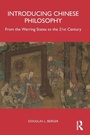
Introducing Chinese Philosophy
From the Warring States to the 21st Century
Published on 3. April 2025
304 pages
978-1-040-32979-5 (ISBN)
Description

This book presents an introductory survey of the major themes, thinkers and texts, philosophical genres and profound insights of the Chinese philosophical tradition. Its coverage ranges from the foundational history of Chinese thought in the 6th-5th centuries BCE up to the present day.
The first two chapters provide an overview of the broad history of Chinese philosophy, identifying its major texts and thinkers, and offer examples of the different literary styles in which philosophy was written throughout the ages. The remaining chapters explore major and ever-pervasive themes of Chinese philosophical reflection, from a holistic portrayal of the natural order and the relational nature of human beings to debates about ethics and personhood that span the entire development of the heritage.
The major questions addressed by the volume are as follows:
What are the most important texts and who are the most influential figures of the history of Chinese philosophy, and what were their historical and social circumstances?
How did Chinese thinkers work in such a variety of literary styles: from dramatized conversation, storytelling and poetry to commentary and analysis to the many different genres of Buddhist literature to modern historical and academic writing?
What are the varieties of cosmic or natural holism found in the various schools of Chinese philosophy-"Proto-Daoist," Buddhist, Confucian and modern-and how are they articulated and defended?
How have Chinese philosophers throughout history presented the nature of the person, in Confucian, Daoist, Buddhist and contemporary perspectives? Why is the notion of the relational person so persistently central to Chinese thought? How was the personhood of women conceptualized throughout the centuries, particularly by Chinese women philosophers?
How did the various notions of personhood shape Chinese philosophers' views of ethics and the ideal social and political order? How did Confucian, Mohist, Legalist, Daoist and Buddhist perspectives on these issues change through the centuries up to the present?
Each chapter includes sections for Further Readings, and a Glossary at the back of the book briefly describes the major time periods, figures, themes and concepts in Chinese philosophy.
Key Features
Presents an overview of important thinkers, ideas and debates from the entire history of Chinese philosophy up to the present day
Acquaints readers with the many varieties of literary style and frameworks of formal argumentation that have existed in the Chinese tradition
Identifies the major themes of the Chinese tradition while showing how various schools and thinkers dealt with them differently
Explores the importance of relational personhood and the various ways it is formulated in Chinese philosophy
Includes coverage of how women philosophers present their own personhood, in Chinese history and up to today
Examines the many different ethical and political implications of Chinese theories of personhood throughout the culture's and state's history
Gives the reader a sense of the complexity, nuances, and insights of modern Chinese thinkers on politics and society
The first two chapters provide an overview of the broad history of Chinese philosophy, identifying its major texts and thinkers, and offer examples of the different literary styles in which philosophy was written throughout the ages. The remaining chapters explore major and ever-pervasive themes of Chinese philosophical reflection, from a holistic portrayal of the natural order and the relational nature of human beings to debates about ethics and personhood that span the entire development of the heritage.
The major questions addressed by the volume are as follows:
What are the most important texts and who are the most influential figures of the history of Chinese philosophy, and what were their historical and social circumstances?
How did Chinese thinkers work in such a variety of literary styles: from dramatized conversation, storytelling and poetry to commentary and analysis to the many different genres of Buddhist literature to modern historical and academic writing?
What are the varieties of cosmic or natural holism found in the various schools of Chinese philosophy-"Proto-Daoist," Buddhist, Confucian and modern-and how are they articulated and defended?
How have Chinese philosophers throughout history presented the nature of the person, in Confucian, Daoist, Buddhist and contemporary perspectives? Why is the notion of the relational person so persistently central to Chinese thought? How was the personhood of women conceptualized throughout the centuries, particularly by Chinese women philosophers?
How did the various notions of personhood shape Chinese philosophers' views of ethics and the ideal social and political order? How did Confucian, Mohist, Legalist, Daoist and Buddhist perspectives on these issues change through the centuries up to the present?
Each chapter includes sections for Further Readings, and a Glossary at the back of the book briefly describes the major time periods, figures, themes and concepts in Chinese philosophy.
Key Features
Presents an overview of important thinkers, ideas and debates from the entire history of Chinese philosophy up to the present day
Acquaints readers with the many varieties of literary style and frameworks of formal argumentation that have existed in the Chinese tradition
Identifies the major themes of the Chinese tradition while showing how various schools and thinkers dealt with them differently
Explores the importance of relational personhood and the various ways it is formulated in Chinese philosophy
Includes coverage of how women philosophers present their own personhood, in Chinese history and up to today
Examines the many different ethical and political implications of Chinese theories of personhood throughout the culture's and state's history
Gives the reader a sense of the complexity, nuances, and insights of modern Chinese thinkers on politics and society
Reviews / Votes
"This is a wonderful textbook, thoughtfully organized by distinctive themes and unique features of Chinese philosophy and carefully supported by many textual and historical evidence. It is a delightful read, with flowing prose, insightful observations, and illuminating narratives. I am especially delighted to see that Chinese Buddhism is treated as an integral part of Chinese philosophy." - Tao Jiang, Rutgers University, USA"The coverage of Chinese philosophy from its beginning up to current debates is outstanding. I would have thought it was impossible to do, but the author manages it while still presenting precise and detailed accounts of specific philosophers and texts. I'm not aware of another book that does this." - Franklin Perkins, University of Hawaii, USA
More details
Language
English
Place of publication
London
United Kingdom
Publishing group
Taylor & Francis Ltd
Target group
College/higher education
Professional and scholarly
File size
4,50 MB
ISBN-13
978-1-040-32979-5 (9781040329795)
Copyright in bibliographic data and cover images is held by Nielsen Book Services Limited or by the publishers or by their respective licensors: all rights reserved.
Schweitzer Classification
Other editions
Additional editions

Book
05/2025
Routledge
Unfortunately, price unknown
Available (delivery time upon request)
Book
04/2025
1st Edition
Routledge
€63.70
Shipment within 10-20 days
Book
04/2025
1st Edition
Routledge
€206.80
Shipment within 10-20 days
Person
Douglas L. Berger is a Professor of Global and Comparative Philosophy at Leiden University in the Netherlands and the Director of the Leiden University Centre for Intercultural Philosophy. He is the author of-among other publications-Encounters of Mind: Luminosity, Personhood and Consciousness in Indian and Chinese Thought (2015) and Indian and Intercultural Philosophy: Personhood, Consciousness and Causality (2021).
Content
Acknowledgments Introduction Chapter 1: Chinese Philosophy: A Brief History Chapter 2: The Varieties of Philosophical Style Chapter 3: The Whole and Not Just the Parts Chapter 4: Relations Natural and Social Chapter 5: Managing All under Heaven in the Warring States Chapter 6: Managing All under Heaven with Continuity or Plurality Afterward Glossary
