

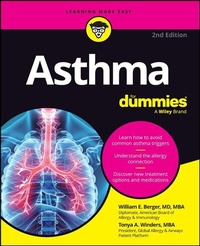
Asthma For Dummies
2nd Edition
Published on 15. June 2023
384 pages
978-1-119-90809-8 (ISBN)
Description

Breathe easier and live a full life with proper asthma treatment
Asthma For Dummies is a reassuring and realistic guide to managing asthma, whether you're living with it yourself or have a loved one who suffers from the disease. It's packed with authoritative information on symptoms and diagnosis, plus resources you can use to enhance long-term asthma management. Find the best treatments and reduce asthma complications with compassionate advice and all the latest details on medication options, including asthma controller drugs, rescue asthma medications, and future trends in asthma therapy. Discover the most common triggers and suggestions for avoiding them in daily life. With the expert advice in this Dummies guide, you can tackle asthma.
* Learn all the basics about diagnosing and managing asthma in adults and children
* Find out about the newest treatments, therapies, and alternative strategies
* Prepare for your doctor's appointment with questions to ask and ideas for working through financial concerns
* Know what to do about complications, dual diagnoses, and special circumstances
This updated edition of Asthma For Dummies is a must-have for asthmatics and parents of asthmatic children.
Asthma For Dummies is a reassuring and realistic guide to managing asthma, whether you're living with it yourself or have a loved one who suffers from the disease. It's packed with authoritative information on symptoms and diagnosis, plus resources you can use to enhance long-term asthma management. Find the best treatments and reduce asthma complications with compassionate advice and all the latest details on medication options, including asthma controller drugs, rescue asthma medications, and future trends in asthma therapy. Discover the most common triggers and suggestions for avoiding them in daily life. With the expert advice in this Dummies guide, you can tackle asthma.
* Learn all the basics about diagnosing and managing asthma in adults and children
* Find out about the newest treatments, therapies, and alternative strategies
* Prepare for your doctor's appointment with questions to ask and ideas for working through financial concerns
* Know what to do about complications, dual diagnoses, and special circumstances
This updated edition of Asthma For Dummies is a must-have for asthmatics and parents of asthmatic children.
More details
Other editions
Additional editions
William E. Berger | Tonya A. Winders
Asthma For Dummies
Book
07/2023
2nd Edition
Wiley
€22.50
Shipment within 15-20 days
Content
- Intro
- Title Page
- Copyright Page
- Table of Contents
- Introduction
- About This Book
- Foolish Assumptions
- Icons Used in This Book
- Beyond the Book
- Where to Go from Here
- Part 1 Getting Started with Asthma
- Chapter 1 Understanding Asthma Basics
- Defining Asthma
- How normal breathing works
- What you can't see can hurt you
- How airway obstruction develops
- Understanding Who Gets Asthma and Why
- Identifying triggers, attacks, episodes, and symptoms
- Realizing that asthma isn't all in your head
- Preventing asthma: Can it be done?
- Uncovering the Many Facets of Asthma
- Allergic asthma
- Nonallergic asthma
- Occupational asthma
- Exercise-induced asthma
- Aspirin-induced asthma
- Food allergies and food-induced anaphylaxis
- Diagnosing Asthma
- Taking your medical history
- Examining your condition
- Testing your lungs
- Spirometry
- Peak-flow meters
- Challenge tests
- Considering other possible diagnoses
- Classifying asthma severity
- Consulting a specialist for diagnosis
- Managing Asthma Effectively
- Asthma self-management/asthma action plan
- Taking care of yourself
- Chapter 2 Building Your Healthcare Team
- Choosing the Right Provider for You
- Paying for your care
- Dealing with insurance issues
- Adding a certified asthma educator
- Working with Other Key Members of the Team
- Chapter 3 Making the Most of Your Doctor Visits
- Preparing for Your First Visit
- Doing Your Homework
- Filling out forms ahead of time
- Telling your story
- Recording your symptoms and medications
- Knowing your family history
- Using Lung and Blood Tests to Diagnose Asthma
- Spirometry
- Fractional exhaled nitric oxide
- Blood eosinophils
- Specific IgE and total IgE
- Taking Symptom Quizzes
- Asthma control test
- AIRQ
- Making Time for Questions
- Using an Annual Checkup Checklist
- Chapter 4 Living Well with Asthma
- Understanding Asthma Education
- Staying informed about asthma
- How asthma educators can help
- Making sure you're heard
- Taking Care of Yourself
- Sleeping well
- Asthma, GERD, and sleep disturbance
- Sleep apnea
- Allergens and sleep problems
- Why nocturnal asthma matters
- Understanding allergic fatigue
- Managing allergy-related sleep problems
- Dealing with dust mites
- Eating right
- Understanding how vitamins D and E can help control asthma
- Avoiding foods that worsen your asthma
- Taking medications
- Identifying and controlling environmental triggers
- Exercising with Asthma
- Understanding EIA
- Managing EIA
- Seeing Your Doctor Regularly
- Reminding yourself of doctor visits
- Getting vaccinated
- Using Personalized Asthma Therapies
- Chapter 5 Managing Asthma Long Term
- Realizing What a Long-Term Management Plan Includes
- Focusing on the Four Levels of Asthma Severity
- Using the Stepwise Approach
- Stepping down
- Stepping up
- Treating severe episodes in stepwise management
- Assessing Your Lungs
- What your doctor should do: Spirometry
- What you can do: Peak-flow monitoring
- Explaining and using peak-flow meters for children
- Using a peak-flow meter at home
- Finding your personal best peak-flow number
- Reading green, yellow, and red peak-flow color zones
- Taking Stock of Your Condition
- Keeping symptom records
- Tracking serious symptoms
- Monitoring your medication use
- Evaluating your inhaler technique
- Understanding Self-Management
- Working with your doctor
- Evaluating your plan for the long term
- Becoming an expert on your asthma
- Improving Your Quality of Life
- Part 2 Knowing What Can Trigger Asthma
- Chapter 6 Knowing Your Asthma Triggers
- Recognizing What Sets Off Your Asthma
- Evaluating triggers
- Tracking and testing for allergic triggers
- Controlling Inhalant Allergens
- Clearing the Air at Home
- Household irritants
- No smoking, please
- Filters and air-cleaning devices
- Working Out Workplace Exposures
- Targeting workplace triggers
- Diagnosing and treating workplace triggers
- Avoiding Drug and Food Triggers
- Aspirin sensitivities
- Sensitivities to sulfites and other additives
- Food allergies
- Managing Other Medical Conditions and Asthma
- Rhinitis and sinusitis
- Gastroesophageal reflux disease
- Common viral infections
- COVID and asthma
- Chapter 7 The Role of Inhalant Allergies
- Protecting against Pollens
- Pollen particulars
- Blowin' in the wind
- Pollens (and molds) for all seasons
- Climate change
- Non-natives
- Counting your pollens
- Running the numbers
- Assessing quality, not quantity
- Allergens in the grass
- Wheezy weeds
- Can't sneeze the forest for the trees
- Managing Molds
- Handling House Dust
- Dust mites
- Cockroaches
- Other pesky dust contributors
- Dust gets in your eyes . . . or nose, throat, and lungs
- Avoiding Triggers and Allergy-Proofing Your Environment
- Understanding why avoidance matters
- Developing an avoidance checklist
- Taking time for terminology
- Knowing your limits
- Crossing the line
- Allergy-proofing your home
- Controlling dust in your home
- Controlling dust mites throughout your home
- Regulating pet dander
- Controlling mold in your abode
- Pollen-proofing precautions
- Chapter 8 The Role of Food Allergies
- Understanding Adverse Food Reactions
- Allergic food hypersensitivities
- How allergic food hypersensitivities develop
- GI tract allergies
- Hives and other food-related skin reactions
- Anaphylaxis and allergic food reactions
- Nonallergic food hypersensitivities
- Understanding the Differences between Food Allergy and Food Intolerance
- Lactose intolerance
- Metabolic food reactions
- Pharmacologic food reactions
- Food additive reactions
- Food poisoning
- Diagnosing Adverse Food Reactions
- Keeping a food diary
- Considering atopic causes
- Eliminating possible food culprits
- Testing for food allergens
- Skin testing
- Oral food challenges
- Enzyme-Linked Immunosorbent Assay (ELISA) testing
- Avoiding Adverse Food Reactions
- Investigating Recent Developments in Treating Food Allergy
- Chapter 9 The Roles of Exercise and Emotions
- Understanding EIA
- Keeping Fit Despite EIA
- Diagnosing EIA can improve asthma treatment
- Controlling EIA with medications
- Athletes and EIA
- Breathing competitively: Nose versus mouth
- Warming up and cooling down to prevent EIA
- Dealing with the Effects of Emotions on Asthma Symptoms
- Stressing out
- Faster breathing
- Inflammation
- Improving asthma control by managing emotions
- Chapter 10 The Role of Other Medical Conditions
- Getting Familiar with Pharmacology
- Blocking Your Histamines: Antihistamines
- Histamine hints
- A dose of prevention
- First-generation OTC antihistamines
- Newer antihistamines
- Antihistamine nasal sprays
- Decongesting Your Nose
- Oral decongestants
- Nasal decongestants
- Two for the Nose: Combination Products
- Analyzing the upside and downside
- One-size-fits-all may not suit your condition
- The Advantages of Using Nasal Sprays
- Using nasal corticosteroids
- Trying combination nasal sprays
- Knowing nasal sprays
- Controlling Symptoms with Cromolyn Sodium
- Reducing Mucus with Anticholinergic Sprays
- Treating Rhinitis with Leukotriene Modifiers
- Keeping an Eye Out for Allergic Conjunctivitis
- Complicating Your Allergies and Asthma: Sinusitis
- Recognizing common causes
- Diving into sinus science
- Classifying sinusitis
- Diagnosing sinusitis
- Determining the best course of treatment
- Antibiotics
- Other medications
- Irrigation
- Getting steamed
- Sinus surgery
- An ounce of prevention . . .
- Sounding Off about Otitis Media
- Revealing common causes
- Getting an earful
- Acute otitis media
- Otitis media with effusion
- Diagnosing ear infections
- Taking preventive measures
- Part 3 Controlling Your Asthma
- Chapter 11 Getting Allergy Tested and Allergy Shots
- Diagnosing Allergies with Skin Tests
- Pins and needles
- Skin tests and antihistamines: Not a good mix
- Starting from scratch: Prick-puncture procedures
- Getting under your skin: Intracutaneous testing
- Skin test side effects
- Blood testing for allergies
- Reviewing Immunotherapy
- Seeing how immunotherapy works
- Deciding whether immunotherapy makes sense for you
- Taking solid tablets: Sublingual immunotherapy
- Getting shots: Subcutaneous immunotherapy
- Sticking to shot schedules
- Committing to a long-term relationship
- Considering side effects
- Looking at Other Forms of Immunotherapy
- Chapter 12 Understanding Asthma Medications
- Understanding the Medicine You Take
- Taking Your Medicine: Why It's Essential
- Looking at asthma's changing dynamics
- Tracking your asthma condition
- Getting the Long and Short of Asthma Medications
- Controlling asthma with long-term medications
- Easing asthma episodes with quick-relief products
- Introducing new rescue medication
- Taking asthma medications prior to surgery
- Delivering Your Dose: Inhalers and Nebulizers
- Using a metered-dose inhaler
- Taking your metered dose correctly
- Getting the right dose from your MDI
- Using new, improved rescue inhalers versus generic brands
- Using a holding chamber
- Using a dry-powder inhaler
- Taking your dry powder correctly
- Getting the right dose from your DPI
- Using a multidose dry-powder inhaler
- Operating your Diskus
- Getting the right dose from your Diskus
- Slow-moving mist inhalers
- Using a nebulizer
- Cleaning your medication delivery system
- Chapter 13 Looking at Asthma Controller Drugs
- Controlling Airway Inflammation with Corticosteroids
- Inhaled corticosteroids
- Knowing your inhaled corticosteroid devices and formulations
- Monitoring children who take inhaled corticosteroids
- Taking inhaled corticosteroids more effectively
- Oral corticosteroids
- Preventing Respiratory Symptoms with Mast Cell Stabilizers
- Cromolyn
- Prescribing cromolyn for young children
- Taking cromolyn prior to pollen exposure and exercise
- Knowing when mast cell stabilizers may not be enough
- Dilating Your Airways with Long-Acting Bronchodilators
- Combining two drugs: Inhaled corticosteroids and LABAs
- Understanding timing: Why long-acting products may not always be enough
- Enhancing anti-inflammatory effectiveness
- Reducing Respiratory Symptoms with Leukotriene Modifiers
- Understanding the importance of leukotrienes in asthma
- Watching out for adverse side effects
- Reactions to newer NSAIDs
- Neuropsychiatric effects
- Looking at leukotriene modifiers, adverse interactions, and your liver
- Introducing Biologics: Precision/Personalized Health Care
- The IgE blocker: Omalizumab
- The big five biologics
- Considering Bronchial Thermoplasty
- Summarizing Respiratory Treatments
- Chapter 14 Treating Asthma Episodes
- Relieving Symptoms with Short-Acting Bronchodilators
- Using short-acting bronchodilators effectively
- Getting more bronchodilation per breath
- Choosing better bronchodilators
- Avoiding potential adverse side effects of short-acting bronchodilators
- Bucking bronchodilator dependence: Avoiding overuse of your quick-relief product
- Taking many medicines can make matters worse
- Introducing improved bronchodilation
- Reversing Airflow Obstruction with Anticholinergics
- Looking at Short-Term Rescue Use of Oral Corticosteroids
- Updating Asthma Treatment Guidelines
- Part 4 Special Asthma Conditions
- Chapter 15 Asthma and Children and Teens
- Understanding Your Child's Asthma
- Inheriting asthma
- Identifying children's asthma triggers
- Controlling - not outgrowing - asthma
- Treating asthma early to avoid problems later
- Identifying Childhood-Onset Asthma
- Taking your child's medical history
- Examining your child for signs of asthma
- Testing your child's lungs
- All That Wheezes Isn't Asthma
- Focusing on Issues Specific to Childhood Asthma
- Teaming up for the best treatment
- Managing asthma in infants (newborn to 2 years old)
- Using a nebulizer with your infant or toddler
- Delivering nebulizer doses properly
- Treating toddlers (ages 2 to 5 years): Medication challenges
- Peak-flow meters and school-age children (ages 5 to 12)
- Using inhalers: Teens and asthma
- Handling Asthma at School and Day Care
- Indoor air quality at school and day care
- Participating in PE: Exercise and asthma
- Chapter 16 Pregnancy and Asthma
- Identifying Special Issues with Asthma during Pregnancy
- Your hormones and your asthma
- The basics of managing asthma while pregnant
- Breathing for Two
- Avoiding asthma triggers, allergens, and irritants during pregnancy
- Undergoing allergy testing and immunotherapy during pregnancy
- Managing nasal conditions associated with pregnancy
- Allergic rhinitis (Hay fever)
- Vasomotor rhinitis of pregnancy
- Sinusitis
- Exercising with asthma during pregnancy
- Assessing your asthma during pregnancy
- Monitoring your baby's condition
- Taking asthma medications while pregnant
- Handling asthma emergencies while pregnant
- Chapter 17 Asthma and Older Adults
- Recognizing Asthma Later in Life
- Taking Asthma Medications When You're Older
- Using more effective delivery devices
- Watching out for adverse side effects
- Chapter 18 Looking At Other Asthma Concerns
- Asthma-COPD Overlap Syndrome
- Aspirin-Exacerbated Respiratory Disease
- Vocal Cord Dysfunction
- Viral Illnesses
- Obesity and Asthma
- Understanding how obesity affects people with asthma
- Controlling your weight to improve asthma control
- Occupational Asthma
- Understanding how occupational asthma develops
- Knowing potential triggers of occupational asthma
- Part 5 Finding Support and Speaking Up
- Chapter 19 Patient Advocacy for Yourself and Others
- Improving Your Doctor Visits
- Keeping an asthma journal
- Making a list
- Asking questions
- Recording your doctor's appointments
- Taking a friend with you
- Advocating for Better Asthma Treatment
- Getting the word out
- Keeping your eyes on the prize
- Chapter 20 Turning to Trusted Resources
- Allergy & Asthma Network
- American Academy of Allergy, Asthma & Immunology
- American College of Allergy, Asthma & Immunology
- American Lung Association
- American Thoracic Society
- Asthma and Allergy Foundation of America
- Caregiver Action Network
- CHEST Foundation
- Global Allergy & Airways Patient Platform
- Global Initiative for Asthma
- MedlinePlus
- National Asthma Education and Prevention Program
- National Jewish Health
- NeedyMeds
- Part 6 The Part of Tens
- Chapter 21 Ten Tips for Traveling with Asthma
- Planning a Safe, Healthy Trip
- Adjusting Treatment for Travel
- Taking Medications and Other Essentials
- Getting Medications and Medical Help Abroad
- Flying with Allergens and Irritants
- Considering Allergy Shots and Travel
- Reducing Trigger Exposures in Hotels and Motels
- Avoiding Food Allergy Reactions during Your Trip
- Finding Help in Case of Emergencies
- Traveling with Your Asthmatic Child
- Chapter 22 Ten Myths About Asthma and Allergies
- Asthma Is Contagious
- I Can't Exercise Because I Have Asthma
- I Just Have A Recurring Head Cold
- Children Will Outgrow Asthma
- Asthma Is All in My Head
- The Only Asthma Medication I'll Ever Need Is a Quick-Relief Inhaler
- I Should Stop Taking All My Allergy and Asthma Medication While I'm Pregnant
- I Don't Need to Carry My Asthma and Allergy Medication with Me
- Moving to Arizona Will Cure My Asthma and Allergies
- I Just Have to Live with My Condition
- Chapter 23 Ten Ways to Avoid the September Asthma Peak
- Schedule an Asthma Checkup Before the School Year Begins
- Make Sure All Asthma Medications Are Refilled Prior to September
- Take Long-Acting Medications as Prescribed
- Always Carry Your Medications
- Have a Peak-Flow Meter with You
- Practice Good Hygiene
- Identify and Avoid Asthma Triggers
- Get Vaccinated against Flu and COVID-19
- Follow Your Asthma Management Plan
- Maintain Good Asthma Control throughout the Entire Year
- Index
- EULA
