

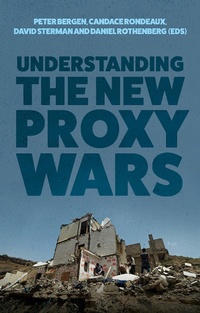
Understanding the New Proxy Wars
Published on 4. October 2022
416 pages
978-1-78738-975-5 (ISBN)
Description

Proxy warfare will shape the conflicts of the twenty-first century for the foreseeable future. Yet the popular understanding of proxy wars remains largely shaped by the experience of the Cold War. In reality, in the Greater Middle East and its periphery today, the growing power of regional states and non-state actors, combined with the proliferation of new technology, has reshaped proxy conflicts, in an increasingly multipolar and interconnected environment. In this collected volume, a range of researchers examine what constitutes proxy warfare and provide new insight into how these wars are waged, in contexts stretching from Ukraine to North Africa and Syria to Afghanistan. The volume draws upon research, surveys and interviews conducted in Syria, Iraq, Libya and Ukraine, as well as examining the propaganda output of those involved in these countries' wars. In doing so, Understanding the New Proxy Wars helps reveal both the continuities and the differences between recent conflicts and those of times past.
More details
Other editions
Additional editions
Peter Bergen | Candace Rondeaux | Daniel Rothenberg
Understanding the New Proxy Wars
Battlegrounds and Strategies Reshaping the Greater Middle East
Book
09/2022
C Hurst & Co Publishers Ltd
€44.00
Shipment within 3-4 weeks
Persons
Peter Bergen is Professor of Practice at Arizona State University's School of Politics and Global Studies. He is also Vice President at the thinktank New America. Candace Rondeaux is Professor of Practice at Arizona State University's School of Politics and Global Studies. She is also the Director of Future Frontlines at the thinktank New America. Daniel Rothenberg is Professor of Practice at Arizona State University's School of Politics and Global Studies. He is a senior fellow at the thinktank New America. David Sterman is a senior policy analyst at the thinktank New America.
Content
- Intro
- Half Title
- Title
- Copyright
- Contents
- List of Figures and Tables
- About the Editors and Contributors
- Introduction
- Part I: Proxy Warfare in the Early Twenty-First Century
- 1. Twenty-First-Century Proxy Warfare: Candace Rondeaux and David Sterman
- 2. Syria 2011-19: Lessons for US Proxy Warfare: Nate Rosenblatt and David Kilcullen
- Part II: Battlegrounds
- 3. Social Networks, Class, and the Syrian Proxy War: Anand Gopal and Jeremy Hodge
- 4. How Raqqa Became the Capital of ISIS: Nate Rosenblatt and David Kilcullen
- 5. 'This War is Out of Our Hands': Libya's Internationalized Conflict Since 2011: Frederic Wehrey
- 6. The Proxy Air Wars Over Libya: Melissa Salyk-Virk
- 7. The View from the City of Taiz: Limitations of the Proxy War Lens for Understanding Conflict in Yemen: Adam Baron and Raiman Al-Hamdani
- Part III: Strategies
- 8. Decoding the Wagner Group: Candace Rondeaux
- 9. The Islamic Revolutionary Guard Corps of the 2020s: Evaluating Iran's Proxy Warfare Strategy: Alex Vatanka
- 10. The Monarchs' Pawns? Gulf State Proxy Warfare 2011-Today: Alexandra Stark
- Acknowledgments
- Notes
- Index
- Back Cover
