

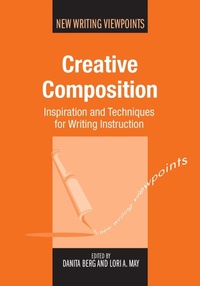
Creative Composition
Inspiration and Techniques for Writing Instruction
Published on 1. May 2015
214 pages
978-1-78309-365-6 (ISBN)
Description

For decades theorists have opined that the lines between creative writing and composition need to be lifted, yet little has been written about the pedagogical methods that allow a cohesive approach between the disciplines. This book brings together contemporary authors and well-respected creative writing instructors and theorists to explore ways creativity in composition may be encouraged in student writers. The question in this anthology is not 'Can writing be taught?' but 'How can we inspire students to embrace the creative process no matter what they write?' This book offers multiple strategies to merge the best practices of teaching writing, regardless of the genre.
Reviews / Votes
One of the rewards of a long career is the opportunity to see new ideas take hold and hang on for a new generation of scholars. This book represents the best current thinking about Creative Writing Studies and the composition-creative writing connection and nicely demonstrates how far we've come. -- Patrick Bizzaro, Indiana University of Pennsylvania, USA This volume offers a fascinating and useful discussion of creative composition. It is a tricky subject to define and it is certainly difficult to establish whether we can or should teach it. Here the contributors explore the topic thoroughly. The reader is offered a wealth of diverse examples and ideas. -- Gill James, University of Salford, UKMore details
Series
Language
English
Place of publication
Bristol
United Kingdom
Publishing group
Channel View Publications Ltd
Target group
College/higher education
Professional and scholarly
ISBN-13
978-1-78309-365-6 (9781783093656)
Copyright in bibliographic data and cover images is held by Nielsen Book Services Limited or by the publishers or by their respective licensors: all rights reserved.
Schweitzer Classification
Other editions
Additional editions
Book
05/2015
Multilingual Matters
€47.70
Shipment within 10-20 days
Persons
Danita Berg is English Department Director at Full Sail University, Orlando, Florida. Her research interests include creative writing studies, women's voice in writing, and invention. She is also Founder and Co-Editor of Animal: A Beast of a Literary Magazine.
www.danitaberg.wordpress.com
Lori A. May is a writing mentor at University of King's College, Halifax, Nova Scotia. She is Founding Editor of Poets' Quarterly (www.poetsquarterly.com), and her other books include The Write Crowd: Literary Citizenship & the Writing Life (Bloomsbury, 2014) and The Low-Residency MFA Handbook: A Guide for Prospective Creative Writing Students (Continuum, 2011).
www.loriamay.com
www.danitaberg.wordpress.com
Lori A. May is a writing mentor at University of King's College, Halifax, Nova Scotia. She is Founding Editor of Poets' Quarterly (www.poetsquarterly.com), and her other books include The Write Crowd: Literary Citizenship & the Writing Life (Bloomsbury, 2014) and The Low-Residency MFA Handbook: A Guide for Prospective Creative Writing Students (Continuum, 2011).
www.loriamay.com
Content
Danita Berg and Lori A. May: Introduction
Tim Mayers and Stephanie Vanderslice: Foreword
1. Denise Landrum-Geyer: On Essaying
2. Sara Burnett: Eat Your Spinach! Why a Blend of Personal and Academic Discourses Matter
3. Graeme Harper: Writing by Creation, with Response, in Experience
4. Abigail G. Scheg: Give it a Taste: Serving Creative Writing in Small Doses
5. Dustin Michael: Wiggling Between the Forms: A Cross-Genre Approach to Writing
6. Andrew Bourelle: Writing to Discover: Creative Nonfiction and Writing Across the Curriculum
7. Jonathan Bradley and Sarah Gray-Panesi: Creative Writing's Five Stages of Development: The Mind of the Creative Writer in the Composition Classroom
8. Rochelle L. Harris and Christine Stewart-Nunez: Sought-After Sophistications: Crafting a Curatorial Stance in the Creative Writing and Composition Classrooms
9. Michael Kula: Audience Resurrected: Restoring Motive and Purpose to Creative Writing
10. Rod Zink: Lending the Muse a Hand: Expanding the Role of Social Constructivism and Collaborative Writing in Creative Writing Pedagogies
11. Shawn Kerivan: Grammar and Creativity in Composition: An Unexpected Nexus
12. Danita Berg: Invention in Creative Writing: Explorations of the Self and the Social in Creative Genres
13. Sonya Huber and Ioanna Opidee: Teaching the Exploratory Essay as Pedagogy, Process, and Project
14. Debra Jacobs: Beyond Argumentation: Toulmin's Model and a Dialogic Process for Critical Self-Reflection
15. Scott J. O'Callaghan: Leave it to the Imagination: Service Learning as Part of an Undergraduate Creative Writing Curriculum
16. Tammie M. Kennedy and Tracey D. Menten: Show, Don't Tell: Using Graphic Narratives to Teach Descriptive Writing
17. Connie Langhorst: A First-Timer's Approach to Teaching in a Non-Traditional Setting
18. Anna Leahy: In It for the Long Haul: The Pedagogy of Perseverance
Tim Mayers and Stephanie Vanderslice: Foreword
1. Denise Landrum-Geyer: On Essaying
2. Sara Burnett: Eat Your Spinach! Why a Blend of Personal and Academic Discourses Matter
3. Graeme Harper: Writing by Creation, with Response, in Experience
4. Abigail G. Scheg: Give it a Taste: Serving Creative Writing in Small Doses
5. Dustin Michael: Wiggling Between the Forms: A Cross-Genre Approach to Writing
6. Andrew Bourelle: Writing to Discover: Creative Nonfiction and Writing Across the Curriculum
7. Jonathan Bradley and Sarah Gray-Panesi: Creative Writing's Five Stages of Development: The Mind of the Creative Writer in the Composition Classroom
8. Rochelle L. Harris and Christine Stewart-Nunez: Sought-After Sophistications: Crafting a Curatorial Stance in the Creative Writing and Composition Classrooms
9. Michael Kula: Audience Resurrected: Restoring Motive and Purpose to Creative Writing
10. Rod Zink: Lending the Muse a Hand: Expanding the Role of Social Constructivism and Collaborative Writing in Creative Writing Pedagogies
11. Shawn Kerivan: Grammar and Creativity in Composition: An Unexpected Nexus
12. Danita Berg: Invention in Creative Writing: Explorations of the Self and the Social in Creative Genres
13. Sonya Huber and Ioanna Opidee: Teaching the Exploratory Essay as Pedagogy, Process, and Project
14. Debra Jacobs: Beyond Argumentation: Toulmin's Model and a Dialogic Process for Critical Self-Reflection
15. Scott J. O'Callaghan: Leave it to the Imagination: Service Learning as Part of an Undergraduate Creative Writing Curriculum
16. Tammie M. Kennedy and Tracey D. Menten: Show, Don't Tell: Using Graphic Narratives to Teach Descriptive Writing
17. Connie Langhorst: A First-Timer's Approach to Teaching in a Non-Traditional Setting
18. Anna Leahy: In It for the Long Haul: The Pedagogy of Perseverance
