

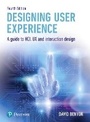
Designing User Experience
Description
Alles über E-Books | Antworten auf Fragen rund um E-Books, Kopierschutz und Dateiformate finden Sie in unserem Info- & Hilfebereich.
The full text downloaded to your computer
With eBooks you can:
- search for key concepts, words and phrases
- make highlights and notes as you study
- share your notes with friends
eBooks are downloaded to your computer and accessible either offline through the Bookshelf (available as a free download), available online and also via the iPad and Android apps.
Upon purchase, you'll gain instant access to this eBook.
Time limit
The eBooks products do not have an expiry date. You will continue to access your digital ebook products whilst you have your Bookshelf installed.
All prices
More details
Other editions
Additional editions
Person
Professor David Benyon is Professor of Human-Computer Systems and Director of the Centre for Interaction Design at Edinburgh Napier University, UK. He has been working in the area of human-computer interaction and interaction design for over 25 years. He has written widely on the subject with over 150 refereed publications covering HCI, interaction design and user experience. He is involved in many leading-edge research and development projects that prototype and evaluate future interactions of people with new and emerging technologies.
Content
- Part I: The essentials of designing user experience
- 1 An introduction to user experience
- 2 PACT: a framework for UX
- 3 The process of UX design
- 4 Cross Channel UX?
- 5 Usability
- 6 Experience design
- Part II: Techniques for designing interactive systems
- 7 Understanding
- 8 Envisionment
- 9 Design 10 Evaluation
- 11 Task analysis
- 12 Visual interface design
- 13 Multimodal interface design
- Part III: Contexts for designing interactive systems
- 14 Designing apps and websites
- 15 Social media
- 16 Collaborative environments
- 17 Agents and avatars
- 18 Ubiquitous computing
- 19 Mobile computing
- 20 Wearable computing
- PART IV: Foundations of UX design
- 21 Memory and attention
- 22 Affect
- 23 Cognition and action
- 24 Social interaction
- 25 Perception and navigation

System requirements
File format: ePUB
Copy protection: Adobe-DRM (Digital Rights Management)
System requirements:
- Computer (Windows; MacOS X; Linux): Install the free reader Adobe Digital Editions prior to download (see eBook Help).
- Tablet/smartphone (Android; iOS): Install the free app Adobe Digital Editions or the app PocketBook before downloading (see eBook Help).
- E-reader: Bookeen, Kobo, Pocketbook, Sony, Tolino and many more (not Kindle).
The file format ePub works well for novels and non-fiction books – i.e., „flowing” text without complex layout. On an e-reader or smartphone, line and page breaks automatically adjust to fit the small displays.
This eBook uses Adobe-DRM, a „hard” copy protection. If the necessary requirements are not met, unfortunately you will not be able to open the eBook. You will therefore need to prepare your reading hardware before downloading.
Please note: We strongly recommend that you authorise using your personal Adobe ID after installation of any reading software.
For more information, see our ebook Help page.
File format: ePUB
Copy protection: Watermark-DRM (Digital Rights Management)
System requirements:
- Computer (Windows; MacOS X; Linux): Use a reading software that can process the file format ePUB: e.g., Adobe Digital Editions or FBReader – both free (see eBook Help).
- Tablet/Smartphone (Android; iOS): Before downloading, install the free app Adobe Digital Editions (see eBook Help).
- E-reader: Bookeen, Kobo, Pocketbook, Sony, Tolino and many more (not Kindle).
The file format ePUB works well for novels and non-fiction books – i.e., „flowing” text without complex layout. On an e-reader or smartphone, line and page breaks automatically adjust to fit the small displays.
This eBook uses Watermark-DRM, a „soft” copy protection. This means that there are no technical restrictions to prevent illegal distribution. However, there is a personalised watermark embedded in the eBook that can be used to identify the purchaser of the eBook in the event of misuse and to provide evidence for legal purposes.
For more information, see our eBook Help page.