

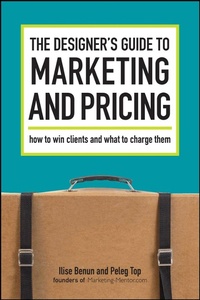
The Designer's Guide To Marketing And Pricing
How To Win Clients And What To Charge Them
Published on 10. March 2008
288 pages
978-1-4403-2516-8 (ISBN)
Description

Do what you love and make money!
The Designer's Guide to Marketing and Pricing will answer all the common questions asked by designers trying to stay afloat in their creative business - and also successful designers who want to put a little more thought into their operations. Whether you're a freelancer, an aspiring entrepreneur or a seasoned small-business owner, you'll learn everything you need to know about how to market and price your services.
This book shows you how to:
You'll learn the ins and outs of creating and running a creative services business - the things they never taught you in school. Plus, there are useful worksheets throughout the book, so you can apply the principles and formulas to your own circumstances and create a workable business plan right away.
The Designer's Guide to Marketing and Pricing will answer all the common questions asked by designers trying to stay afloat in their creative business - and also successful designers who want to put a little more thought into their operations. Whether you're a freelancer, an aspiring entrepreneur or a seasoned small-business owner, you'll learn everything you need to know about how to market and price your services.
This book shows you how to:
- learn which marketing tools are most effective and how to use them
- create a smart marketing plan that reflects your financial goals
- plan small actionable steps to take in reaching those financial goals
- determine who your ideal clients are and establish contact with them
- turn that initial contact into a profitable relationship for both of you
- talk to clients about money and the design process - without fear
- figure out a fair hourly rate and give an accurate estimate for a project
You'll learn the ins and outs of creating and running a creative services business - the things they never taught you in school. Plus, there are useful worksheets throughout the book, so you can apply the principles and formulas to your own circumstances and create a workable business plan right away.
More details
Other editions
Additional editions
Book
03/2008
How Design Books
€25.70
Article exhausted; check different version
Person
Ilise Benun and Peleg Top
Content
- Intro
- Title Page
- Acknowledgments
- About the Authors
- About Marketing Mentor
- Contents
- Foreword
- Part One: Marketing
- Chapter 1: Who is My Market?
- Build on the Foundation of Your Expertise
- Specializing Lets You Dominate the Market
- Four Strategies for Specializing
- It Helps to Have More Than One Area of Expertise
- Is This Market Ready for You?
- Introducing Yourself to a Brand New Market
- Creating Samples for a New Market
- Chapter 2: How Can I Find Clients and Prospects?
- How to Find Events to Attend
- How to Meet Prospects Who Aren't Geographically Close to You
- Using Mailing Lists
- How to Build Your Dream List
- Cherry-Picking Prospects
- Chapter 3: How Should I Present Myself?
- Why You Must Have a Personal Brand
- The Name of Your Business
- Don't Forget About Your Domain Name
- Winning Taglines Take the Mystery Out of Your Services
- Presenting Yourself as a Professional
- How to Talk About Your Services
- Having Blurbs for All Seasons
- Don't Sound Like a Robot
- Marketing Syntax: The Language of Results
- Engage Your Listeners With Stories
- What Are Your Facts and Benefits?
- Chapter 4: Which Marketing Tools Should I Use?
- Networking
- E-Mail Marketing
- Online Presence
- Cold Calling
- Promotional Materials
- Chapter 5: What Should I Say In Person, On The Phone and Online?
- In Person
- On the Phone
- Networking Online
- Chapter 6: How Should I Follow Up?
- Follow Up with a Personal Message
- The Follow-Up Process, Step by Step
- You Can't Follow Up Without a System
- Ongoing Follow-Up
- Part Two: Pricing
- Chapter 7: How Do I Manage My Money?
- How Do I Deal With My Personal Money?
- Your Money Mentality
- You Are in the Driver's Seat: Planning and Managing Your Money
- Peleg Top's Personal Money Management System
- Chapter 8: What Should I Charge?
- Understanding What You Are Selling
- The Importance of an Hourly Rate
- Hire Subcontractors
- Rules for Doing Pro Bono Work
- Should I Barter and Trade?
- Chapter 9: How Do I Talk About Money?
- It's Okay to Talk About Money
- Getting Clients to Talk About Their Budgets
- Chapter 10: What Should Be In My Proposal?
- Your Proposal Is a Marketing Tool
- What Should Be in My Proposal?
- How Should I Present My Proposal?
- How to Ask for the Sale
- Three Techniques for Dealing With the Black-Hole Syndrome
- Chapter 11: What Should Be in My Contract?
- Negotiating the Contract
- Turning Your Proposal Into a Contract
- Getting Money Upfront (And What Can Happen if You Don't)
- Chapter 12: How Should I Grow My Business?
- The Next Steps and When to Take Them
- When Should I Hire Employees?
- Steps You Can Take Toward Growth
- Resources
- Books
- Web Sites and Blogs
- Magazines
- Copyright
