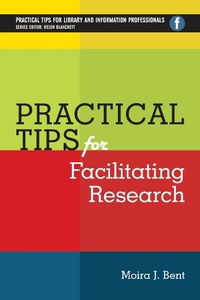
Practical Tips for Facilitating Research
Description

This practical guide offers innovative tips and reliable best practice to enable new and experienced library and information professionals to evaluate their current provision and develop their service to meet the evolving needs of the research community.
Interacting effectively with information is at the heart of all research, consequently information professionals have a key role to play in facilitating the development of researchers who are able to operate confidently and successfully in the information world.
Grounded in current theory and informed by practitioners from around the world, this practical book offers a wide range of ideas and methods to assist library and information professionals in developing and managing their role in the research environment.
Part of the Practical Tips for Library and Information Professionals series, the book is organised into eight sections:
- landscapes and models
- structures and strategies
- places and spaces
- library staff roles
- collections
- specific interventions in the research process or lifecycle
- teaching approaches
- information literacy skills workshops and programmes.
Practical Tips for Facilitating Research will be essential reading for academic liaison librarians, research support librarians and all library and information professionals who work with research staff and students.
More details
Other editions
Additional editions