

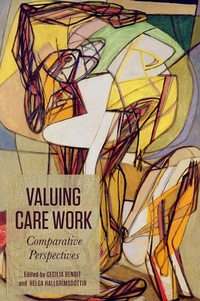
Valuing Care Work
Comparative Perspectives
1st Edition
Published on 26. February 2011
304 pages
978-1-4426-8999-2 (ISBN)
Description

There are many forms of paid and unpaid labour encompassed in health care systems, including home care for the elderly or disabled, community health services, and the care family members provide for loved ones. Valuing Care Work is an international comparative study that examines economic organizations as well as intimate settings to show how personal service work is shaped by broader welfare state developments.
To trace the relationships between gender, labour, and equity in health care, the essays in this volume analyse the rules and practices that shape care work. The contributors highlight how national configurations of the welfare state shape the gendering of paid and unpaid intimate labour in a range of settings and discuss how the policies and practices associated with neoliberalism have focussed on efficiency and accountability to the detriment of other policy agendas, including those that might further increase dignity and equity for both recipients and providers of paid and unpaid health care.
To trace the relationships between gender, labour, and equity in health care, the essays in this volume analyse the rules and practices that shape care work. The contributors highlight how national configurations of the welfare state shape the gendering of paid and unpaid intimate labour in a range of settings and discuss how the policies and practices associated with neoliberalism have focussed on efficiency and accountability to the detriment of other policy agendas, including those that might further increase dignity and equity for both recipients and providers of paid and unpaid health care.
Reviews / Votes
Addressing a real gap in recent literature, Valuing Care Work meaningfully advances our understandings of women and the welfare state. This collection excels by exploring a diverse range of issues, from the opportunities and constraints of hospital volunteerism to the rarely seen glimpses of care recipient experiences and the uniqueness of Aboriginal care work. Each chapter is truly enjoyable and reflects the contributors' collective expertise and extensive knowledge of the care work field. - Vappu Tyyskae, Department of Sociology, Ryerson UniversityMore details
Language
English
Place of publication
Toronto
Canada
Target group
College/higher education
Professional and scholarly
Edition type
Digital original
Illustrations
1 map
1 map
File size
1,46 MB
ISBN-13
978-1-4426-8999-2 (9781442689992)
Copyright in bibliographic data and cover images is held by Nielsen Book Services Limited or by the publishers or by their respective licensors: all rights reserved.
Schweitzer Classification
Other editions
Additional editions
Book
02/2011
University of Toronto Press
€89.33
Article exhausted; check different version
Persons
Cecilia Benoit is a professor in the Department of Sociology at the University of Victoria.
Helga Hallgrimsdottir is an assistant professor in the Department of Sociology at the University of Victoria.
Helga Hallgrimsdottir is an assistant professor in the Department of Sociology at the University of Victoria.
Content
Acknowledgements
Contributors
PART ONE: Theoretical considerations
Conceptualizing Care Work by C. Benoit and H. Hallgrimsdottir (University of Victoria)
Emplacing Care: Understanding Care Work across Social & Spatial Contexts by H. Dolan (University of Victoria) and D. Thien (California State University)
PART TWO: Paid Care Work in Formal Organizations
In Search of Equity and Dignity in Maternity Care: Canada in Comparative Perspective by C. Benoit (University of Victoria), S. Wrede (University of Helsinki), and ?. EinarsdOttir (University of Ireland)
Caring Beyond Borders: Comparing the Relationship between Work and Migration Patterns in Canada and Finland by I. Bourgeault and S. Wrede (University of Helsinki)
PART THREE: Paid Care Work in Intimate & Community Settings
Patching Up the Holes? Analyzing Paid Care Work in Homes by M. E. Purkis (University of Victoria), C. Ceci (University of Alberta), and K. Bjornsdottir (University of Ireland)
My Home, Your Work, Our Relationship: Elderly Clients' Experiences of Home Care Services by A. Martin-Matthews (University of British Columbia), J. Sims-Gould (University of British Columbia)
Bifurcated Consciousness: Aboriginal Care Workers in Community Settings by R. Eni (University of Manitoba)
PART FOUR: Unpaid Care work in Intimate Settings
Mothers' Health, Responsibilization, and Choice in Unpaid Family Care Work after Separation/Divorce by R. Treloar (University of Victoria), L. Funk (University of Victoria)
"Choice" in Informal Health Care Work: Adult Children with Aging Parents by L. Funk, K. Kobayashi (University of Victoria)
Spinning the Family Web: Grandparents Raising Grandchildren in Canada by P. Mackenzie (University of Victoria), L. Brown University of Victoria), M. Callahan (University of Victoria), B. Whittington (University of Victoria)
PART FIVE: Unpaid Care Work in Economic Organizations
Voluntary Caregiving? Constraints and Opportunities for Hospital Volunteers by M. Mellow (University of Lethbridge)
Volunteering on the Frontline: Caring for Sex Workers in Non-Profit Organizations by R. Phillips (University of Victoria), C. Leischner (University of Victoria), and L. Casey (University of Victoria)
PART SIX: Public Policy Implications & New Directions for Research
Public Policy, Caring Practices and Gender in Health Care Work by H. Hallgrimsdottir, K. Teghtsoonian, D. Brown and C. Benoit (all University of Victoria)
Contributors
PART ONE: Theoretical considerations
Conceptualizing Care Work by C. Benoit and H. Hallgrimsdottir (University of Victoria)
Emplacing Care: Understanding Care Work across Social & Spatial Contexts by H. Dolan (University of Victoria) and D. Thien (California State University)
PART TWO: Paid Care Work in Formal Organizations
In Search of Equity and Dignity in Maternity Care: Canada in Comparative Perspective by C. Benoit (University of Victoria), S. Wrede (University of Helsinki), and ?. EinarsdOttir (University of Ireland)
Caring Beyond Borders: Comparing the Relationship between Work and Migration Patterns in Canada and Finland by I. Bourgeault and S. Wrede (University of Helsinki)
PART THREE: Paid Care Work in Intimate & Community Settings
Patching Up the Holes? Analyzing Paid Care Work in Homes by M. E. Purkis (University of Victoria), C. Ceci (University of Alberta), and K. Bjornsdottir (University of Ireland)
My Home, Your Work, Our Relationship: Elderly Clients' Experiences of Home Care Services by A. Martin-Matthews (University of British Columbia), J. Sims-Gould (University of British Columbia)
Bifurcated Consciousness: Aboriginal Care Workers in Community Settings by R. Eni (University of Manitoba)
PART FOUR: Unpaid Care work in Intimate Settings
Mothers' Health, Responsibilization, and Choice in Unpaid Family Care Work after Separation/Divorce by R. Treloar (University of Victoria), L. Funk (University of Victoria)
"Choice" in Informal Health Care Work: Adult Children with Aging Parents by L. Funk, K. Kobayashi (University of Victoria)
Spinning the Family Web: Grandparents Raising Grandchildren in Canada by P. Mackenzie (University of Victoria), L. Brown University of Victoria), M. Callahan (University of Victoria), B. Whittington (University of Victoria)
PART FIVE: Unpaid Care Work in Economic Organizations
Voluntary Caregiving? Constraints and Opportunities for Hospital Volunteers by M. Mellow (University of Lethbridge)
Volunteering on the Frontline: Caring for Sex Workers in Non-Profit Organizations by R. Phillips (University of Victoria), C. Leischner (University of Victoria), and L. Casey (University of Victoria)
PART SIX: Public Policy Implications & New Directions for Research
Public Policy, Caring Practices and Gender in Health Care Work by H. Hallgrimsdottir, K. Teghtsoonian, D. Brown and C. Benoit (all University of Victoria)
