

Smoke Signals from Samarcand
Description
Alles über E-Books | Antworten auf Fragen rund um E-Books, Kopierschutz und Dateiformate finden Sie in unserem Info- & Hilfebereich.
A case study and dramatic retelling of young girls on trial for arson at a reform school
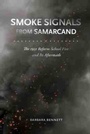
In 1931 sixteen poor, white girls-all teenaged inmates at Samarcand Manor, officially named the State Home and Industrial School for Girls, in Samarcand, North Carolina-were accused of burning down two campus buildings in protest against living conditions. Barbara Bennett offers not only a dramatic retelling of this historic case in Smoke Signals from Samarcand, but also reveals a case study of the misguided social engineering schemes-fraught with racism, classism, and sexual stereotypes-that churned through North Carolina and other southern states during this time.
The girls, who became known as the "Samarcand Sixteen," were described by administrators and the media as incorrigible and troublesome. Bennett additionally reveals their grim backgrounds and details the harsh disciplinary methods, including savage whippings, that were dispensed at Samarcand and other reform schools in the early twentieth century. Arson was a capital offense in North Carolina at the time, and the girls were put on trial for their lives.
The sensational trial took place in the midst of a strong eugenics movement that was sweeping the state and the South. The girls' newly minted lawyer, Nell Battle Lewis, argued that the treatment the girls endured at Samarcand had forced them to take drastic action and therefore should result in lenient sentences. Instead the state of North Carolina used bogus "scientific" theories-such as "bad blood genetics"-to create legal policy and criminal justice practices that were heavily prejudiced against powerless people, particularly girls and women.
In the end the girls received sentences of eighteen months to five years in the state penitentiary, although the trial and its publicity did lead to improvements in the physical conditions and disciplinary methods at Samarcand and other juvenile facilities in North Carolina.
All prices
More details
Other editions
Additional editions
Person
Barbara Bennett is an associate professor of English at North Carolina State University. She is the author of five books, including Understanding Jill McCorkle, published by the University of South Carolina Press, and Soul of a Lion.
Content
- Cover
- SMOKE SIGNALS FROM SAMARCAND
- Dedication
- Title
- Copyright
- Contents
- List of Illustrations
- Acknowledgments
- Prologue: Fire
- Part One THE SAMARCAND SIXTEEN
- One
- Two
- Three
- Four
- Part Two THE TRIAL
- Five
- Six
- Epilogue: Repercussions
- Works Cited
- Index
- About the Author

System requirements
File format: ePUB
Copy protection: Adobe-DRM (Digital Rights Management)
System requirements:
- Computer (Windows; MacOS X; Linux): Install the free reader Adobe Digital Editions prior to download (see eBook Help).
- Tablet/smartphone (Android; iOS): Install the free app Adobe Digital Editions or the app PocketBook before downloading (see eBook Help).
- E-reader: Bookeen, Kobo, Pocketbook, Sony, Tolino and many more (not Kindle).
The file format ePub works well for novels and non-fiction books – i.e., „flowing” text without complex layout. On an e-reader or smartphone, line and page breaks automatically adjust to fit the small displays.
This eBook uses Adobe-DRM, a „hard” copy protection. If the necessary requirements are not met, unfortunately you will not be able to open the eBook. You will therefore need to prepare your reading hardware before downloading.
Please note: We strongly recommend that you authorise using your personal Adobe ID after installation of any reading software.
For more information, see our ebook Help page.
File format: PDF
Copy-Protection: Adobe-DRM (Digital Rights Management)
System requirements:
- Computer (Windows; MacOS X; Linux): Install the free reader Adobe Digital Editions prior to download (see eBook Help).
- Tablet/smartphone (Android; iOS): Install the free app Adobe Digital Editions or the app PocketBook before downloading (see eBook Help).
- E-reader: Bookeen, Kobo, Pocketbook, Sony, Tolino and many more (only limited: Kindle).
The file format PDF always displays a book page identically on any hardware. This makes PDF suitable for complex layouts such as those used in textbooks and reference books (images, tables, columns, footnotes). Unfortunately, on the small screens of e-readers or smartphones, PDFs are rather annoying, requiring too much scrolling.
This eBook uses Adobe-DRM, a „hard” copy protection. If the necessary requirements are not met, unfortunately you will not be able to open the eBook. You will therefore need to prepare your reading hardware before downloading.
Please note: We strongly recommend that you authorise using your personal Adobe ID after installation of any reading software.
For more information, see our eBook Help page.
File format: ePUB
Copy protection: Watermark-DRM (Digital Rights Management)
System requirements:
- Computer (Windows; MacOS X; Linux): Use a reading software that can process the file format ePUB: e.g., Adobe Digital Editions or FBReader – both free (see eBook Help).
- Tablet/Smartphone (Android; iOS): Before downloading, install the free app Adobe Digital Editions (see eBook Help).
- E-reader: Bookeen, Kobo, Pocketbook, Sony, Tolino and many more (not Kindle).
The file format ePUB works well for novels and non-fiction books – i.e., „flowing” text without complex layout. On an e-reader or smartphone, line and page breaks automatically adjust to fit the small displays.
This eBook uses Watermark-DRM, a „soft” copy protection. This means that there are no technical restrictions to prevent illegal distribution. However, there is a personalised watermark embedded in the eBook that can be used to identify the purchaser of the eBook in the event of misuse and to provide evidence for legal purposes.
For more information, see our eBook Help page.
