

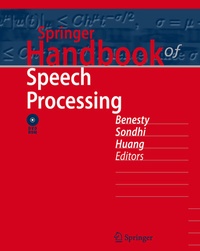
Springer Handbook of Speech Processing
Description

From common consumer products such as cell phones and MP3 players to more sophisticated projects such as human-machine interfaces and responsive robots, speech technologies are now everywhere. Many think that it is just a matter of time before more applications of the science of speech become inescapable in our daily life. This handbook is meant to play a fundamental role for sustainable progress in speech research and development. Springer Handbook of Speech Processing targets three categories of readers: graduate students, professors and active researchers in academia and research labs, and engineers in industry who need to understand or implement some specific algorithms for their speech-related products. The handbook could also be used as a sourcebook for one or more graduate courses on signal processing for speech and different aspects of speech processing and applications. A quickly accessible source of application-oriented, authoritative and comprehensive information about these technologies, it combines the established knowledge derived from research in such fast evolving disciplines as signal processing and communications, acoustics, computer science and linguistics.
Reviews / Votes
From the reviews:"This massive volume contains 53 chapters and covers just about all aspects of the field of speech processing. . The editors are commended for producing a valuable tool in the understanding of speech and speech synthesis/recognition. The book is a valuable addition to the bookshelf of researchers, speech scientists, and engineers." (Richard J. Peppin, International Journal of Acoustics and Vibration, Vol. 13 (1), 2008)"This book is a comprehensive overview of most of the major topics associated with speech processing written by the most renowned authors in each topic. The book is well structured with a clearly organized topics. It is intended for use by the researcher . . book is organized in nine sections that cover all current speech applications. . In conclusion, I would highly recommend that anyone interested in speech processing have a copy of this encyclopaedic work." (Eduardo López Gonsalo, The Phonetician, Vol. I-II (97/98), 2008)More details
Other editions
Additional editions
Persons
Content
Introduction to Speech Processing.- Production, Perception, and Modeling of Speech.- Signal Processing for Speech.- Speech Coding.-Text-to-Speech Synthesis.- Speech Recognition.- Speaker Recognition.- Language Recognition.- Speech Enhancement.- Multichannel Speech Processing
