

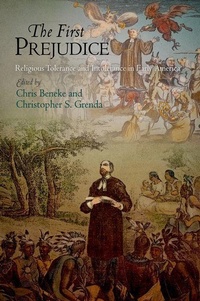
The First Prejudice
Religious Tolerance and Intolerance in Early America
1st Edition
Published on 6. June 2011
408 pages
978-0-8122-0489-6 (ISBN)
Description

In many ways, religion was the United States' first prejudice-both an early source of bigotry and the object of the first sustained efforts to limit its effects. Spanning more than two centuries across colonial British America and the United States, The First Prejudice offers a groundbreaking exploration of the early history of persecution and toleration. The twelve essays in this volume were composed by leading historians with an eye to the larger significance of religious tolerance and intolerance. Individual chapters examine the prosecution of religious crimes, the biblical sources of tolerance and intolerance, the British imperial context of toleration, the bounds of Native American spiritual independence, the nuances of anti-Semitism and anti-Catholicism, the resilience of African American faiths, and the challenges confronted by skeptics and freethinkers.
The First Prejudice presents a revealing portrait of the rhetoric, regulations, and customs that shaped the relationships between people of different faiths in seventeenth- and eighteenth-century America. It relates changes in law and language to the lived experience of religious conflict and religious cooperation, highlighting the crucial ways in which they molded U.S. culture and politics. By incorporating a broad range of groups and religious differences in its accounts of tolerance and intolerance, The First Prejudice opens a significant new vista on the understanding of America's long experience with diversity.
The First Prejudice presents a revealing portrait of the rhetoric, regulations, and customs that shaped the relationships between people of different faiths in seventeenth- and eighteenth-century America. It relates changes in law and language to the lived experience of religious conflict and religious cooperation, highlighting the crucial ways in which they molded U.S. culture and politics. By incorporating a broad range of groups and religious differences in its accounts of tolerance and intolerance, The First Prejudice opens a significant new vista on the understanding of America's long experience with diversity.
Reviews / Votes
"The religious diversity of early America has been fully documented in historical scholarship. How religious tolerance was conceived, codified, and practiced has garnered less attention. This anthology by Chris Beneke and Christopher S. Grenda initiates a productive conversation about the contours of religious difference in early America." (Philadelphia Magazine of History and Biography) "A delightful array of essays from established scholars in the study of Anglo-American religion and society. The collection boasts generous quotations from primary sources in the essays and includes extensive endnotes that reflect recent scholarship." (Journal of American History) "The First Prejudice offers an invaluable exploration of the complicated development of religious tolerance in Early American culture. Beneke and Grenda draw extensively from America's relation to its English and European roots, avoiding simplistic formulations in favor of a multifaceted analysis of Early American religious culture." (Eighteenth Century Studies) "Creatively and thoughtfully connecting the two historiographical traditions that examine religious tolerance and intolerance in early America-church-state history and religious history-this edited volume's essays use the ideological and legal arguments favored by church-state historians and the emphasis on ecclesiastical identity and practice common in religious history. The result is a surprisingly cohesive collection of essays that, given their chronological and geographical breadth, demonstrate the cultural and judicial ubiquity of religious prejudice while highlighting often unexpected opportunities for religious toleration, coexistence, and exchange in early America." (Journal of Southern History) "The collection covers a wide geographical area, from the northern Colonies to the American South. In this way, the authors illustrate how, over time and space, Americans struggled to define toleration and apply it to their communities, often resulting in some form of religious tolerance, though religious prejudice continued well into the 19th century in the form of local customs, policies, and language. Written by well-respected historians, this is a valuable contribution to the study of US religious and cultural history." (Choice)More details
Series
Language
English
Place of publication
Pennsylvania
United States
Target group
College/higher education
File size
2,89 MB
ISBN-13
978-0-8122-0489-6 (9780812204896)
Copyright in bibliographic data and cover images is held by Nielsen Book Services Limited or by the publishers or by their respective licensors: all rights reserved.
Schweitzer Classification
Other editions
Additional editions
Chris Beneke | Christopher S. Grenda
The First Prejudice
Religious Tolerance and Intolerance in Early America
Book
10/2014
University of Pennsylvania Press
€37.50
Shipment within 10-20 days
Chris Beneke | Christopher S. Grenda
The First Prejudice
Religious Tolerance and Intolerance in Early America
Book
12/2010
University of Pennsylvania Press
€45.88
Article exhausted; check different version
Persons
Chris Beneke is Associate Professor of History and Director of the Valente Center for Arts and Sciences at Bentley University and author of Beyond Toleration: The Religious Origins of American Pluralism. Christopher S. Grenda is Associate Professor of History at Bronx Community College of the City University of New York.
Content
Introduction
-Chris Beneke and Christopher S. Grenda
PART I. IDEOLOGIES OF TOLERANCE AND INTOLERANCE IN EARLY AMERICA
Chapter 1. Faith, Reason, and Enlightenment: The Cultural Sources of Toleration in Early America
-Christopher S. Grenda
Chapter 2. Amalek and the Rhetoric of Extermination
-John Corrigan
PART II. PRACTICES OF TOLERANCE AND INTOLERANCE IN COLONIAL BRITISH AMERICA
Chapter 3. The Episcopate, the British Union, and the Failure of Religious Settlement in Colonial British America
-Ned Landsman
Chapter 4. Practicing Toleration in Dutch New Netherland
-Joyce D. Goodfriend
Chapter 5. Heretics, Blasphemers, and Sabbath Breakers: The Prosecution of Religious Crime in Early America
-Susan Juster
Chapter 6. Persecuting Quakers? Liberty and Toleration in Early Pennsylvania
-Andrew R. Murphy
PART III. THE BOUNDARIES OF TOLERANCE AND INTOLERANCE IN EARLY AMERICA
Chapter 7. Native Freedom? Indians and Religious Tolerance in Early America
-Richard W. Pointer
Chapter 8. Slaves to Intolerance: African American Christianity and Religious Freedom in Early America
-Jon Sensbach
Chapter 9. Catholics, Protestants, and the Clash of Civilizations in Early America
-Owen Stanwood
Chapter 10. Anti-Semitism, Toleration, and Appreciation: The Changing Relations of Jews and Gentiles in Early America
-William Pencak
PART IV. THE PERSISTENCE OF TOLERANCE AND INTOLERANCE IN THE NEW NATION
Chapter 11. The ''Catholic Spirit Prevailing in Our Country'': America's Moderate Religious Revolution
-Chris Beneke
Chapter 12. The Boundaries of Toleration and Tolerance: Religious Infidelity in the Early American Republic
-Christopher Grasso
Notes
List of Contributors
Index
-Chris Beneke and Christopher S. Grenda
PART I. IDEOLOGIES OF TOLERANCE AND INTOLERANCE IN EARLY AMERICA
Chapter 1. Faith, Reason, and Enlightenment: The Cultural Sources of Toleration in Early America
-Christopher S. Grenda
Chapter 2. Amalek and the Rhetoric of Extermination
-John Corrigan
PART II. PRACTICES OF TOLERANCE AND INTOLERANCE IN COLONIAL BRITISH AMERICA
Chapter 3. The Episcopate, the British Union, and the Failure of Religious Settlement in Colonial British America
-Ned Landsman
Chapter 4. Practicing Toleration in Dutch New Netherland
-Joyce D. Goodfriend
Chapter 5. Heretics, Blasphemers, and Sabbath Breakers: The Prosecution of Religious Crime in Early America
-Susan Juster
Chapter 6. Persecuting Quakers? Liberty and Toleration in Early Pennsylvania
-Andrew R. Murphy
PART III. THE BOUNDARIES OF TOLERANCE AND INTOLERANCE IN EARLY AMERICA
Chapter 7. Native Freedom? Indians and Religious Tolerance in Early America
-Richard W. Pointer
Chapter 8. Slaves to Intolerance: African American Christianity and Religious Freedom in Early America
-Jon Sensbach
Chapter 9. Catholics, Protestants, and the Clash of Civilizations in Early America
-Owen Stanwood
Chapter 10. Anti-Semitism, Toleration, and Appreciation: The Changing Relations of Jews and Gentiles in Early America
-William Pencak
PART IV. THE PERSISTENCE OF TOLERANCE AND INTOLERANCE IN THE NEW NATION
Chapter 11. The ''Catholic Spirit Prevailing in Our Country'': America's Moderate Religious Revolution
-Chris Beneke
Chapter 12. The Boundaries of Toleration and Tolerance: Religious Infidelity in the Early American Republic
-Christopher Grasso
Notes
List of Contributors
Index
