

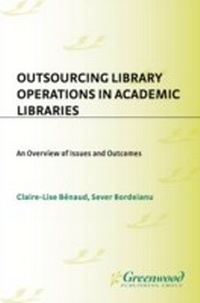
Outsourcing Library Operations in Academic Libraries
An Overview of Issues and Outcomes
1st Edition
Published on 15. July 1998
216 pages
978-0-313-02264-7 (ISBN)
Description

As outsourcing becomes more commonplace in libraries, the need for a authoritative guide becomes indisputable. This book, designed to give librarians a broad understanding of outsourcing issues in academic libraries, synthesizes prevailing theories on the topic and describes current outsourcing practices in all areas of librarianship. After a historical overview and a detailed analysis of the pros and cons of outsourcing, the authors outline the steps for planning and implementing a successful outsourcing program. Individual chapters cover collection development, acquisitions and serials management, cataloging, retrospective conversion, authority control, preservation, and public services and systems. A special feature of the book is a detailed survey of more than 200 academic research libraries and other academic libraries about outsourcing practices.
More details
Edition
1. Auflage
Language
English
Place of publication
New York
United States
Publishing group
Bloomsbury Publishing Plc
Target group
Interest Age: From 7 to 17 years
ISBN-13
978-0-313-02264-7 (9780313022647)
Copyright in bibliographic data and cover images is held by Nielsen Book Services Limited or by the publishers or by their respective licensors: all rights reserved.
Schweitzer Classification
Other editions
Additional editions
Claire-Lise Benaud | Sever Bordeianu
Outsourcing Library Operations in Academic Libraries
An Overview of Issues and Outcomes
Book
07/1998
Libraries Unlimited Inc
€69.40
Shipment within 3-4 weeks
Content
- Intro
- Contents
- Foreword
- Preface
- Introduction
- List of Acronyms
- 1-Outsourcing: An Overview
- What Is Outsourcing?
- Definitions of Outsourcing
- Definition of the Outsource Supplier
- Definitions of Related Terms
- Key Concepts in Outsourcing
- Outsourcing As a Reengineering Tool
- Why Outsource?
- What to Outsource
- The Mechanics of Outsourcing
- Advantages and Disadvantages
- The Company Point of View
- The Employee Point of View
- Outsourcing: A National Debate
- Corporate Responsibility
- Costs and Wages
- Global Outsourcing
- Conclusion
- Notes
- 2-Outsourcing and Academic Libraries
- Brief History of Outsourcing
- Outsourcing Today
- Outsourcing in Academic Libraries
- Outsourcing in Special Libraries
- Outsourcing in Public Libraries
- Outsourcing in Federal Libraries
- What Are the Library's Core Services?
- Outsourcing Core Competencies: A Contradiction in Terms?
- Technical Services
- Public Services
- Why Do Libraries Outsource?
- What Questions Should We Ask?
- Advantages and Disadvantages
- Outsourcing and Library Jobs
- Whose Jobs Are Eliminated?
- A Personal Perspective
- The Administrator's Perspective
- The Outsourcing Debate in the Library Community
- Library World Versus Business World
- Librarians Versus Management
- Outsourcing Versus Cooperation
- Outsourcing: A Tool for Addressing Personnel Problems
- Outsourcing As a Catalyst for Change
- Inconclusive Evidence
- Conclusion
- Notes
- 3-The Three Phases of Outsourcing
- Planning
- Role of Library Management
- Higher Initial Costs
- Understanding Existing Processes
- Measuring Costs
- Measuring Quality
- Informing the Staff
- The Request for Proposal Process
- Selecting a Vendor
- Negotiating the Contract
- Implementation
- Managing
- Notes
- 4-Outsourcing Survey Results
- Collection Development
- Overall Findings
- Comparison of ARL and Non-ARL Libraries
- Acquisitions
- Overall Findings
- Comparison of ARL and Non-ARL Libraries
- Preservation
- Overall Findings
- Comparison of ARL and Non-ARL Libraries
- Reference
- Interlibrary Loan
- Document Delivery
- Systems
- Overall Findings
- Comparison of ARL and Non-ARL Libraries
- Cataloging
- Overall Findings
- Authority Control
- Retrospective Conversion
- Overall Findings
- Comparison of ARL and Non-ARL Libraries
- General Comments
- Conclusion
- Notes
- 5-Collection Development
- Historical Background
- The Controversy
- The Literature on Approval Plans
- Basics of Approval Plans
- Publisher Lists
- Profiles
- The Contract
- Types of Approval Plans
- Current Developments
- Direct Access
- Value-Added Services
- Total Outsourcing
- Advantages and Disadvantages
- Discounts
- Access
- Reliability
- Reports
- Staff Savings
- Control
- Gaps in Coverage
- Collection Development As a Model for Librarianship
- Conclusion
- Notes
- 6-Acquisitions and Serials Management
- The Evolution of Acquisitions
- Acquisitions Librarians and Vendors: A Select Relationship
- Benefits of Outsourcing
- Vendor Services
- Price and Availability Checking
- Duplicate Checking and Cancellation
- Rush Ordering
- Vendor Reports
- Claiming and Check-in of Serials
- Outsourcing Other Areas: Implications for Acquisitions
- Collection Development
- Cataloging
- Technology and Outsourcing
- The Library's Online System
- Electronic Communication with Book Vendors
- Electronic Data Interchange (EDI)
- Conclusion
- Notes
- 7-Cataloging
- Historical Background
- Catalog Card Services
- Bibliographic Utilities
- Selective Outsourcing
- The Controversy
- Is Cataloging a Core Function?
- The Ivory Tower of Cataloging
- The Inevitability of Outsourcing
- The Cookie-Cutter Approach
- Cataloging Expertise
- Losing the Spirit of National Cooperation
- Quality of Records
- Fairness
- Why Libraries Consider Outsourcing Cataloging
- Greater Efficiency
- Timely Cataloging
- Increased Productivity
- Lower Costs
- Value-Added Services
- Maximizing Staff Resource Use
- Steps to Outsourcing Cataloging
- Evaluating the Cataloging Department
- What Can Be Outsourced
- Methods of Outsourcing
- Means of Delivery
- Choosing a Vendor
- The Profile
- Impact on Library Operations
- Cataloging
- Acquisitions
- Collection Development
- Systems
- Interlibrary Loan
- Reference
- Source of Cataloging Record
- Cataloging Vendors
- Bibliographic Utilities As Vendors of Cataloging Records
- Materials Jobbers
- Cataloging Companies
- Conclusion
- Notes
- 8-Retrospective Conversion
- Historical Background
- In-House Versus Outsourced Retrospective Conversion
- Retrospective Conversion Issues
- Types of Records Converted
- Checking Holdings Before a Conversion Project
- Problem Records
- Conversion Versus Recataloging
- Standards
- Maintaining Control
- Staffing
- Timeliness
- Quality Control Issues
- Incomplete Data
- Editing
- Authority Control
- Postconversion Cleanup
- Managing Vendor Conversion
- Proposal
- Conversion Specifications
- Cost
- Choosing a Conversion Vendor
- Conversion Vendors
- Bibliographic Utilities and Network Vendors
- Commercial Vendors
- Conclusion
- 9-Authority Control
- Historical Background
- In-House Versus Outsourced Authority Control
- In-House Authority Control
- Vendor-Supplied Authority Control
- General Considerations for Outsourcing
- Cost
- The RFP
- Source of the Vendor's Authority Files
- Input and Output
- Batch Processing
- Manual Review
- Reports
- Conclusion
- Notes
- 10-Preservation
- Binding
- Brief History
- Function of Binding
- Outsourcing of Bindery Operations
- Mending
- Preservation Microfilming
- Preservation Photocopying
- Book Preservation Boxes
- Deacidification
- Digitization
- Disaster Preparedness and Control
- Outsourcing Considerations
- Conclusion
- Notes
- 11-Public Services and Systems
- Public Services
- Reference
- Instruction
- Online Searching
- Interlibrary Loan and Document Delivery
- Systems
- Historical Background
- Outsourcing Systems
- Conclusion
- Notes
- 12-Conclusion
- Notes
- Appendix: Survey Questions and Results
- Suggested Readings
- Index
- A
- B
- C
- D
- E
- F
- G
- H
- I
- J
- K
- L
- M
- N
- O
- P
- Q
- R
- S
- T
- U
- V
- W
- X
- Y
