

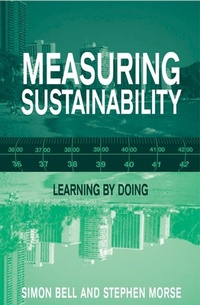
Measuring Sustainability
Learning From Doing
1st Edition
Published on 17. June 2013
206 pages
978-1-136-56134-4 (ISBN)
Description

'
Measuring the sustainability of development is crucial to achieving it, and is one of the most actively studied issues in the area. To date, most studies of measurements or indicators have been largely theoretical.
However, this book, a follow-on to Bell and Morse's highly influential Sustainability Indicators (1999), presents valuable practical advice on how to develop measurements that will work in real-life development contexts. It describes and analyses how to derive, validate and apply indicators in the course of an actual development project - in this case the Mediterranean Action Plan in Malta.
The authors explain the trade-offs and constraints involved and how it is possible to combine the open-ended and flexible perspectives of sustainability with the more linear processes and fixed targets of specific projects through the use of pragmatic and reflective methodologies.
Measuring the sustainability of development is crucial to achieving it, and is one of the most actively studied issues in the area. To date, most studies of measurements or indicators have been largely theoretical.
However, this book, a follow-on to Bell and Morse's highly influential Sustainability Indicators (1999), presents valuable practical advice on how to develop measurements that will work in real-life development contexts. It describes and analyses how to derive, validate and apply indicators in the course of an actual development project - in this case the Mediterranean Action Plan in Malta.
The authors explain the trade-offs and constraints involved and how it is possible to combine the open-ended and flexible perspectives of sustainability with the more linear processes and fixed targets of specific projects through the use of pragmatic and reflective methodologies.
Reviews / Votes
Presents valuable practical advice on how to develop measurements that will work in real-life development contexts.'Natural Resources Journal
'The colourful and reflective presentation of the process - which brought people together in defining their own set of sustainability indicators and helped them apply these indicators in policy making - is the most valuable contribution of the book to the increasing field of works in the indicator business.'
Peter Hardi, PhD, Director, Measurement and Indicator Program, International Institute for Sustainable Development
More details
Language
English
Place of publication
London
United Kingdom
Publishing group
Taylor & Francis Ltd
Target group
College/higher education
File size
3,37 MB
ISBN-13
978-1-136-56134-4 (9781136561344)
Copyright in bibliographic data and cover images is held by Nielsen Book Services Limited or by the publishers or by their respective licensors: all rights reserved.
Schweitzer Classification
Other editions
Additional editions
Book
03/2003
1st Edition
Earthscan Ltd
€230.65
Article not available at the moment
Book
03/2003
1st Edition
Earthscan Ltd
€71.50
Shipment within 3-4 weeks
Persons
Simon Bell is Senior Lecturer in information systems at the Open University.
Stephen Morse is Reader in development studies at the University of Reading and co-author of Science, Agriculture and Research: A Compromised Participation (Earthscan, 2002).
Stephen Morse is Reader in development studies at the University of Reading and co-author of Science, Agriculture and Research: A Compromised Participation (Earthscan, 2002).
Content
Preface * Part I The Brave New Frontier of Sustainability: Where are We? * Part II Sustainability Indicators: A Brief Review * Part III Systemic Sustainability Analysis and Prospective * Part IV Doing SPSA: Some Reflective Experience * Part V New Frontiers of Practice * Part VI The End of a Journey? * Appendix 1: Systematic and Prospective Sustainability Analysis (SPSA) in Malta * Notes * References * Index
