

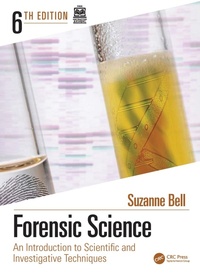
Forensic Science
An Introduction to Scientific and Investigative Techniques
6th Edition
Published on 23. April 2025
632 pages
978-1-040-31682-5 (ISBN)
Description

Forensic Science: An Introduction to Scientific and Investigative Techniques, Sixth Edition covers a full range of fundamental topics essential to modern forensic casework and investigation. The new edition is fully updated to outline best practices - including recent technology and techniques - providing an engaging account of current advances in the field.
Going beyond theory to application, Forensic Science begins by discussing the intersection of law and forensic science, how things become evidence, and how courts decide if an item or testimony is admissible. It presents the broadest array of forensic disciplines among available textbooks on the market, addressing: forensic anthropology, death investigation (including entomology), bloodstain pattern analysis, firearms, tool marks, and forensic analysis of questioned documents, among others. Students follow evidence all the way from the crime scene into laboratory analysis and even onto the autopsy table.
Updates to this edition include a new chapter on DNA analysis covering lineage markers and investigative genetic genealogy (Chapter 11 Advanced Topics in DNA Analysis). Chapter 2 addresses statistics, probability, and frequency databases in interpreting forensic evidence. A section called "Return to the Scene of the Crime" describes scenarios that allows students to compare the physical evidence with the analyzed testing results. "Advanced Topics" sections present quantitative or advanced aspects of each chapter's subject matter. This material is geared toward students with a strong math and science background, forensic science majors, and honors students.
Designed for a single-term course at the undergraduate level, the book's writing is straightforward and accessible - explaining in-depth concepts clearly and accurately. Forensic Science: An Introduction to Scientific and Investigative Techniques, Sixth Edition continues to serve as the essential, go-to textbook for introduction to forensic science courses.
Free Digital Learning Resources for instructors and students are available at routledgelearning.com/forensicscience, including:
Flash cards for glossary terms
Interactive matching, drag-and-drop, and "Hot Spot" mapping exercises
Numerous self-test questions, and
Recorded videos of practicing forensic scientists speaking to chapter topics in their given area of expertise
Going beyond theory to application, Forensic Science begins by discussing the intersection of law and forensic science, how things become evidence, and how courts decide if an item or testimony is admissible. It presents the broadest array of forensic disciplines among available textbooks on the market, addressing: forensic anthropology, death investigation (including entomology), bloodstain pattern analysis, firearms, tool marks, and forensic analysis of questioned documents, among others. Students follow evidence all the way from the crime scene into laboratory analysis and even onto the autopsy table.
Updates to this edition include a new chapter on DNA analysis covering lineage markers and investigative genetic genealogy (Chapter 11 Advanced Topics in DNA Analysis). Chapter 2 addresses statistics, probability, and frequency databases in interpreting forensic evidence. A section called "Return to the Scene of the Crime" describes scenarios that allows students to compare the physical evidence with the analyzed testing results. "Advanced Topics" sections present quantitative or advanced aspects of each chapter's subject matter. This material is geared toward students with a strong math and science background, forensic science majors, and honors students.
Designed for a single-term course at the undergraduate level, the book's writing is straightforward and accessible - explaining in-depth concepts clearly and accurately. Forensic Science: An Introduction to Scientific and Investigative Techniques, Sixth Edition continues to serve as the essential, go-to textbook for introduction to forensic science courses.
Free Digital Learning Resources for instructors and students are available at routledgelearning.com/forensicscience, including:
Flash cards for glossary terms
Interactive matching, drag-and-drop, and "Hot Spot" mapping exercises
Numerous self-test questions, and
Recorded videos of practicing forensic scientists speaking to chapter topics in their given area of expertise
More details
Edition
6th edition
Language
English
Place of publication
London
United Kingdom
Publishing group
Taylor & Francis Ltd
Target group
College/higher education
Illustrations
42 Tables, black and white; 64 Line drawings, color; 472 Halftones, color; 536 Illustrations, color
File size
507,85 MB
ISBN-13
978-1-040-31682-5 (9781040316825)
Copyright in bibliographic data and cover images is held by Nielsen Book Services Limited or by the publishers or by their respective licensors: all rights reserved.
Schweitzer Classification
Other editions
Additional editions
Book
04/2025
6th Edition
CRC Press
€92.00
Shipment within 10-20 days
Person
Dr. Suzanne Bell is an Emeritus Professor and past Chair of the Department of Forensic and Investigative Sciences at West Virginia University. She has been involved in forensic science as a practitioner and educator for decades. Her career began at the New Mexico State Police Crime Laboratory where she worked in forensic chemistry and crime scene response. Positions with Los Alamos National Laboratory and Eastern Washington University followed before arriving at WVU in 2003. Among other roles, she served as Professor and Chair of the Department of Forensic Science. She has published many papers in and has taught and mentored students in forensic science and chemistry from undergraduate through post-doctoral levels. Her career has been dedicated to forensic education for students, forensic practitioners, and the public.
Dr. Bell served on the National Commission on Forensic Science (NCFS) from 2014 to 2017. She is the author of 13 books including multiple editions of a comprehensive introductory text and three editions of Forensic Chemistry. Her latest title is Understanding Forensic DNA Typing, which she co-wrote with Dr. John Butler, an internally recognized DNA working at the National Institutes of Science and Technology.
Dr. Bell served on the National Commission on Forensic Science (NCFS) from 2014 to 2017. She is the author of 13 books including multiple editions of a comprehensive introductory text and three editions of Forensic Chemistry. Her latest title is Understanding Forensic DNA Typing, which she co-wrote with Dr. John Butler, an internally recognized DNA working at the National Institutes of Science and Technology.
Content
1. Justice and Science
2. Evidence, Analysis, and Interpretation
3. Crime Scene Investigation
4. Bloodstain Patterns
5. Medicolegal Investigation of Death
6. Forensic Toxicology
7. Forensic Anthropology
8. Forensic Entomology
9. Biological Evidence
10. DNA Profiling
11. Advanced Topics in DNA Analysis
12. Illicit Drugs and Poisons
13. Fire Investigation
14. Explosives
15. Fingerprints
16. Firearms and Tool Marks
17. Tread Impressions
18. Questioned Documents
19. Trace Evidence
20. Digital Forensics
21. Forensic Engineering
22. Behavioral Science
2. Evidence, Analysis, and Interpretation
3. Crime Scene Investigation
4. Bloodstain Patterns
5. Medicolegal Investigation of Death
6. Forensic Toxicology
7. Forensic Anthropology
8. Forensic Entomology
9. Biological Evidence
10. DNA Profiling
11. Advanced Topics in DNA Analysis
12. Illicit Drugs and Poisons
13. Fire Investigation
14. Explosives
15. Fingerprints
16. Firearms and Tool Marks
17. Tread Impressions
18. Questioned Documents
19. Trace Evidence
20. Digital Forensics
21. Forensic Engineering
22. Behavioral Science
