

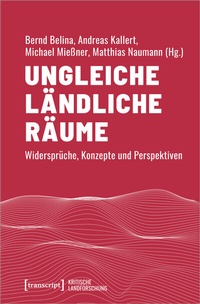
Ungleiche ländliche Räume
Widersprüche, Konzepte und Perspektiven
1st Edition
Published on 1. August 2022
452 pages
978-3-8394-6013-9 (ISBN)
Description

Ländliche Räume sind wieder »in«: In Zeiten der Corona-Krise gelten sie als vermeintlich sicherere Orte, Investor*innen entdecken das Land als einträgliches Geschäftsfeld und Eigentümer*innen profitieren von Preissteigerungen bei Grund und Boden. Gleichzeitig entwickeln sich ländliche Räume stark auseinander: in prosperierende und abgehängte Regionen. Die Beiträger*innen des Bandes liefern eine Bestandsaufnahme der Forschung zu ländlichen Ungleichheiten und bieten Ansatzpunkte für eine kritische Landforschung und progressive Perspektiven auf ländliche Räume. Neben theoretischen Überlegungen geht es dabei auch um sozialen Wandel, die Neuordnung von Stadt-Land-Verhältnissen sowie die Themen Migration, Identität und Populismus.
Reviews / Votes
»Die Herausgeber haben für ihren Sammelband keinen Anspruch auf Vollständigkeit erhoben, gleichwohl bietet dieser einen gelungenen und willkommenen Überblick zudem, was die Forschung zu einer Kritischen Geographie ländlicher Räume hierzulande aktuell bewegt.«More details
Other editions
Additional editions
Bernd Belina | Andreas Kallert | Michael Mießner
Ungleiche ländliche Räume
Widersprüche, Konzepte und Perspektiven
Book
08/2022
1st Edition
transcript
€45.00
Shipment within 5-7 days
Persons
Editor
Bernd Belina, Goethe-Universität Frankfurt, Deutschland
Bernd Belina (Prof. Dr.) ist Professor für Humangeographie am Institut für Humangeographie der Goethe-Universität Frankfurt am Main.
ISNI:
Andreas Kallert, Universität Würzburg, Deutschland
Andreas Kallert (Dr.) forscht und lehrt am Lehrstuhl für Humangeographie der Julius-Maximilians-Universität Würzburg. Seien Arbeitsschwerpunkte sind aktuelle Krisen des Finanzsystems, Austerität und die ungleiche Entwicklung ländlicher Räume.
Michael Mießner, Universität Trier, Deutschland
Michael Mießner ist Juniorprofessor für Wirtschaftsgeographie an der Universität Trier. Er forscht zu ländlicher und regionaler Entwicklung, Gentrifizierung sowie den Geographien von Freizeit und Tourismus.
Matthias Naumann, Universität Würzburg, Deutschland
Matthias Naumann ist Professor für Humangeographie an der Universität Würzburg. Seine Forschungsschwerpunkte sind Stadtgeographie und die Geographie ländlicher Räume, der Wandel von Infrastruktur sowie Politische Geographie.
