

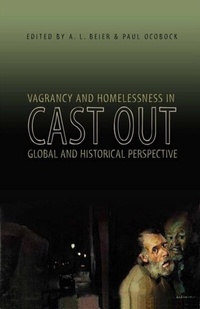
Cast Out
Vagrancy and Homelessness in Global and Historical Perspective
1st Edition
Published on 16. June 2014
409 pages
978-0-89680-460-9 (ISBN)
Description

Throughout history, those arrested for vagrancy have generally been poor men and women, often young, able-bodied, unemployed, and homeless. Most histories of vagrancy have focused on the European and American experiences. Cast Out: Vagrancy and Homelessness in Global and Historical Perspective is the first book to consider the shared global heritage of vagrancy laws, homelessness, and the historical processes they accompanied.
In this ambitious collection, vagrancy and homelessness are used to examine a vast array of phenomena, from the migration of labor to social and governmental responses to poverty through charity, welfare, and prosecution. The essays in Cast Out represent the best scholarship on these subjects and include discussions of the lives of the underclass, strategies for surviving and escaping poverty, the criminalization of poverty by the state, the rise of welfare and development programs, the relationship between imperial powers and colonized peoples, and the struggle to achieve independence after colonial rule. By juxtaposing these histories, the authors explore vagrancy as a common response to poverty, labor dislocation, and changing social norms, as well as how this strategy changed over time and adapted to regional peculiarities.
Part of a growing literature on world history, Cast Out offers fresh perspectives and new research in fields that have yet to fully investigate vagrancy and homelessness. This book by leading scholars in the field is for policy makers, as well as for courses on poverty, homelessness, and world history.
Contributors:
Richard B. Allen
David Arnold
A. L. Beier
Andrew Burton
Vincent DiGirolamo
Andrew A. Gentes
Robert Gordon
Frank Tobias Higbie
Thomas H. Holloway
Abby Margolis
Paul Ocobock
Aminda M. Smith
Linda Woodbridge
In this ambitious collection, vagrancy and homelessness are used to examine a vast array of phenomena, from the migration of labor to social and governmental responses to poverty through charity, welfare, and prosecution. The essays in Cast Out represent the best scholarship on these subjects and include discussions of the lives of the underclass, strategies for surviving and escaping poverty, the criminalization of poverty by the state, the rise of welfare and development programs, the relationship between imperial powers and colonized peoples, and the struggle to achieve independence after colonial rule. By juxtaposing these histories, the authors explore vagrancy as a common response to poverty, labor dislocation, and changing social norms, as well as how this strategy changed over time and adapted to regional peculiarities.
Part of a growing literature on world history, Cast Out offers fresh perspectives and new research in fields that have yet to fully investigate vagrancy and homelessness. This book by leading scholars in the field is for policy makers, as well as for courses on poverty, homelessness, and world history.
Contributors:
Richard B. Allen
David Arnold
A. L. Beier
Andrew Burton
Vincent DiGirolamo
Andrew A. Gentes
Robert Gordon
Frank Tobias Higbie
Thomas H. Holloway
Abby Margolis
Paul Ocobock
Aminda M. Smith
Linda Woodbridge
Reviews / Votes
"This impressive collection of essays on vagrancy, homelessness, and poverty has truly global historical dimensions. It covers seven centuries and five continents, has a superb introductory overview, and is comparative social history at its best. It deserves to have a wide readership." "This book will serve as an index of the multivalent nature of current work in social history, literature, and postcolonial studies in vagrancy and homelessness. At the very least, the book provides an indispensible classroom textbook on poverty and vagrancy from a historical perspective." * Enterprise & Society *More details
Series
Edition
1. Auflage
Language
English
Place of publication
Athens
United States
Target group
Professional and scholarly
File size
1,31 MB
ISBN-13
978-0-89680-460-9 (9780896804609)
Copyright in bibliographic data and cover images is held by Nielsen Book Services Limited or by the publishers or by their respective licensors: all rights reserved.
Schweitzer Classification
Other editions
Additional editions
Book
11/2008
Ohio University Press
€46.50
Shipment within 3-4 weeks
Persons
A. L. Beier is a professor of history at Illinois State University. He is author of Masterless Men: The Vagrancy problem in England, 1560-1640 and co-editor of London, 1500-1700: The Making of the Metropolis. Paul Ocobock is an assistant professor of history at the University of Notre Dame.
Content
- Intro
- Title
- Copyright
- Contents
- Acknowledgments
- Introduction: Vagrancy and Homelessness in Global and Historical Perspective
- Chapter One: "A New Serfdom": Labor Laws, Vagrancy Statutes, and Labor Discipline in England, 1350-1800
- Chapter Two: The Neglected Soldier as Vagrant, Revenger, Tyrant Slayer in Early Modern England
- Chapter Three: "Takin' It to the Streets": Henry Mayhew and the Language of the Underclass in Mid-Nineteenth-Century London
- Chapter Four: Vagrant India: Famine, Poverty, and Welfare under Colonial Rule
- Chapter Five: Vagrancy in Mauritius and the Nineteenth-Century Colonial Plantation World
- Chapter Six: Doing Favors for Street People: Official Responses to Beggars and Vagrants in Nineteenth-Century Rio de Janeiro
- Chapter Seven: Vagabondage and Siberia: Disciplinary Modernism in Tsarist Russia
- Chapter Eight: "Tramps in the Making": The Troubling Itinerancy of America's News Peddlers
- Chapter Nine: Between Romance and Degradation: Navigating the Meanings of Vagrancy in North America, 1870-1940
- Chapter Ten: The "Travelling Native": Vagrancy and Colonial Control in British East Africa
- Chapter Eleven: Thought Reform: The Chinese Communists and the Reeducation of Beijing's Beggars, Vagrants, and Petty Thieves
- Chapter Twelve: Imposing Vagrancy Legislation in Contemporary Papua New Guinea
- Chapter Thirteen: Subversive Accommodations: Doing Homeless in Tokyo's Ueno Park
- Select Bibliography
- Contributors
- Index
