

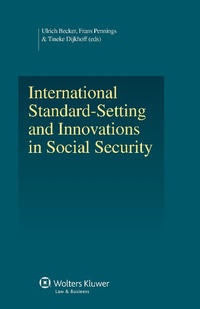
International Standard-Setting and Innovations in Social Security
Published on 26. March 2013
554 pages
978-90-411-5798-0 (ISBN)
Description

Already from the beginning of the twentieth century, international standards on social security have been developed by international organizations. A very active period of standard setting was the 1950s-1970s, although the focus was primarily on European countries. Since the 1990s, few new standards have been developed. Yet, there are still large deficiencies in social protection in many countries, and poverty keeps on being an unsolved problem. At the same time, structural changes are introduced to developed social security systems which seem to jeopardize the implementation of international social standards. On the one hand, the need to promote social protection for all on a global level is still strongly felt. On the other, innovations in social security in all part of the world seem to lead to new obstacles on the way to its realization. Therefore, a study of the most important phenomena of social security developments in the light of the functioning of international standards is very much needed. This book studies new approaches for social protection in developed as well as in developing countries, in order to analyze how existing standards can deal with them and whether new standards are desired. It covers a broad range of important issues, namely poverty, migration, natural disasters and diseases such as HIV/AIDS, informal social security, new social risks and privatization.
The innovations in social security reacting to these issues are dealt with by detailed case studies and analyzing chapters. Twenty-four renowned specialists from all relevant regions of the world have contributed to this book. They do not only give up-to-date overviews on national social security systems and a discussion of the standards, but also analyze and compare all important recent developments in social security world-wide.
The areas addressed include the following:;
global standards, and standards in Europe, Latin America and Southern Africa;
poverty reduction programmes;
social protection and HIV/AIDS;
coverage of long-term care;
social protection for persons working in informal employment;
protection of migrants;
privatization and activation;
Assuming that there is still a need to lay down standards at a supra-state level, this book critically discusses the pros and cons of standards for each of the selected contingencies and clearly shows the differences between developed and developing countries and the continents. In its description of issues affecting the lives of large parts of the world's population, and in the analyses it offers for further action on the part of international organizations, non-governmental organizations, and the various states, it contributes greatly to the design of international standards in the near future. As such, it will be welcomed by interested policymakers, agency and NGO officials, and academics worldwide.
The innovations in social security reacting to these issues are dealt with by detailed case studies and analyzing chapters. Twenty-four renowned specialists from all relevant regions of the world have contributed to this book. They do not only give up-to-date overviews on national social security systems and a discussion of the standards, but also analyze and compare all important recent developments in social security world-wide.
The areas addressed include the following:;
global standards, and standards in Europe, Latin America and Southern Africa;
poverty reduction programmes;
social protection and HIV/AIDS;
coverage of long-term care;
social protection for persons working in informal employment;
protection of migrants;
privatization and activation;
Assuming that there is still a need to lay down standards at a supra-state level, this book critically discusses the pros and cons of standards for each of the selected contingencies and clearly shows the differences between developed and developing countries and the continents. In its description of issues affecting the lives of large parts of the world's population, and in the analyses it offers for further action on the part of international organizations, non-governmental organizations, and the various states, it contributes greatly to the design of international standards in the near future. As such, it will be welcomed by interested policymakers, agency and NGO officials, and academics worldwide.
More details
Other editions
Additional editions
Book
03/2013
1st Edition
Kluwer Law International
€257.00
Shipment within 10-20 days
Content
- Cover
- Half Title Page
- Editorial Board
- Title Page
- Copyright Page
- List of Editors and Contributors
- Summary of Contents
- Table of Contents
- Preface
- List of Abbreviations
- CHAPTER 1 General Introduction
- §1.01 AIM OF THE BOOK
- [A] Starting Points
- [B] Underlying Assumptions and Concepts
- [C] Outline
- §1.02 THE ROLE OF INTERNATIONAL SOCIAL STANDARDS IN A GLOBALIZED WORLD
- [A] International Social Standards as an Element of a Global Social Order
- [B] Normative Approaches
- [1] Employment-Related and Human Rights-Related Approaches
- [2] Social Security and Social Protection
- [3] A Global Approach despite Different Starting Points
- §1.03 NATIONAL INNOVATIONS AND INTERNATIONAL STANDARDS
- [A] Methods
- [B] Innovations in Social Security
- [C] Possible Reactions at the International Level
- Part I Setting of International Social Security Standards
- A Background
- CHAPTER 2 Historical and Theoretical Background of Standard Setting in Social Security
- §2.01 INTRODUCTION
- §2.02 THE UNITED NATIONS
- [A] Article 9 of the International Covenant on Economic, Social and Cultural Rights
- §2.03 THE ILO
- [A] Main Developments
- [B] Methods of Standard Setting and Supervision
- [C] Developments in the Methods of ILO Standard Setting
- [1] Three Generations of Standards
- [2] The Situation after 1988
- [3] Convention No. 102 as an Example of ILO Standard Setting
- [4] Principles Enshrined in ILO Conventions
- [5] 2011: A New Élan for ILO Standard Setting
- [a] Analysis of Obstacles to Realize the Objective to Extend Social Security Protection
- [b] The Proposed Two Methods for Extending Social Security
- [c] Adopting of Recommendation 202: Social Protection Floors Recommendation, 2012
- §2.04 THE COUNCIL OF EUROPE
- [A] General
- [B] The European Code of Social Security
- [C] The European Social Charter
- §2.05 THE EUROPEAN UNION
- §2.06 AFRICA
- §2.07 SOUTH AND CENTRAL AMERICA
- §2.08 THEORETICAL AND STRATEGIC ASPECTS OF HAVING INTERNATIONAL STANDARDS
- [A] Why Create International Standards?
- [B] Do Standards Have Effects?
- [C] The Form of the Standards: Convention versus Human Rights Approach
- [1] The Legal Character of Standards
- [2] The Convention versus Human Rights Approach
- [3] Convergence or Complementary
- [4] Enforceability by Individuals
- §2.09 CONCLUSIONS
- B Different Levels of Standard Setting
- CHAPTER 3 Different Levels of Standard Setting: Introduction
- §3.01 INTRODUCTION
- §3.02 WHY ARE STANDARDS STILL DEVELOPED, AND WHY AT THE REGIONAL LEVEL?
- §3.03 THE STANDARDS IN PRACTICE
- CHAPTER 4 Global Standards: The Policy of the ILO
- §4.01 INTRODUCTION
- §4.02 THE NOTION OF CORE LABOUR STANDARDS
- §4.03 DEVELOPMENTS IN THE AREA OF SOCIAL SECURITY
- §4.04 UPDATING OR RENEWING STANDARDS FOR SOCIAL SECURITY?
- §4.05 STRATEGIES TO DEVELOP SOCIAL SECURITY
- §4.06 THE REPORT FOR THE 2011 ILO CONFERENCE
- §4.07 THE 2011 CONFERENCE
- §4.08 CONCLUSION
- CHAPTER 5 The Guiding Role of ILO Convention No. 102
- §5.01 INTRODUCTION
- §5.02 BACKGROUND AND OBJECTIVES OF CONVENTION NO. 102
- §5.03 SPECIFIC NORMS REGARDING NINE SOCIAL RISKS
- [A] Material Scope
- [B] Personal Coverage
- [C] Level and Duration of the Benefit
- [D] Qualifying Periods
- §5.04 FLEXIBILITY CLAUSES
- [A] Flexibility in the Number of Parts to Be Accepted
- [B] Temporary Exceptions for Developing Countries
- [C] Flexibility Regarding the Design of a Scheme
- [D] Flexibility through Undefined Terms and Concepts
- [E] Lack of Flexibility Regarding the Risks Covered
- [F] Flexibility Combined with Specificity: A Compromise
- §5.05 GENERAL PRINCIPLES FOR SOCIAL SECURITY
- [A] The Principles that Can Be Derived from Convention No. 102
- [B] The Durable Validity of the General Principles
- §5.06 THE (LEGAL) EFFECT OF ILO SOCIAL SECURITY STANDARDS
- [A] The Soft Character of Hard Legal Instruments
- [B] The Different Ways of Impacting on National Social Security
- §5.07 THE FUTURE OF ILO SOCIAL SECURITY STANDARD SETTING
- §5.08 CONCLUSIONS
- CHAPTER 6 Social Security Standards in Latin America
- §6.01 INTRODUCTION
- §6.02 GUARANTEES ON THE RIGHT TO SOCIAL SECURITY
- §6.03 COMPLIANCE INDICATORS IN SOCIAL SECURITY
- §6.04 CONCLUSION
- CHAPTER 7 Social Security Standards in Southern Africa
- §7.01 STANDARD SETTING IN THE SADC
- [A] State of Social Security in SADC: Overview
- [B] Reform Initiatives and Direction7
- §7.02 SADC SOCIAL SECURITY STANDARDS
- [A] Standard Setting in SADC: Instruments, Implementation and Enforcement
- [B] Social Security Standards
- [C] Evaluation
- [D] Constitutional Framework
- [E] Constitutional Case Law
- §7.03 APPLICATION OF INTERNATIONAL SOCIAL SECURITY STANDARDS
- [A] The Framework for the Application of International Standards in SADC
- [B] The SADC Ratification Record
- [C] Relevance of International Social Security Standards in SADC
- [1] The ILO Conventions
- [2] Coverage of Informal Workers and Convention 102
- [3] The Risk-Based Approach
- [4] Other Considerations
- §7.04 THE NEED FOR A HUMAN RIGHTS-BASED APPROACH
- §7.05 MIGRANT WORKERS IN SADC
- §7.06 CONCLUSION: THE NEED FOR AN ALTERNATIVE PARADIGM
- CHAPTER 8 Social Security Standards in Europe
- §8.01 A SHORT HISTORY OF THE DEVELOPMENT OF EUROPEAN STANDARDS
- [A] The Council of Europe
- [B] The Fight against New Poverty
- §8.02 RULES OF THE ESC
- [A] Adequate Social Security System
- [B] Contingencies
- [C] Two Types of Threshold
- [D] Relationship with the Social Code
- [E] Progressive Development
- [F] Savings
- [G] Social Assistance as Last Resort
- §8.03 RULES OF THE EUROPEAN COURT OF HUMAN RIGHTS
- [A] Existence Minimum
- [B] Protection of Family Life
- [C] Protection of Social Savings
- §8.04 RELATIONSHIP WITH EU LAW
- [A] Provisions
- [B] Competence
- §8.05 SITUATION IN THE COUNTRIES
- [A] Method of Supervision
- [B] Results of Supervision
- [C] National Follow-Up
- [D] Flexicurity and Future Challenges
- CHAPTER 9 Different Levels of Standard-Setting: Analysis
- §9.01 THE ROLE OF REGIONAL STANDARDS
- §9.02 THE RELATION BETWEEN INTERNATIONAL AND REGIONAL STANDARDS
- §9.03 THE MAIN DIFFERENCES BETWEEN REGIONAL AND GLOBAL STANDARDS
- §9.04 SUPERVISION TECHNIQUES AND ENFORCEMENT
- §9.05 CONCLUSIONS
- Part II Material Scope: Uncovered and New Risks
- A Poverty
- CHAPTER 10 Poverty: Introduction
- §10.01 INTRODUCTION
- §10.02 THE CONCEPT OF POVERTY
- §10.03 STRATEGIES TO COMBAT POVERTY
- §10.04 THE FOLLOWING CHAPTERS
- CHAPTER 11 Poverty Policy, Development and the State: Toward a Typology of Strategic Approaches
- §11.01 INTRODUCTION
- §11.02 NATIONAL LEVEL STRATEGIES
- [A] The Stalinist-Soviet Variant
- [B] The State Directed, Mixed Economy Variant
- [C] The Developmentalist Variant
- [D] The Market Liberal Variant
- §11.03 COMMUNITY LEVEL STRATEGIES
- [A] The Rural Community Development Variant
- [B] The Critical Community Action Variant
- [C] The Non-governmental Social Capital Variant
- [D] The Urban Community Development Variant
- §11.04 HOUSEHOLD LEVEL STRATEGIES
- §11.05 DEVELOPMENT, SOCIAL SECURITY AND POVERTY ERADICATION
- CHAPTER 12 Poverty Reduction in South Africa: The Old-Age Pension
- §12.01 INTRODUCTION
- §12.02 THE BASIC PENSION IN SOUTH AFRICA
- [A] Historical Background
- [B] The Basic Pension as Part of the Social Assistance System
- [C] The Basic Pension and the Human Right to Social Security
- [D] The Various Effects of the Basic Pension
- [E] Remaining Challenges
- §12.03 RELATION TO INTERNATIONAL STANDARDS
- §12.04 CONCLUSION
- CHAPTER 13 Poverty Reduction in Bolivia: The Universal Pension
- §13.01 INTRODUCTION
- §13.02 HISTORICAL DIMENSION AND NORMATIVE BACKGROUND
- [A] Early History
- [B] The Social Security Code (1956)
- [C] A Step Back in Social Legislation
- [D] Privatization of Social Insurance
- [E] Privatization and the Relationship with Cash Transfer Benefit
- [F] Back to State: Social Policy and the Unconditional Cash Transfers
- §13.03 UNIVERSAL PENSION SYSTEM AS A MEASURE TO FIGHT POVERTY?
- [A] Extreme Poverty in Bolivia
- [B] Costs and Benefits of the Universal Pension System
- [C] The Universal Old-Age Pension
- §13.04 INTERNATIONAL STANDARDS
- §13.05 CONCLUSIONS
- CHAPTER 14 Poverty in the United Kingdom
- §14.01 INTRODUCTION
- §14.02 WHAT IS POVERTY?
- §14.03 FROM CHARITY TO THE STATE: THE HISTORY OF POLICIES TO PREVENT POVERTY
- §14.04 IMPORT OF THE CONTRIBUTORY PRINCIPLE
- [A] Introduction
- [B] Old-Age Pensions
- [C] Unemployment Benefits
- [D] Health Care
- §14.05 THE BEVERIDGE REPORT
- [A] Introduction
- [B] The Impact of the Policies on Poverty
- §14.06 THE ELIMINATION OF POVERTY UNDER THE THATCHER GOVERNMENT
- §14.07 THE ABOLITION OF CHILD POVERTY UNDER THE BLAIR GOVERNMENT
- [A] Introduction
- [B] Child Poverty
- [C] The Impact of the Policies on Poverty
- §14.08 THE RETURN OF THE DARK SHADOW OF MALTHUSIAN PHILOSOPHY
- §14.09 CONCLUSION
- CHAPTER 15 Poverty: Analysis
- §15.01 INTRODUCTION
- §15.02 SOCIAL PROTECTION FLOOR
- §15.03 ANALYSIS OF THE CASE STUDIES
- §15.04 A NEW CONVENTION?
- §15.05 FINAL REMARKS
- B New Social Risks
- CHAPTER 16 New Social Risks: Introduction
- §16.01 THE CHALLENGE OF RISKS
- §16.02 GLOBALIZATION AND INTERNATIONALIZATION
- §16.03 NEW SOCIAL RISKS: NEED FOR HEALTH CARE AND LONG-TERM CARE
- [A] Health Care as a Social Security Benefit: HIV/AIDS and Influenza Pandemics as New Challenges
- [B] Need for Long-Term Care
- §16.04 THE TOPICS TO BE ADDRESSED IN THE COUNTRY STUDIES
- CHAPTER 17 HIV and AIDS in Southern Africa
- §17.01 INTRODUCTION
- §17.02 SOCIO-ECONOMIC CONTEXT
- §17.03 SOCIAL PROTECTION RESPONSE(S) TO HIV/AIDS IN THE REGION
- [A] Social Assistance
- [B] Social Insurance
- [C] Health Care
- [D] Social Protection Intervention(s) in the Region: Some Observations
- §17.04 EXISTING (SOCIAL PROTECTION) STANDARDS
- [A] ILO Social Security and Related Instruments
- [B] SADC Regional Instruments
- [C] Domestic Laws
- [D] Some Preliminary Observations and Proposals
- §17.05 CONCLUDING SUMMARY
- CHAPTER 18 HIV and AIDS in Tanzania
- §18.01 COVERAGE OF HIV/AIDS BY EXISTING SOCIAL SECURITY SCHEMES
- [A] The Government Employees' Provident Fund
- [B] The Local Authorities' Pensions Fund
- [C] Public Service Pensions Fund
- [D] The National Social Security Fund
- [E] The National Health Insurance Fund
- [F] Other Private Schemes
- §18.02 INFORMAL COVERAGE/PROVISION FOR THE INFECTED INDIVIDUALS
- §18.03 CHALLENGES AND PROSPECTS
- §18.04 CONCLUSION
- CHAPTER 19 HIV and AIDS in Russia
- §19.01 INTRODUCTION
- [A] Spread of HIV and AIDS in Russia
- [B] Social and Economic Consequences
- §19.02 THE SITUATION IN RUSSIA
- [A] Legal Basis
- [B] HIV Prevention in Russia
- [1] HIV Prevention through Active Protective Measures
- [a] Criminal Responsibility for Exposing Others to the Risk of Infection with HIV
- [b] Expulsion of HIV-Positive Persons and AIDS Patients with Foreign Citizenship
- [2] HIV Prevention through Public Health Programmes
- [3] Coping with the Consequences of HIV and AIDS through the Social Security System
- [4] Prevention and Fight against HIV through Civil Society Organizations
- [C] Health Care for HIV-Infected Persons and AIDS Patients
- [1] Fundamental Configuration Principles for the Russian Health System
- [2] Mandatory Statutory Health Insurance System
- [3] Equal Rights for HIV-Infected Persons in the Provision of Medical Services
- [4] HIV/AIDS As a 'Socially Significant Infectious Disease' and 'Infectious Disease that Is Hazardous to Public Health'
- [D] Other Types of Social Protection for HIV-Infected Persons and AIDS Patients through the Compulsory Social Insurance System
- §19.03 RELATIONSHIP WITH INTERNATIONAL STANDARDS
- [A] ILO Convention No. 102
- [B] ILO Recommendation No. 200
- §19.04 CONCLUSION
- CHAPTER 20 Long-Term Care Insurance in Japan
- §20.01 INTRODUCTION
- §20.02 ORIGINS OF JAPANESE LONG-TERM CARE INSURANCE
- §20.03 THE LONG-TERM CARE INSURANCE SYSTEM
- [A] Risk Coverage
- [B] Persons Covered
- [C] Benefits
- [1] Benefits in Kind
- [2] Other Benefits
- [3] Eligibility for Benefits
- [4] Combination of Benefits and Exemptions
- [5] Granting of Benefits
- [6] Financing Principle
- §20.04 PROSPECTS
- §20.05 COMPARATIVE ISSUES
- [A] International Influence
- [B] Characteristics of Long-Term Care Services
- [C] Different Standards for Long-Term Care Services and Medical Services
- [1] Type and Scope of Services
- [2] Age of Protected Persons
- CHAPTER 21 Long-Term Care in Austria
- §21.01 INTRODUCTION
- §21.02 CARE ALLOWANCE
- [A] Principles
- [B] Assessment
- [C] Some Figures
- §21.03 BENEFITS IN KIND
- [A] Principles
- [B] Support Services
- §21.04 RECENT DEVELOPMENTS
- §21.05 CONCLUSIONS AND PROSPECTS
- §21.06 NEW INTERNATIONAL STANDARDS?
- CHAPTER 22 New Social Risks: Analysis
- §22.01 LONG-TERM CARE
- §22.02 HIV AND AIDS
- Part III Personal Scope: Informal Sector and Migrants
- A Informal Sector
- CHAPTER 23 Informal Sector: Introduction
- §23.01 INTRODUCTION
- §23.02 A GENERAL OUTLOOK
- [A] Size of the Informal Sector
- [B] Concept of Informal Sector
- [C] Groups and Categories of Informal Sector Workers
- [D] Integrating the Informal Sector within the Formal Sector
- §23.03 SOCIAL PROTECTION ISSUES AND CHALLENGES
- §23.04 INTERNATIONAL STANDARDS
- [A] Do Informal Sector Workers Fall outside the Scope of International Labour Standards?
- [B] ILO Standards and Informal Sector Workers
- [C] Interesting Recent ILO's Initiatives
- §23.05 CONCLUSION
- CHAPTER 24 The Informal Sector in Mexico
- §24.01 INTRODUCTION
- §24.02 LABOUR LAW AND SOCIAL SECURITY IN MEXICO
- [A] Historical Context
- [B] Coverage through Two Public Institutions for Social Insurance
- [C] Legal Remedies for Social Security Issues
- §24.03 THE INFORMAL SECTOR IN MEXICO
- [A] The Informal Sector: Facts and Features
- [B] Informal Sector Workers and Social Security
- [1] Family Health Insurance
- [2] Mexican Workers Employed Abroad
- [3] Life Insurance for the Less Privileged and Those with the Lowest Income
- [4] Popular Health Insurance
- §24.04 EXPLORING WAYS TO EXTEND SOCIAL SECURITY TO THE INFORMAL SECTOR
- [A] The Role of International Standards
- [B] The Social Protection Floor
- [C] Possible Solutions at the National Level
- §24.05 CONCLUSION
- CHAPTER 25 Social Protection for Informal and Low-Paid Work in Germany
- §25.01 INTRODUCTION
- [A] Three Dimensions of Formal Work
- [B] Formal and Informal Work: Legal and Economic Aspects
- §25.02 WHAT IS THE RELEVANCE OF ILO CONVENTIONS FOR GERMANY?
- [A] What Is the Relationship between ILO Conventions and Constitutional Rights?
- §25.03 SOCIAL PROTECTION FOR INFORMAL WORKERS IN GERMANY
- [A] The Social Security Concept of Work
- [B] Social Protection for Low-Paid Employees (Mini-Jobs)
- [C] Social Protection for the Self-Employed
- [D] Social Protection for Unpaid Family Work
- §25.04 CONCLUSION
- [A] Insufficient Social Protection for Informal Workers
- [B] International Standards Give Momentum to Internal Reforms
- CHAPTER 26 Informal Sector: Analysis
- §26.01 INTRODUCTION
- §26.02 COMPARATIVE OVERVIEW
- [A] The Comparative Context of the Country Studies
- [B] Informal Sector Work: A Contextual Synopsis
- [C] Informal Sector and Access to Social Protections: Problems and (Possible) Solutions
- §26.03 RELEVANCE OF EXISTING INTERNATIONAL STANDARDS
- §26.04 CONCLUDING OBSERVATIONS
- B Migrants
- CHAPTER 27 Migrants: Introduction
- §27.01 INTRODUCTION
- §27.02 RELEVANCE OF THE TOPIC
- §27.03 INTERACTIONS AND RELATIONSHIPS BETWEEN MIGRATION AND STANDARD SETTING
- §27.04 THE FOLLOWING CHAPTERS
- CHAPTER 28 Migrants in South Africa
- §28.01 INTRODUCTION
- §28.02 MIGRATION IN SOUTHERN AFRICA
- §28.03 ACCESS TO FORMAL SOCIAL PROTECTION FOR MIGRANTS IN SOUTH AFRICA
- [A] Introduction
- [B] Access by Different Categories of Non-citizens to Social Security in South Africa
- [1] Permanent Residents
- [2] Temporary Residents
- [3] Refugees and Asylum Seekers
- [a] Developments in Case Law
- [4] Irregular Migrants
- [a] Scope of Coverage: Social Insurance
- [b] Scope of Coverage: Social Assistance
- [5] Children in an Irregular Situation
- §28.04 PORTABILITY
- [A] Introduction
- [B] Portability of South African Social Security Benefits
- [C] The Way Forward?
- §28.05 CONCLUDING REMARKS
- CHAPTER 29 Social Protection of Migrants in China
- §29.01 INTRODUCTION
- §29.02 CONCEPTUAL FRAMEWORK OF NATIONAL MIGRATION POLICY
- [A] Reform of the Hukou System
- [B] Standardization of Labour Market Regulations
- §29.03 SOCIAL RIGHTS FOR MIGRANTS
- §29.04 GENERAL CHARACTERISTICS OF SOCIAL SECURITY
- [A] Cooperative Rural Health Care
- [B] Urban Health Care
- [C] Access for Migrant Workers to the Various Systems
- [D] Rural Pension Insurance
- [E] Urban Pension Insurance
- [F] Access for Migrant Workers to the Various Pension Systems
- [G] Social Assistance in Rural and Urban Areas
- §29.05 RELATIONSHIP WITH INTERNATIONAL STANDARDS
- [A] Migration as a New Risk
- [B] Influence of International Standards in China
- [C] New Measures or Conventions for Migrants
- §29.06 CONCLUSION
- CHAPTER 30 Social Protection of Migrants in Spain
- §30.01 INTRODUCTION
- [A] Who Is an Alien in Spain?
- [B] EU Nationals' Legal Status
- [C] Third-Country Nationals' Constitutional Rights
- [D] Third-Country Nationals' Rights According to EU Legislation
- §30.02 MIGRANTS' LABOUR AND SOCIAL SECURITY RIGHTS IN SPAIN
- [A] Equal Treatment in the Field of Employment and Social Security
- [B] Irregular Migrants' According to Organic Law 4/2000
- [C] Irregular Migrants' Labour Rights
- [D] Irregular Migrants' Rights to Social Protection
- [E] Irregular Migrants' Right to Health Care
- [F] Unemployment Benefits
- [G] Basic Social Services and Benefits
- §30.03 RELATIONSHIP TO INTERNATIONAL STANDARDS
- [A] Accidents at Work and Occupational Diseases
- §30.04 SHOULD IRREGULAR MIGRANTS' BASIC RIGHTS BE PROTECTED THROUGH AN INTERNATIONAL INSTRUMENT?
- §30.05 CONCLUSIONS
- CHAPTER 31 Migrants: Analysis
- §31.01 INTRODUCTION
- §31.02 CONCEPTUAL FRAMEWORK
- §31.03 CLASSIFICATION OF CATEGORIES OF MIGRANTS AND CONDITIONS FOR ACCESS TO SOCIAL BENEFITS
- [A] Criteria for Categories
- [B] Permanent Residents, Temporary Residents and Irregular Migrants
- [C] Right to Health Care for Minors
- [D] Refugees and Asylum Seekers
- §31.04 CONTENT OF THE RIGHTS FOR MIGRANTS
- [A] Unemployment Benefits
- [B] Right to Emergency Public Healthcare
- [C] Right to Health Care during Pregnancy
- [D] Accidents at Work and Occupational Disease Benefits
- [E] Problems of Implementation
- §31.05 CONCLUSIONS: DEVELOPMENT OF STANDARD-SETTING FOR MIGRANTS
- [A] Proposed Solutions
- [B] Final Remarks
- Part IV Methods and Tools: Privatization and Activation
- CHAPTER 32 Privatization and Activation: Introduction
- §32.01 CONCEPT OF PRIVATIZATION
- §32.02 RELEVANCE OF THE TOPIC
- §32.03 METHODS OF PRIVATIZATION
- §32.04 THE RELATIONSHIP BETWEEN PRIVATIZATION AND INTERNATIONAL STANDARDS
- [A] State Responsibility
- [B] Possible Inconsistencies
- §32.05 PRIVATIZATION AS VIEWED BY THE SUPERVISORY BODIES
- §32.06 THE FOLLOWING CHAPTERS
- CHAPTER 33 Privatization of Chile's Pension and Health Care Systems
- §33.01 INTRODUCTION
- §33.02 THE STATE OF SOCIAL SECURITY PRIVATIZATION IN LATIN AMERICA
- §33.03 THE PENSION SYSTEM
- [A] Reform and Re-reform
- [B] Reform and Re-reform Effects on Social Security Principles or International Standards
- [1] Universal Coverage
- [a] Reform
- [b] Re-reform
- [2] Sufficiency of Benefits
- [a] Reform
- [b] Re-reform
- [3] Social Solidarity and Gender Equity
- [a] Reform
- [b] Re-reform
- [4] Efficiency, Moderate Administrative Costs and Social Representation
- [a] Reform
- [b] Re-reform
- [5] Financial Sustainability
- [a] Reform
- [b] Re-reform
- §33.04 CHILE'S HEALTH CARE SYSTEM
- [A] Reform and Re-reform
- [B] Reform and Re-reform Effects on Social Security Principles
- [1] Universal Coverage
- [a] Reform
- [b] Re-reform
- [2] Sufficiency in Benefits
- [a] Reform
- [b] Re-reform
- [3] Social Solidarity and Gender Equity
- [a] Reform
- [b] Re-reform
- [4] Efficiency, Moderate Administrative Costs and Social Representation
- [a] Reform
- [b] Re-reform
- [5] Financial Sustainability
- [a] Reform
- [b] Re-reform
- §33.05 RELATIONSHIP WITH INTERNATIONAL PRINCIPLES
- [A] Pensions
- [B] Health Care
- [C] Pending Challenges and Recommendations
- CHAPTER 34 Protection of Old Age in Chile
- §34.01 INTRODUCTION
- §34.02 DESCRIPTION AND ANALYSIS OF THE NATIONAL LAW
- §34.03 INTRODUCTION OF A NON-CONTRIBUTORY MECHANISM: TOWARDS A UNIVERSAL EXTENSION OF COVERAGE
- [A] The Basic Solidarity Pension
- [B] The Solidarity-Based Top-Up Benefit
- [C] Confirmation of the Pension Funds Mechanism
- §34.04 RELATIONSHIP WITH INTERNATIONAL STANDARDS
- [A] The Observations of the CEACR
- [1] Administration by Non-profit Organizations
- [2] Representatives of the Insured Should Participate in the Administration
- [3] Employers Should Contribute to the Financing of the Insurance System
- [B] Compliance with Convention No. 102: A Possible Way Out
- [C] Future Reforms of Chilean Protection against Old-Age Risk
- §34.05 FINAL REMARKS
- CHAPTER 35 Voluntary Pensions in the Czech Republic
- §35.01 INTRODUCTION
- §35.02 DESCRIPTION AND ANALYSIS OF THE NATIONAL LAW
- [A] Main Characteristics of the DC Scheme
- [B] Relationship with Other Social Security Schemes
- [C] Main Advantages and Disadvantages of the Scheme
- [D] Effects of the Scheme
- [E] Further Perspectives on the DC Scheme
- §35.03 RELATIONSHIP WITH INTERNATIONAL STANDARDS
- §35.04 CONCLUSIONS
- CHAPTER 36 Privatization and Activation in the Netherlands
- §36.01 INTRODUCTION
- §36.02 PRIVATIZATION OF INCOME IN CASE OF SICKNE
- [A] Background
- [B] The Rules Applicable to Employers and Employees
- [C] Reintegration Efforts Required of the Employer and Employee
- [D] The Nature of the Privatization of the SBA
- [E] Privatization and International Standards
- [1] The Views of the Supervisory Committees
- [2] Principles and Privatization of Social Security
- [3] Is Reconciliation between Standards and Privatization Possible?
- §36.03 THE REFORM OF THE DISABILITY BENEFITS ACT
- [A] Background
- [B] System of the Act
- [C] Relationship with the International Standards
- [D] The Report of the Committee of Experts
- [E] Is Reconciliation Possible?
- §36.04 CONCLUSIONS
- CHAPTER 37 Privatization and Activation: Analysis
- §37.01 INTRODUCTION
- §37.02 PRIVATIZATION IN SOCIAL SECURITY
- [A] Reasons for Privatization
- [B] Privatization in Different Fields of Social Security and Defined-Contribution Schemes
- [C] Privatization and Governmental Responsibility
- §37.03 PRIVATIZATION, ACTIVATION AND SELF-RESPONSIBILITY
- §37.04 POSSIBLE CONFLICTS BETWEEN PRIVATIZED SOCIAL SECURITY AND INTERNATIONAL STANDARDS
- [A] Social Security and its Arrangements
- [1] Access to Social Security
- [2] Level of Benefits
- [B] Financing and Governance of Social Security Schemes
- [1] Contributions
- [2] Administration
- §37.05 CONCLUSION AND SOLUTIONS
- Part V Conclusions
- CHAPTER 38 Final Conclusions
- §38.01 INTRODUCTION
- §38.02 POVERTY
- §38.03 HEALTH CARE
- [A] Long-Term Care
- [B] HIV and AIDS
- §38.04 MIGRANTS
- §38.05 INFORMAL SECTOR
- §38.06 METHODS AND TOOLS: PRIVATIZATION AND ACTIVATION
- §38.07 THE FUTURE ROLE OF STANDARD SETTING
- Bibliography
- Back Cover
