
Sonic Liturgy
Description
Alles über E-Books | Antworten auf Fragen rund um E-Books, Kopierschutz und Dateiformate finden Sie in unserem Info- & Hilfebereich.
A groundbreaking study into the parallel developments of worship and musical performance in Hindu culture
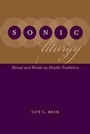
Sonic Liturgy: Ritual and Music in Hindu Tradition builds on the foundation of Guy L. Beck's earlier work, which described the theoretical role of sound in Hindu thought. Sonic Liturgy continues the discussion of sound into the realm of Hindu ritual and musical traditions of worship.
Beginning with the chanting of the Sama-Veda alongside the fire sacrifices of the ancient Indo-Aryans and with the classical Gandharva music as outlined in the musicological texts of Bharata and Dattila, Beck establishes a historical foundation for an in-depth understanding of the role of music in the early Puja rituals and Indian theater in the vernacular poetry of the Bhakti movements in medieval temple worship of Siva and Vishnu in southern India, and later in the worship of Krishna in the northern Braj region. By surveying a multitude of worship traditions, Beck reveals a continuous template of interwoven ritual and music in Hindu tradition that he terms "sonic liturgy," a structure of religious worship and experience that incorporates sound and music on many levels.
In developing the concept and methods for understanding the phenomenon of sonic liturgy, Beck draws from liturgical studies and ritual studies, broadening the dimensions of each, as well as from recent work in the fields of Indian religion and music. As he maps the evolution of sonic liturgy in Hindu culture, Beck shows how, parallel to the development of religious ritual from ancient times to the present, there is a less understood progression of musical form, beginning with Vedic chants of two to three notes to complicated genres of devotional temple music employing ragas with up to a dozen notes. Sonic liturgy in its maturity is manifest as a complex interactive worship experience of the Vaishnava sects, presented here in Beck's final chapters.
All prices
More details
Other editions
Additional editions
Person
Guy L. Beck is the author of Sonic Theology: Hinduism and Sacred Sound and editor of Sacred Sound: Experiencing Music in World Religions. A U.S. Fulbright-Nehru Senior Research Fellow, Beck has spent more than six years in India studying Hinduism and music, and he has written extensively on the role of sound and music in Indian traditions. He has also learned the art of classical Hindustani vocal music from distinguished exponents in India and has recorded two audio CDs, as well as given numerous lectures and concerts in both India and the West. Beck teaches religion and music at Tulane University and the University of New Orleans.
Content
- Cover
- Title Page
- Copyright Page
- Table of Contents
- Series Editor's Preface
- Preface
- Note on Transliteration
- Introduction
- 1: Ancient India
- 2: Classical India
- 3: Medieval India
- 4: Seva and Haveli Sangit
- 5: Seva and Samaj Gayan
- Conclusion
- Notes
- Glossary
- Bibliography
- Index

System requirements
File format: ePUB
Copy protection: Adobe-DRM (Digital Rights Management)
System requirements:
- Computer (Windows; MacOS X; Linux): Install the free reader Adobe Digital Editions prior to download (see eBook Help).
- Tablet/smartphone (Android; iOS): Install the free app Adobe Digital Editions or the app PocketBook before downloading (see eBook Help).
- E-reader: Bookeen, Kobo, Pocketbook, Sony, Tolino and many more (not Kindle).
The file format ePub works well for novels and non-fiction books – i.e., „flowing” text without complex layout. On an e-reader or smartphone, line and page breaks automatically adjust to fit the small displays.
This eBook uses Adobe-DRM, a „hard” copy protection. If the necessary requirements are not met, unfortunately you will not be able to open the eBook. You will therefore need to prepare your reading hardware before downloading.
Please note: We strongly recommend that you authorise using your personal Adobe ID after installation of any reading software.
For more information, see our ebook Help page.
File format: PDF
Copy-Protection: Adobe-DRM (Digital Rights Management)
System requirements:
- Computer (Windows; MacOS X; Linux): Install the free reader Adobe Digital Editions prior to download (see eBook Help).
- Tablet/smartphone (Android; iOS): Install the free app Adobe Digital Editions or the app PocketBook before downloading (see eBook Help).
- E-reader: Bookeen, Kobo, Pocketbook, Sony, Tolino and many more (only limited: Kindle).
The file format PDF always displays a book page identically on any hardware. This makes PDF suitable for complex layouts such as those used in textbooks and reference books (images, tables, columns, footnotes). Unfortunately, on the small screens of e-readers or smartphones, PDFs are rather annoying, requiring too much scrolling.
This eBook uses Adobe-DRM, a „hard” copy protection. If the necessary requirements are not met, unfortunately you will not be able to open the eBook. You will therefore need to prepare your reading hardware before downloading.
Please note: We strongly recommend that you authorise using your personal Adobe ID after installation of any reading software.
For more information, see our eBook Help page.
File format: ePUB
Copy protection: Watermark-DRM (Digital Rights Management)
System requirements:
- Computer (Windows; MacOS X; Linux): Use a reading software that can process the file format ePUB: e.g., Adobe Digital Editions or FBReader – both free (see eBook Help).
- Tablet/Smartphone (Android; iOS): Before downloading, install the free app Adobe Digital Editions (see eBook Help).
- E-reader: Bookeen, Kobo, Pocketbook, Sony, Tolino and many more (not Kindle).
The file format ePUB works well for novels and non-fiction books – i.e., „flowing” text without complex layout. On an e-reader or smartphone, line and page breaks automatically adjust to fit the small displays.
This eBook uses Watermark-DRM, a „soft” copy protection. This means that there are no technical restrictions to prevent illegal distribution. However, there is a personalised watermark embedded in the eBook that can be used to identify the purchaser of the eBook in the event of misuse and to provide evidence for legal purposes.
For more information, see our eBook Help page.
