

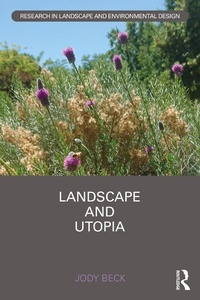
Landscape and Utopia
1st Edition
Published on 22. December 2022
188 pages
978-1-351-05372-3 (ISBN)
Description

This book examines three landmark utopian visions central to 20th century landscape architectural, planning, and architectural theory.
The period between the 1890s and the 1940s was a fertile time for utopian thinking. Significant geographic shifts of large populations; radically altered relations between capital and labor; rapid technological developments; large investments in transportation and energy infrastructure; and repetitive economic disruptions motivated many individuals to wholly reimagine society - including the connections between social relations and the built environment. Landscape and Utopia examines the role of landscapes in the political imaginations of the Garden City, the Radiant City, and Broadacre City. Each project uses landscapes to propose a reconstruction of the relationships between land, labor, and capital but - while the projects are well-known - the role played by landscapes has been largely left unexamined. Similarly, the radical anti-capitalism that underpinned each project has similarly been, for the most part, left out of contemporary discussions. This book sets these projects within a historical and philosophical context and opens a discussion on the role of landscapes in society today.
This book will be a must-read for instructors, students, and researchers of the history and theory of landscape architecture, planning, and architecture as well as utopian studies, cultural and social history, and environmental theory.
The period between the 1890s and the 1940s was a fertile time for utopian thinking. Significant geographic shifts of large populations; radically altered relations between capital and labor; rapid technological developments; large investments in transportation and energy infrastructure; and repetitive economic disruptions motivated many individuals to wholly reimagine society - including the connections between social relations and the built environment. Landscape and Utopia examines the role of landscapes in the political imaginations of the Garden City, the Radiant City, and Broadacre City. Each project uses landscapes to propose a reconstruction of the relationships between land, labor, and capital but - while the projects are well-known - the role played by landscapes has been largely left unexamined. Similarly, the radical anti-capitalism that underpinned each project has similarly been, for the most part, left out of contemporary discussions. This book sets these projects within a historical and philosophical context and opens a discussion on the role of landscapes in society today.
This book will be a must-read for instructors, students, and researchers of the history and theory of landscape architecture, planning, and architecture as well as utopian studies, cultural and social history, and environmental theory.
More details
Series
Edition
1. Auflage
Language
English
Place of publication
London
United Kingdom
Publishing group
Taylor & Francis Ltd
Target group
College/higher education
Professional and scholarly
ISBN-13
978-1-351-05372-3 (9781351053723)
Copyright in bibliographic data and cover images is held by Nielsen Book Services Limited or by the publishers or by their respective licensors: all rights reserved.
Schweitzer Classification
Other editions
Additional editions
Person
Jody Beck is an associate professor in the Department of Landscape Architecture at the University of Colorado Denver, USA. His research interests center around the political content of landscape. His first book, John Nolen and the Metropolitan Landscape, covers the political underpinnings of a figure significant to the development of the modern professions of both landscape architecture and city planning. He has also published several works on the importance of food and agricultural production to the politics of landscape.
Content
1. Why Utopia? Why Landscape? 2. Landscapes as Political Media 3. When the Social Order was a Public Question 4. Land, Capital, and Labor 5. Technology 6. Food and Agriculture 7. Leisure 8. Freedom, Cooperation, and Authority 9. History, Nature, Agency and So What Next? Afterword
