


Cognitive Behavior Therapy
Basics and Beyond
3rd Edition
Published on 1. October 2020
414 pages
978-1-4625-4423-3 (ISBN)
Description

Graduate students and clinicians in psychology, social work, counseling, psychiatry, and psychiatric nursing. Serves as a text in graduate-level CBT and psychotherapy courses.
More details
Other editions
Additional editions
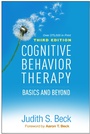
Book
11/2020
3rd Edition
Guilford Press
€74.50
Shipment within 15-20 days
Person
Judith S. Beck, PhD, is President of the Beck Institute for Cognitive Behavior Therapy (www.beckinstitute.org), a nonprofit organization that provides state-of-the-art training and certification in CBT to individuals and organizations, offers online courses on a variety of CBT topics, conducts research, and serves as a leading global resource in CBT. She is also Clinical Professor of Psychology in Psychiatry at the University of Pennsylvania Perelman School of Medicine. Dr. Beck has written over 100 articles and chapters as well as books, workbooks, and pamphlets for professionals and nonprofessionals, including Cognitive Behavior Therapy, Third Edition: Basics and Beyond and Cognitive Therapy for Challenging Problems: What to Do When the Basics Don't Work. She has made hundreds of presentations nationally and internationally on various applications of CBT and is the primary developer of the Beck Institute's online CBT training courses, which have been taken by health and mental health professionals in over 130 countries. Dr. Beck maintains a clinical caseload at the Beck Institute's in-house clinic in suburban Philadelphia, helping clients who are experiencing a range of challenges.
Content
Foreword, Aaron T. Beck
1. Introduction to Cognitive Behavior Therapy
2. Overview of Treatment
3. Cognitive Conceptualization
4. The Therapeutic Relationship
5. The Evaluation Session
6. The First Therapy Session
7. Activity Scheduling
8. Action Plans
9. Treatment Planning
10. Structuring Sessions
11. Problems in Structuring Sessions
12. Identifying Automatic Thoughts
13. Emotions
14. Evaluating Automatic Thoughts
15. Responding to Automatic Thoughts
16. Integrating Mindfulness into CBT
17. Introduction to Beliefs
18. Modifying Beliefs
19. Additional Techniques
20. Imagery
21. Termination and Relapse Prevention
22. Problems in Therapy
Appendix A. CBT Resources
Appendix B. Beck Institute Case Write-Up: Summary and Conceptualization
Appendix C. Steps in the AWARE Technique
Appendix D. Restructuring the Meaning of Early Memories through Experiential Techniques
1. Introduction to Cognitive Behavior Therapy
2. Overview of Treatment
3. Cognitive Conceptualization
4. The Therapeutic Relationship
5. The Evaluation Session
6. The First Therapy Session
7. Activity Scheduling
8. Action Plans
9. Treatment Planning
10. Structuring Sessions
11. Problems in Structuring Sessions
12. Identifying Automatic Thoughts
13. Emotions
14. Evaluating Automatic Thoughts
15. Responding to Automatic Thoughts
16. Integrating Mindfulness into CBT
17. Introduction to Beliefs
18. Modifying Beliefs
19. Additional Techniques
20. Imagery
21. Termination and Relapse Prevention
22. Problems in Therapy
Appendix A. CBT Resources
Appendix B. Beck Institute Case Write-Up: Summary and Conceptualization
Appendix C. Steps in the AWARE Technique
Appendix D. Restructuring the Meaning of Early Memories through Experiential Techniques
