

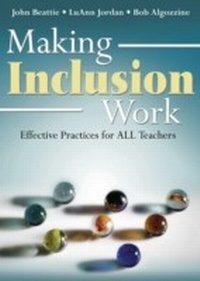
Making Inclusion Work
Effective Practices for All Teachers
1st Edition
Published on 9. September 2014
288 pages
978-1-63220-036-5 (ISBN)
Description

Learn the best methods for teaching students with disabilities in an inclusive classroom!
In today's classrooms, teachers must meet the educational needs of students of all ability levels, including students with disabilities. This invaluable resource offers elementary and secondary teachers a deeper awareness of "what works" when teaching students with disabilities in general education classrooms. Grounded in extensive special education research, this book will enlighten teachers with a greater understanding of special education students and how to teach them successfully.
For teaching students with the most common disabilities in classes with their nondisabled peers, general and special education teachers alike will get the most current information on issues such as:
. Developing Individualized Education Programs
. Teaching reading successfully
. Managing behavior and motivating students
. Organizing classrooms and lessons effectively
. Using cognitive strategies successfully
. Making appropriate accommodations and modifications
. Assessing students, grading, and collecting data
. Working with parents and families
. Collaborating with other teachers and parents
One of the greatest challenges teachers face today is how to ensure that all students succeed, regardless of their ability. Rooted in the best research and practice, this essential resource provides the tools needed to create an inclusive classroom and demonstrates how to teach classes successfully.
In today's classrooms, teachers must meet the educational needs of students of all ability levels, including students with disabilities. This invaluable resource offers elementary and secondary teachers a deeper awareness of "what works" when teaching students with disabilities in general education classrooms. Grounded in extensive special education research, this book will enlighten teachers with a greater understanding of special education students and how to teach them successfully.
For teaching students with the most common disabilities in classes with their nondisabled peers, general and special education teachers alike will get the most current information on issues such as:
. Developing Individualized Education Programs
. Teaching reading successfully
. Managing behavior and motivating students
. Organizing classrooms and lessons effectively
. Using cognitive strategies successfully
. Making appropriate accommodations and modifications
. Assessing students, grading, and collecting data
. Working with parents and families
. Collaborating with other teachers and parents
One of the greatest challenges teachers face today is how to ensure that all students succeed, regardless of their ability. Rooted in the best research and practice, this essential resource provides the tools needed to create an inclusive classroom and demonstrates how to teach classes successfully.
More details
Other editions
Additional editions
John Beattie | LuAnn Jordan | Bob Algozzine
Making Inclusion Work
Effective Practices for All Teachers
Book
09/2014
Skyhorse Publishing
€14.50
Shipment within 3-4 weeks
Persons
John Beattie earned his doctorate from the University of Florida in 1981. He teaches at the University of North Carolina at Charlotte. He currently resides in Charlotte, North Carolina.
LuAnn Jordan earned her doctorate from the University of Florida in 1995. She is Associate Professor and Graduate Certificate in Special Education Program Advisor at the University of North Carolina at Charlotte. She currently resides in Charlotte, North Carolina.
Bob Algozzine earned his doctorate from Pennsylvania State University in 1975, joining the faculty there that same year and moving to the University of Florida in 1977. Since 1987, he has been a faculty member at the University of North Carolina at Charlotte. He currently resides in Charlotte, North Carolina.
LuAnn Jordan earned her doctorate from the University of Florida in 1995. She is Associate Professor and Graduate Certificate in Special Education Program Advisor at the University of North Carolina at Charlotte. She currently resides in Charlotte, North Carolina.
Bob Algozzine earned his doctorate from Pennsylvania State University in 1975, joining the faculty there that same year and moving to the University of Florida in 1977. Since 1987, he has been a faculty member at the University of North Carolina at Charlotte. He currently resides in Charlotte, North Carolina.
Content
- Intro
- Title Page
- Copyright
- Contents
- Preface
- Making Inclusion Work
- Knowledge Base
- Content of This Book
- Acknowledgments
- About the Authors
- 1. What Is Special Education?
- What Do I Need to Know About Special Education?
- Where Can I Find Resources or More Information on Special Education?
- Chapter References
- 2. Why Do We Have Inclusion?
- What Do I Need to Know About Inclusion?
- What Factors Are Necessary for Inclusion to Succeed?
- How Does No Child Left Behind Support Access to the General Education Curriculum?
- Where Can I Find Resources or More Information on Inclusion?
- Chapter References
- 3. What Is an Individualized Education Program?
- How Does a Student Get an IEP?
- What Do I Need to Know About Individualized Education Programs?
- Where Can I Find Resources or More Information on IEPs?
- Chapter References
- 4. What Is Classroom Organization?
- Why Should My Classroom Be Organized?
- What Do I Need to Know About Classroom Organization?
- Who Needs Classroom Organization?
- How Do I Know How Well My Classroom Organization Works?
- Where Can I Find More Information on Classroom Organization?
- Chapter References
- 5. What Works for Lesson Organization?
- What Do I Need to Know About Lesson Organization?
- How Do I Organize Lessons in the Inclusive Classroom?
- What Are Some Ways to Facilitate Lesson Organization?
- Where Can I Find Resources or More Information on Lesson Organization?
- Chapter References
- 6. What Is Behavior Management and Motivation?
- Why Should I Use Behavior Management and Motivation in My Classroom?
- How Do I Use Behavior Management and Motivation in My Classroom?
- How Do I Evaluate How Well Behavior Management and Motivation Activities Work in My Classroom?
- What Are Some Commonly Used Behavior Management and Motivation Activities?
- Where Can I Find Resources or More Information on Behavior Management and Motivation?
- Chapter References
- 7. What Works in Teaching Reading?
- LuAnn Jordan and Jennifer A. Diliberto
- What Are the Basic Components of Reading?
- How Can I Be Sensitive to My Students' Reading Difficulties?
- What Are Reading Strategies, and How Can I Use Them in My Classroom?
- How Do I Use Content Enhancement in My Inclusive Classroom?
- How Do I Know if Reading Strategies Work in My Classroom?
- Where Can I Find Resources or More Information on Reading Strategies?
- Chapter References
- 8. What Are Cognitive Strategies?
- What Do I Need to Know About Cognitive Strategies?
- Why Should I Use Cognitive Strategies in My Classroom?
- What Is Content Enhancement, and What Does It Have to Do With Cognitive Strategies?
- How Do I Know if Cognitive Strategies Work in My Classroom?
- What Are Some Commonly Used Cognitive Strategies?
- Where Can I Find Resources or More Information on Cognitive Strategies?
- Chapter References
- 9. What Are Effective Accommodations and Modifications?
- What Do I Need to Know About Accommodations and Modifications?
- Why Should I Use Accommodations and Modifications in My Classroom?
- What Are Some Commonly Used Accommodations, and How Do I Use Them in My Classroom?
- What Are Some Commonly Used Modifications, and How Do I Use Them in My Classroom?
- Where Can I Find Resources or More Information on Accommodations and Modification?
- Chapter References
- 10. What Works for Ongoing Assessment, Data Collection, and Grading?
- What Do I Need to Know About Assessment, Data Collection, and Grading?
- Purposes of Assessment
- Legal Considerations and Assessment
- Collecting Assessment Data
- Grading in the Inclusive Setting
- Where Can I Find Resources or More Information on Assessment, Data Collection, and Grading?
- Chapter References
- 11. What Assistance Do Parents and Families Need?
- What Do I Need to Know About Parents?
- How Do I Work With Parents to Maximize Their Involvement?
- What Are Some Approaches That Work Effectively With Parents?
- Where Can I Find Resources or More Information on Parents?
- Chapter References
- 12. What Works for Communicating, Consulting, and Collaborating With Other Professionals?
- What Do I Need to Know About Communicating, Consulting, and Collaborating?
- Why Should I Communicate, Consult, and Collaborate With Other Professionals?
- How Do I Communicate, Consult, and Collaborate Effectively With Other Professionals?
- What Approaches Are Used to Communicate, Consult, and Collaborate?
- Where Can I Find Resources or More Information on Communicating, Consulting, and Collaborating?
- Chapter References
- 13. The End Is Just the Beginning!
- Ensuring That No Child Is Left Behind
- Index
