

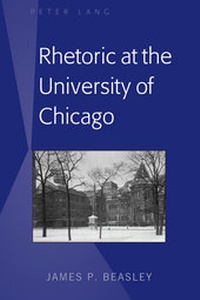
Rhetoric at the University of Chicago
Description

From the early 1940s through the 1960s, some of the most important articles in rhetoric and composition were written by University of Chicago faculty, and it was these articles that became the touchstones of rhetorical education in the institutional return to rhetoric in the latter half of the twentieth century. Despite the immense rhetorical output of these University of Chicago professors, there has not been, to date, a book-length treatment of why these writers focused their attention on the importance of rhetoric in the writing class. Not only that, but there has not been a revisionist account of how these articles were constructed or how the teaching of rhetoric and composition has often been misguided as a result of an uncritical acceptance of these articles in the rhetorical tradition. By organizing these articles based on their University of Chicago context, Rhetoric at the University of Chicago sheds new light on the beginnings of rhetoric and composition and demonstrates the significance of historical context in avoiding the misuse of these articles as foundationalist rhetorical history.
More details
Other editions
Additional editions
Person
James P. Beasley is an associate professor at the University of North Florida, where he teaches courses in rhetorical history, theory, and research. His work has been previously published in College Composition and Communication, JGE: The Journal of General Education, Rhetoric Review, and Enculturation.
Content
List of Figures - Acknowledgements - Rhetoric at the University of Chicago: A Materialist History - Richard McKeon and "Rhetoric in the Middle Ages" - Kenneth Burke and "The Problem of the Intrinsic" - Demetrius and Kenneth Burke's "Rhetorics" - Richard Weaver and "To Write the Truth" - Manuel Bilsky, Richard Weaver, Robert Streeter, and McCrea Hazlitt and "Looking for an Argument" - Wayne Booth and "The Revival of Rhetoric" - "Utterly Mad": Chicago, Conclusions, and Rhetorical Catastrophes - Index.
