

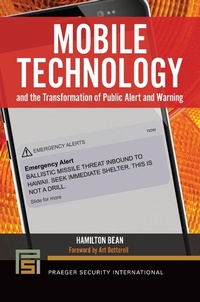
Mobile Technology and the Transformation of Public Alert and Warning
1st Edition
Published on 1. October 2019
240 pages
978-1-4408-6603-6 (ISBN)
Description

This timely book provides the inside story of the development of mobile public alert and warning technology in the United States and addresses similar systems being used in Australia, Canada, Japan, and the Netherlands.
This book provides a comprehensive account of how mobile-smartphone systems are transforming the practice of public alert and warning in the United States. Recent events have vaulted mobile alert and warning technology to the forefront of public debates concerning the hazards of the digital age. False alarms of ballistic missile attacks on Hawaii and Japan, the non-use of mobile alerts during the Northern California wildfires, and the role this technology plays in supporting police manhunts and counterterrorism efforts have prompted reconsideration of how these systems are used.
Drawing upon interviews with officials, executives, experts, and citizens, the book provides an in-depth analysis of the events and contexts influencing the trajectory of mobile public alert and warning and charts a course for its improvement. The book first introduces readers to the high stakes involved in the transformation of public alert and warning, explaining how new research is revealing the benefits, limitations, and risks of mobile technology in the disaster communication context. Three case studies then illustrate issues of risk, trust, and appropriateness in mobile public alert and warning.
This book provides a comprehensive account of how mobile-smartphone systems are transforming the practice of public alert and warning in the United States. Recent events have vaulted mobile alert and warning technology to the forefront of public debates concerning the hazards of the digital age. False alarms of ballistic missile attacks on Hawaii and Japan, the non-use of mobile alerts during the Northern California wildfires, and the role this technology plays in supporting police manhunts and counterterrorism efforts have prompted reconsideration of how these systems are used.
Drawing upon interviews with officials, executives, experts, and citizens, the book provides an in-depth analysis of the events and contexts influencing the trajectory of mobile public alert and warning and charts a course for its improvement. The book first introduces readers to the high stakes involved in the transformation of public alert and warning, explaining how new research is revealing the benefits, limitations, and risks of mobile technology in the disaster communication context. Three case studies then illustrate issues of risk, trust, and appropriateness in mobile public alert and warning.
More details
Series
Edition
1. Auflage
Language
English
Place of publication
United States
Publishing group
Bloomsbury Publishing Plc
Target group
Interest Age: From 7 to 17 years
ISBN-13
978-1-4408-6603-6 (9781440866036)
Copyright in bibliographic data and cover images is held by Nielsen Book Services Limited or by the publishers or by their respective licensors: all rights reserved.
Schweitzer Classification
Other editions
Additional editions
Book
10/2019
Praeger Publishers Inc
€88.70
Shipment within 10-20 days
Persons
Hamilton Bean, PhD, is associate professor in the Department of Communication at the University of Colorado, Denver. He has published more than 25 academic studies of communication and security.
