

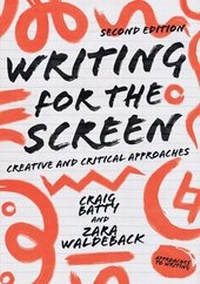
Writing for the Screen
Description

This revised and refreshed edition guides the contemporary screenwriter through a variety of creative and critical approaches to a deeper understanding of how to tell stories for the screen. With a renewed focus on theme and structure, the book is an essential guide for writers, script developers and teachers to help develop ideas into rich dynamic projects, and craft compelling, resonating screenplays. Combining creative tools and approaches with critical and contextual underpinnings, the book is ideal for screenwriting students who are looking to expand their skills and reflect on practices to add greater depth to their scripts. It will also inspire experienced writers and developers to find fresh ways of working and consider how new technology is affecting storytelling voices. Comprehensive and engaging, this book considers key narrative questions of today and offers a range of exercises to address them.
Integrating creative guidance with rigorous scholarship, this is the perfect companion for undergraduate students taking courses in screenwriting. Encouraging and pragmatic, it will provide a wealth of inspiration for those wishing to work in the industry or deepen their study of the practice.
More details
Other editions
Additional editions
Persons
Professor Craig Batty is Head of Creative Writing at the University of Technology Sydney, Australia. He is an award-winning educator and researcher, with interests in screenwriting craft, theory and teaching, creative practice research methodologies, and supervising creative doctorates. He is also a writer, script editor and script consultant.
Zara Waldeback is a script consultant and creative specialist currently living in Sweden and working across Europe. In the UK, she was for many years Senior Lecturer in Screenwriting and Directing at Thames Valley University, as well as working in development for British Screen and the First Film Foundation. She now teaches key narrative skills to a range of creative artists, and works as script editor for feature films, including the award-winning Sami Blood.
Content
Introduction.- PART I: FOUNDATIONS.- 1. Establishing Practice.- 2. Subject: Ideas into Character.- 3. Structure and Narrative.- 4. Visual Storytelling.- 5. Dialogue and Voice.- 6. The Cultures of Screenwriting.- 7. Key Points and Foundations Exercises.- PART II: SPECULATIONS.- 8. Exploring Possibilities.- 9. Subjects: Ideas into Characters.- 10. Structures and Narratives.- 11. Visual Storytelling.- 12. Dialogues and Voices.- 13. Further Cultures of Screenwriting.- 14. Key Points and Speculations Exercises.

