

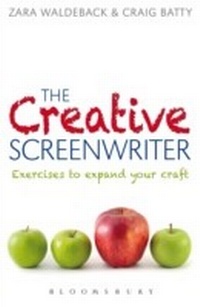
The Creative Screenwriter
Exercises to Expand Your Craft
1st Edition
Published on 15. March 2012
224 pages
978-1-4081-5519-6 (ISBN)
Description

Creativity is becoming increasingly important in an age of advanced audience sophistication. It's no longer enough to follow standard writing techniques - becoming a first-class screenwriter demands not only a command of craft, but an understanding of how to unleash and harness creativity.
"The Creative Screenwriter" offers a wealth of inspiring writing exercises designed to help you produce better, more exciting scripts. Each essential area of screenwriting is covered in its own chapter, from learning how to build stories and finding good ideas, to deepening characters and experimenting with structure, to enhancing scene writing and improving pitching. Finally, a range of innovative DIY Script Surgeries encourage you to find solutions to common screenwriting problems, such as overcoming writer's block, managing the rewrite and selling your work.
This is a book to return to again and again. It is a guide for aspiring screenwriters who want to develop a powerful writing practice; a manual for teachers and students seeking discussion and reflection; a bible for professionals wanting to hone their craft and solve script struggles. It will rekindle the creative spark; remind you of why you love writing; and help to express the stories you want to tell - and sell!
"The Creative Screenwriter" offers a wealth of inspiring writing exercises designed to help you produce better, more exciting scripts. Each essential area of screenwriting is covered in its own chapter, from learning how to build stories and finding good ideas, to deepening characters and experimenting with structure, to enhancing scene writing and improving pitching. Finally, a range of innovative DIY Script Surgeries encourage you to find solutions to common screenwriting problems, such as overcoming writer's block, managing the rewrite and selling your work.
This is a book to return to again and again. It is a guide for aspiring screenwriters who want to develop a powerful writing practice; a manual for teachers and students seeking discussion and reflection; a bible for professionals wanting to hone their craft and solve script struggles. It will rekindle the creative spark; remind you of why you love writing; and help to express the stories you want to tell - and sell!
More details
Edition
1. Auflage
Language
English
Place of publication
London
United Kingdom
Publishing group
Bloomsbury Publishing PLC
Target group
College/higher education
ISBN-13
978-1-4081-5519-6 (9781408155196)
Copyright in bibliographic data and cover images is held by Nielsen Book Services Limited or by the publishers or by their respective licensors: all rights reserved.
Schweitzer Classification
Other editions
Additional editions
Book
03/2012
Bloomsbury Academic
€24.00
Shipment within 10-20 days
Persons
Dr Craig Batty is Senior Lecturer in Creative and Professional Writing at RMIT University in Melbourne. He taught screenwriting at several British universities prior to this, including Bournemouth University. He has worked as a writer and script consultant on various short film, feature film, television and online projects. He publishes numerous books and articles on screenwriting and regularly speaks at conferences and festivals around the world.
Zara Waldeback is Head Dramaturg on 'Writing for Film and Interactive Media' at Brobygrafiska Högskolan, Sweden. She previously taught at Brunel and Sussex Universities in the UK and was programme leader for the MA in Creative Screenwriting at Thames Valley University. She freelances as a Script Consultant, and has worked in development for British Screen, the First Film Foundation and North by Northwest. As a writer she has written scripts with funding from the UK Film Council, Screen South and South East Arts, and developed feature film scripts with Danish and British producers. She specialises in developing effective methods for teaching screenwriting online, has written extensively for ScriptWriter Magazine and is co-author of "Writing for the Screen: Creative and Critical Approaches" (Palgrave Macmillan, 2008).
Zara Waldeback is Head Dramaturg on 'Writing for Film and Interactive Media' at Brobygrafiska Högskolan, Sweden. She previously taught at Brunel and Sussex Universities in the UK and was programme leader for the MA in Creative Screenwriting at Thames Valley University. She freelances as a Script Consultant, and has worked in development for British Screen, the First Film Foundation and North by Northwest. As a writer she has written scripts with funding from the UK Film Council, Screen South and South East Arts, and developed feature film scripts with Danish and British producers. She specialises in developing effective methods for teaching screenwriting online, has written extensively for ScriptWriter Magazine and is co-author of "Writing for the Screen: Creative and Critical Approaches" (Palgrave Macmillan, 2008).
Content
- Cover
- Contents
- Acknowledgements
- Introduction
- 1 Being creative
- What does creativity mean to you?
- Ready, steady, go!
- Limiting yourself
- Magic moments
- Wordplay
- ABC stories
- Spontaneous storytelling
- Listening to an onion
- Having fun!
- Being bad
- 2 Generating ideas
- Going to the heart
- Finding the plot, finding the emotion
- Into the unknown
- What's around you?
- Creative collisions
- Bringing people together
- What do you know? What don't you know?
- Words of wisdom
- Trading places
- In the news
- The hardest choice
- Perfect fit
- 3 Developing stories
- Growing up
- Finding your compass
- Assessing story potential
- What's the problem?
- Dot to dot
- Conflict vs meaningful conflict
- What happens next?
- One thing leads to another
- Back to the future
- Losing the plot
- 4 Understanding characters
- Pinpointing the protagonist
- Supermarket sweep
- Character building
- A creative portrait
- Inside out
- What's in a name?
- Stepping into change
- Lost baggage
- Motivating action
- Public and private spheres
- 5 Shaping relationships
- The odd couple
- Finding the right antagonist
- Antagonist as thematic driver
- The third party
- Weaving webs
- Family values
- A matter of perspective
- Generating perspective
- Listening out for relationships
- Ensembles
- Absent friends
- 6 Designing structure
- Structuring the emotional journey
- Character arc as structure
- Chain reaction
- Inciting incidents
- All change
- Planning the plan
- Deepening the problem
- Rising action
- Making things worse
- Plants and payoffs
- Tying-up loose ends
- 7 Reimagining structure
- Alternative routes
- Where are you going?
- Multiple protagonists
- Parallel stories
- Mix it up
- Flashing back
- Telling the time
- Shapeshifting
- 8 Defining beginnings and endings
- Starting over
- Setting the dramatic question
- Image is everything
- First impressions
- Pain and problems
- Essential facts
- Opening with voiceover
- Full stop
- Last dance
- Mirror, mirror
- One step beyond
- Damp squib
- 9 Weaving worlds
- Reframing the familiar
- Beyond the sea
- Television set
- Outside the comfort zone
- A whole new world
- Playing by the rules
- Opening doors
- Bricks and mortar
- When are we?
- Inner worlds
- A common language
- Location, location, location
- 10 Exploring genre and form
- Themes and dreams
- Genre protagonists
- Home sweet home
- Fitting the bill
- Mix and match
- Setting the mood
- It's no joke
- Finding form
- 11 Enhancing scene writing
- Fulfilling the function
- The telling moment
- The deciding factor
- Scene structure
- Turn up the heat
- Complicating factors
- Topping and tailing
- Crossing over
- Catching up
- 12 Strengthening visual storytelling
- Doing, not being
- Walk the talk
- Swap shop
- Valued objects
- Say what you see
- Trading spaces
- Imprisoned
- I spy
- Compare and contrast
- Visual pleasure
- Sound and vision
- Seen and not heard
- Show, don't tell
- 13 Improving dialogue
- Through their eyes
- Guess who
- Speaking relations
- Silent talk
- Lying and denying
- Writing subtext
- Key phrase
- Exposition - creating a need to know
- Exposition - breaking it up
- Talking in tongues
- The voice of the world
- 14 Managing rewrites
- Reigniting the spark
- Give yourself a break
- Filtering feedback
- Temptations
- Building blocks
- Running out of fuel
- What's really going on?
- Rhythm and tempo
- Collapsible cast
- Stuck in the mud
- 15 Perfecting the pitch
- Practice runs
- The heart of the matter
- Finding your focus
- Falling in love again
- Pitching the right note
- The spoken word
- The question is . . .
- 16 Building outlines and treatments
- Power punch
- Mapping it out
- Step to the beat
- Bridge building
- Warm up workout
- Subsuming subplots
- Purple prose
- Title and genre
- Naming the game
- 17 Discovering voice
- A matter of style
- Patchwork quilt
- Treasure chest
- Harmonising voices
- Hand in hand
- Hidden resources
- The joy of writing
- The writer's life
- Conclusion
- DIY script surgery
- Writer's block
- Uninspiring ideas
- Sketchy characters
- Insufficient plot
- Unclear theme
- Credibility gaps
- Lacklustre prose
- Never ending stories
- Sick and tired
- Final draft polish
- Selling your stories
