

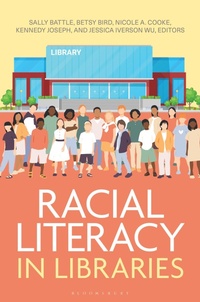
Racial Literacy in Libraries
1st Edition
Published on 5. February 2026
328 pages
979-8-216-17056-3 (ISBN)
Description

Learn how libraries can develop and use collections, space, resources, and programs to expand racial literacy in their communities.
Libraries are no longer simply providers of basic literacy - they're evolving to meet community needs for an expanding list of literacies: digital, health, information, financial. Racial Literacy in Libraries argues persuasively that libraries need to add racial literacy to that list. Its authors and contributors teach you how to understand and communicate about race and racism.
Since readers are likely to begin with different backgrounds on race, Part One offers a primer written by experts on the science and history of skin color, the invention of race and racism in the United States, and the development of racial identity. Part Two helps librarians bridge the gap between theory and practice. Chapters discuss the important concepts of representation, equity, and access and offer practical examples of how to apply them in libraries, including through collection development. Part Three offers real-life examples of libraries across the country who are bringing racial literacy to their communities through collections, curated resources, and programs. A companion website offers tools you can use right away, whenever you're ready to put your racial literacy learning into practice.
All librarians who want to bring a more bias-free worldview to library work will benefit from this guide to racial literacy.
Libraries are no longer simply providers of basic literacy - they're evolving to meet community needs for an expanding list of literacies: digital, health, information, financial. Racial Literacy in Libraries argues persuasively that libraries need to add racial literacy to that list. Its authors and contributors teach you how to understand and communicate about race and racism.
Since readers are likely to begin with different backgrounds on race, Part One offers a primer written by experts on the science and history of skin color, the invention of race and racism in the United States, and the development of racial identity. Part Two helps librarians bridge the gap between theory and practice. Chapters discuss the important concepts of representation, equity, and access and offer practical examples of how to apply them in libraries, including through collection development. Part Three offers real-life examples of libraries across the country who are bringing racial literacy to their communities through collections, curated resources, and programs. A companion website offers tools you can use right away, whenever you're ready to put your racial literacy learning into practice.
All librarians who want to bring a more bias-free worldview to library work will benefit from this guide to racial literacy.
More details
Edition
1. Auflage
Language
English
Place of publication
United States
Publishing group
Bloomsbury Publishing Plc
Target group
College/higher education
Professional and scholarly
ISBN-13
979-8-216-17056-3 (9798216170563)
Copyright in bibliographic data and cover images is held by Nielsen Book Services Limited or by the publishers or by their respective licensors: all rights reserved.
Schweitzer Classification
Other editions
Additional editions
Sally Battle | Betsy Bird | Nicole A. Cooke
Racial Literacy in Libraries
Book
approx. 02/2026
Libraries Unlimited Inc
€62.50
Not yet published
Persons
Sally Battle is the Youth Programming Librarian at Mount Prospect Public Library, Illinois, USA.
Betsy Bird is the Collection Development Manager of Evanston Public Library, Illinois, USA.
Nicole A. Cooke, PhD, MEd, MLS, is the Augusta Baker Endowed Chair and an Associate Professor at the School of Library and Information Science at the University of South Carolina, USA.
Kennedy Joseph is the Teen Engagement Coordinator at the Evanston Public Library, Illinois, USA.
Jessica Iverson Wu is a Children's and STEM Focus Library Assistant at Evanston Public Library, Illinois, USA.
Betsy Bird is the Collection Development Manager of Evanston Public Library, Illinois, USA.
Nicole A. Cooke, PhD, MEd, MLS, is the Augusta Baker Endowed Chair and an Associate Professor at the School of Library and Information Science at the University of South Carolina, USA.
Kennedy Joseph is the Teen Engagement Coordinator at the Evanston Public Library, Illinois, USA.
Jessica Iverson Wu is a Children's and STEM Focus Library Assistant at Evanston Public Library, Illinois, USA.
Content
Foreword, Joseph L. Graves and Nina Jablonski
Acknowledgements
Introduction: Why Racial Literacy? Sally Battle
Part One: Background: Why and How Should Libraries Foster Racial Literacy?
Part One Introduction: Racism as Misinformation: Racial Literacy as a Solution, Nicole A. Cooke
1. Understanding the Challenges and Opportunities of Talking to Children about Race and Racism in Child-Facing Institutions, Leigh S. Wilton, Jessica Sullivan, Analia F. Albuja, Sylvia P. Perry
2. Tell Me Sweet Little Lies: Racism as a Form of Persistent Malinformation, Nicole A. Cooke
3. Unpacking the Racial Literacy Turn, Jordan Bell and Yolanda Sealey-Ruiz
Part Two: Essentials: What Does Every Library Professional Need to Know?
Part Two Introduction: What We All Need to Know: Bridging the Gap between Theory and Practice, Nicole A. Cooke
4. The Evolution of Skin Color and the Invention of Color-Based Races, Nina Jablonski
5. Representation Matters: A Practitioner's Guide to Ethnic-Racial Development in Children, Onnie Rogers, Dana Mastro, Michael B. Robb, Alanna Peebles
6. Navigating Your Equity Journey, Casey H. Rawson and Sandra Hughes-Hassell
7. Racial Literacy in Collection Development, Betsy Bird
8. Belonging in the Library: A Tool for Improved Access through Racial Literacy, Jessica Iverson Wu
Part Three: Applications: Fostering Racial Learning and Literacy While Serving Youth
Part Three Introduction: How Can We Foster Racial Literacy without Causing Harm? Sally Battle
9. School Libraries: Serving Every Child's Racial Identity Growth, Laura Reiko Simeon
10. "Inclusive Classroom Libraries" Workshop for Teachers and School Librarians, Nicole Lawton
11. Pathways to Racial Literacy: Incorporating Anti-Bias Principles into Youth and Family Library Programs, Sally Battle and Sydney Stensland
12. Camp Read-a-Rama: Growing Racial Literacy through 100% Engagement Programming, Sydney Geyer and Michelle H. Martin
13. Race Education-Specific Family Programs in Public Libraries, Sally Battle with contributors Esli Avalos, Jessica A. Bratt, Cristina Bueno, Crystal Elliott O'Connor, Kennedy Joseph, Megan Sanks, Jessica Iverson Wu, and Sarah Jo Zaharako
14. Library Programs for Racial Affinity Groups, Kennedy Joseph
Conclusion, Sally Battle
Index
Acknowledgements
Introduction: Why Racial Literacy? Sally Battle
Part One: Background: Why and How Should Libraries Foster Racial Literacy?
Part One Introduction: Racism as Misinformation: Racial Literacy as a Solution, Nicole A. Cooke
1. Understanding the Challenges and Opportunities of Talking to Children about Race and Racism in Child-Facing Institutions, Leigh S. Wilton, Jessica Sullivan, Analia F. Albuja, Sylvia P. Perry
2. Tell Me Sweet Little Lies: Racism as a Form of Persistent Malinformation, Nicole A. Cooke
3. Unpacking the Racial Literacy Turn, Jordan Bell and Yolanda Sealey-Ruiz
Part Two: Essentials: What Does Every Library Professional Need to Know?
Part Two Introduction: What We All Need to Know: Bridging the Gap between Theory and Practice, Nicole A. Cooke
4. The Evolution of Skin Color and the Invention of Color-Based Races, Nina Jablonski
5. Representation Matters: A Practitioner's Guide to Ethnic-Racial Development in Children, Onnie Rogers, Dana Mastro, Michael B. Robb, Alanna Peebles
6. Navigating Your Equity Journey, Casey H. Rawson and Sandra Hughes-Hassell
7. Racial Literacy in Collection Development, Betsy Bird
8. Belonging in the Library: A Tool for Improved Access through Racial Literacy, Jessica Iverson Wu
Part Three: Applications: Fostering Racial Learning and Literacy While Serving Youth
Part Three Introduction: How Can We Foster Racial Literacy without Causing Harm? Sally Battle
9. School Libraries: Serving Every Child's Racial Identity Growth, Laura Reiko Simeon
10. "Inclusive Classroom Libraries" Workshop for Teachers and School Librarians, Nicole Lawton
11. Pathways to Racial Literacy: Incorporating Anti-Bias Principles into Youth and Family Library Programs, Sally Battle and Sydney Stensland
12. Camp Read-a-Rama: Growing Racial Literacy through 100% Engagement Programming, Sydney Geyer and Michelle H. Martin
13. Race Education-Specific Family Programs in Public Libraries, Sally Battle with contributors Esli Avalos, Jessica A. Bratt, Cristina Bueno, Crystal Elliott O'Connor, Kennedy Joseph, Megan Sanks, Jessica Iverson Wu, and Sarah Jo Zaharako
14. Library Programs for Racial Affinity Groups, Kennedy Joseph
Conclusion, Sally Battle
Index
