

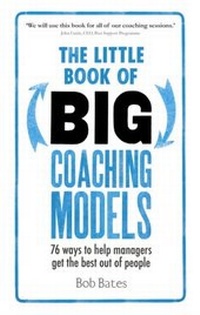
The Little Book of Big Coaching Models: 83 ways to help managers get the best out of people
The Little Book of Big Coaching Models: 76 Ways to help managers get the best out of people
1st Edition
Published on 2. March 2015
272 pages
978-1-292-08152-6 (ISBN)
Description

Leaders and Managers want quick answers, quick ways to reach solutions, ways and means to access knowledge that won't eat into their precious time and quick ideas that deliver a big result. The Little Book of Big Coaching Models cuts through all the noise and gives managers access to the very best coaching models that they need to get the best from their team Every model is quick and easy to read and delivers the essential information and know-how quickly, efficiently and memorably.
The full text downloaded to your computer. With eBooks you can:
search for key concepts, words and phrases
make highlights and notes as you study
share your notes with friends
Print 5 pages at a time
Compatible for PCs and MACs
No expiry (offline access will remain whilst the Bookshelf software is installed.
eBooks are downloaded to your computer and accessible either offline through the VitalSource Bookshelf (available as a free download), available online and also via the iPad/Android app.
When the eBook is purchased, you will receive an email with your access code. Simply go to http://bookshelf.vitalsource.com/ to download the FREE Bookshelf software. After installation, enter your access code for your eBook.
Time limit
The VitalSource products do not have an expiry date. You will continue to access your VitalSource products whilst you have your VitalSource Bookshelf installed.
The full text downloaded to your computer. With eBooks you can:
search for key concepts, words and phrases
make highlights and notes as you study
share your notes with friends
Print 5 pages at a time
Compatible for PCs and MACs
No expiry (offline access will remain whilst the Bookshelf software is installed.
eBooks are downloaded to your computer and accessible either offline through the VitalSource Bookshelf (available as a free download), available online and also via the iPad/Android app.
When the eBook is purchased, you will receive an email with your access code. Simply go to http://bookshelf.vitalsource.com/ to download the FREE Bookshelf software. After installation, enter your access code for your eBook.
Time limit
The VitalSource products do not have an expiry date. You will continue to access your VitalSource products whilst you have your VitalSource Bookshelf installed.
All prices
More details
Edition
1. Auflage
Language
English
Place of publication
United Kingdom
Target group
College/higher education
ISBN-13
978-1-292-08152-6 (9781292081526)
Copyright in bibliographic data and cover images is held by Nielsen Book Services Limited or by the publishers or by their respective licensors: all rights reserved.
Schweitzer Classification
Other editions
Additional editions
Book
02/2015
Pearson Business
€19.00
Shipment within 10-20 days
Person
Dr. Bob Bates worked in the Civil Service for many years as a senior manager before becoming a Senior Lecturer at Birmingham City University in 1997. Throughout his career he has worked extensively with SMEs specialising in staff and management development.
Content
PART 1 MAKING A START
Introduction
SECTION 1 UNDERSTAND HOW PEOPLE THINK AND LEARN
Introduction
1 Malcolm Knowles: How adults learn
2 Neil Fleming: VAK
3 David Kolb: Experiential learning cycle
4 Katherine Myers and Isabel Briggs: The Myers-Briggs Type Indicator
SECTION 2 UNDERSTAND WHAT MOTIVATES PEOPLE
Introduction
5 John Keller: The ARCS model of motivational design
6 Douglas McGregor: X and Y theory
7 Frederick Herzberg: Hygiene factors and KITAs
SECTION 3 BE A GOOD COMMUNICATOR
Introduction
8 Michael Argyle: The communication cycle model
9 Eric Berne: Transactional analysis
10 Joseph Luft and Harry Ingram: Johari windows
SECTION 4 SET THE RIGHT OBJECTIVES
Introduction
11 Benjamin Bloom: Levels in the cognitive domain
12 Ravindrakumar Dave: Levels in the psychomotive domain
13 David Krathwol and Benjamin Bloom: Levels in the affective domain
SECTION 5 COACHING THROUGH DIRECTING
Introduction
14 Ivan Pavlov: Classical conditioning
15 Edwin Guthrie: Contiguity theory
16 Robert Merton: Self-fulfilling prophecy
SECTION 6 COACHING THROUGH FACILITATING
Introduction
17 Abraham Maslow: Hierarchy of needs
18 Carl Rogers: Facilitation
19 Jack Mezirow: Transformational learning
SECTION 7 COACHING THROUGH SHOWING OTHERS HOW TO DO IT
Introduction
20 The Gestaltists: Insight theory
21 Karl Pribram, George Miller and Eugene Gallanter: Test-Operate-Test-Exit (TOTE)
22 Albert Bandura: Role modelling
SECTION 8 COACHING THROUGH STIMULATING
Introduction
23 Donald Hebb: Associative learning
24 Leon Festinger: Cognitive dissonance
25 Michael Merzenich: Neuroplasticity
SECTION 9 DEALING WITH CHALLENGING BEHAVIOUR
Introduction
26 Kurt Lewin: Reshaping behaviour
27 Peter Honey: Behaviour modification
28 Robert Hare: Psychopathic checklist
PART 2 TAKING IT FURTHER
Introduction
29 Richard Bandler and John Grinder: Neuro-Linguistic Programming (NLP)
30 Gregory Bateson: Neuro-logical levels
31 Donald Broadbent: Filtering
32 Marty Brounstein: The Five Pillars for Building Commitment
33 Arthur Costa and Bena Kallick: The coach as a critical friend
34 Edward De Bono: The six thinking hats
35 Robert Dilts: The Disney creativity strategy
36 Gerard Egan: The skilled helper model
37 Ferdinand Fournies: Coaching discussion plan
38 Tim Gallwey: The inner game
39 Howard Gardner: Multiple intelligence
40 Andrew Gilbert and Karen Whittleworth: The OSCAR model
41 Daniel Goleman: Emotional intelligence
42 Bruce Grimley: The 7Cs coaching model
43 John Grinder: New Behaviour Generator
44 Richard Hale and Eileen Hutchinson: The INSIGHT coaching cycle
45 Peter Hawkins: The CLEAR model
46 Jon Kabat-Zinn: Mindfulness
47 Max Landsberg: The Tao of coaching
48 David Lane and Sarah Corrie: Purpose, perspectives a
Introduction
SECTION 1 UNDERSTAND HOW PEOPLE THINK AND LEARN
Introduction
1 Malcolm Knowles: How adults learn
2 Neil Fleming: VAK
3 David Kolb: Experiential learning cycle
4 Katherine Myers and Isabel Briggs: The Myers-Briggs Type Indicator
SECTION 2 UNDERSTAND WHAT MOTIVATES PEOPLE
Introduction
5 John Keller: The ARCS model of motivational design
6 Douglas McGregor: X and Y theory
7 Frederick Herzberg: Hygiene factors and KITAs
SECTION 3 BE A GOOD COMMUNICATOR
Introduction
8 Michael Argyle: The communication cycle model
9 Eric Berne: Transactional analysis
10 Joseph Luft and Harry Ingram: Johari windows
SECTION 4 SET THE RIGHT OBJECTIVES
Introduction
11 Benjamin Bloom: Levels in the cognitive domain
12 Ravindrakumar Dave: Levels in the psychomotive domain
13 David Krathwol and Benjamin Bloom: Levels in the affective domain
SECTION 5 COACHING THROUGH DIRECTING
Introduction
14 Ivan Pavlov: Classical conditioning
15 Edwin Guthrie: Contiguity theory
16 Robert Merton: Self-fulfilling prophecy
SECTION 6 COACHING THROUGH FACILITATING
Introduction
17 Abraham Maslow: Hierarchy of needs
18 Carl Rogers: Facilitation
19 Jack Mezirow: Transformational learning
SECTION 7 COACHING THROUGH SHOWING OTHERS HOW TO DO IT
Introduction
20 The Gestaltists: Insight theory
21 Karl Pribram, George Miller and Eugene Gallanter: Test-Operate-Test-Exit (TOTE)
22 Albert Bandura: Role modelling
SECTION 8 COACHING THROUGH STIMULATING
Introduction
23 Donald Hebb: Associative learning
24 Leon Festinger: Cognitive dissonance
25 Michael Merzenich: Neuroplasticity
SECTION 9 DEALING WITH CHALLENGING BEHAVIOUR
Introduction
26 Kurt Lewin: Reshaping behaviour
27 Peter Honey: Behaviour modification
28 Robert Hare: Psychopathic checklist
PART 2 TAKING IT FURTHER
Introduction
29 Richard Bandler and John Grinder: Neuro-Linguistic Programming (NLP)
30 Gregory Bateson: Neuro-logical levels
31 Donald Broadbent: Filtering
32 Marty Brounstein: The Five Pillars for Building Commitment
33 Arthur Costa and Bena Kallick: The coach as a critical friend
34 Edward De Bono: The six thinking hats
35 Robert Dilts: The Disney creativity strategy
36 Gerard Egan: The skilled helper model
37 Ferdinand Fournies: Coaching discussion plan
38 Tim Gallwey: The inner game
39 Howard Gardner: Multiple intelligence
40 Andrew Gilbert and Karen Whittleworth: The OSCAR model
41 Daniel Goleman: Emotional intelligence
42 Bruce Grimley: The 7Cs coaching model
43 John Grinder: New Behaviour Generator
44 Richard Hale and Eileen Hutchinson: The INSIGHT coaching cycle
45 Peter Hawkins: The CLEAR model
46 Jon Kabat-Zinn: Mindfulness
47 Max Landsberg: The Tao of coaching
48 David Lane and Sarah Corrie: Purpose, perspectives a
