

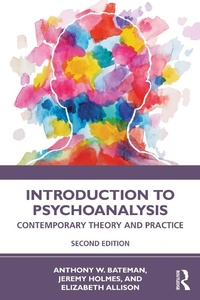
Introduction to Psychoanalysis
Contemporary Theory and Practice
2nd Edition
Published on 11. October 2021
360 pages
978-1-000-44870-2 (ISBN)
Description

What is psychoanalysis? Is it relevant to today's mental health crisis? How can psychoanalysis help people suffering from psychological distress and illness? This vital new book examines how psychoanalysis has changed since its inception, and how it has adapted to the needs and concerns of 21st-century mental health professionals and patients.
The first part of this book provides a concise and unbiased account of the origins of psychoanalysis, and the theories which characterise the main post-Freudian schools - neo-Freudian, Kleinian, interpersonal, self-psychological, Lacanian - and the ways in which they agree and diverge. The second part uses clinical illustrations to examine the practicalities of psychoanalytic technique in the consulting room - assessment, free association, dream analysis, transference, and counter-transference. Whatever their allegiance or role, mental health professionals - psychologists, psychiatrists, social workers, child mental health professionals, mental health nurses - need to be conversant with the strengths, relevance, and limitations of the psychoanalytic approach.
This book provides an indispensable, up-to-date, and accessible account of psychoanalysis today. Shaped throughout by considering the viewpoint of an interested 21st-century reader, it is of great interest to psychoanalysts and related mental health professionals, as well as students and all those interested in the treatment of mental health.
The first part of this book provides a concise and unbiased account of the origins of psychoanalysis, and the theories which characterise the main post-Freudian schools - neo-Freudian, Kleinian, interpersonal, self-psychological, Lacanian - and the ways in which they agree and diverge. The second part uses clinical illustrations to examine the practicalities of psychoanalytic technique in the consulting room - assessment, free association, dream analysis, transference, and counter-transference. Whatever their allegiance or role, mental health professionals - psychologists, psychiatrists, social workers, child mental health professionals, mental health nurses - need to be conversant with the strengths, relevance, and limitations of the psychoanalytic approach.
This book provides an indispensable, up-to-date, and accessible account of psychoanalysis today. Shaped throughout by considering the viewpoint of an interested 21st-century reader, it is of great interest to psychoanalysts and related mental health professionals, as well as students and all those interested in the treatment of mental health.
Reviews / Votes
'The best scholarly and clinically focused introduction to psychoanalytic ideas brilliantly integrating and celebrating the majesty of the concepts while also identifying key shortcomings. For a comprehensive, up to date and accessible presentation of this immense body of work you need to look no further.'Peter Fonagy, OBE FMedSci FBA FAcSS, Professor of Psychoanalysis and Developmental Science
'This book brings together three experts in conveying the essentials of psychoanalysis to varied and often sceptical audiences. They are deeply versed in its framework and clinical relevance, but well able to stand back and ask key questions, including on very contemporary issues such as remote analysis and institutional prejudice. One can hear in their shared voice that they understand, value and respect but do not idealise psychoanalysis. I am sure that a very large number of mental health professionals, trainees and the interested public will be really captivated by the serious, open-minded engagement with what psychoanalysis is and why, helped by the exceptionally clear writing to recognise questions they had not yet formulated but now realise they want to grapple with. I think here they are in safe hands as they navigate the different perspectives.'
Professor Mary Hepworth, Research Department of Clinical, Educational and Health Psychology, UCL
'This splendid second edition has been collaboratively authored by three outstanding clinicians who are superb authors and conceptualizers. They have integrated major themes in psychoanalytic and psychotherapeutic discourse in a seamless way. They have definitely accomplished their goal to bring psychoanalysis into the contemporary scientific and intellectual mainstream and to focus primarily on ideas and techniques rather than personalities. I heartily recommend this impressive second edition to all serious clinicians and to students who are preparing for clinical practice.'
Glen O. Gabbard, MD, Author of Psychodynamic Psychiatry in Clinical Practice
More details
Edition
2nd edition
Language
English
Place of publication
London
United Kingdom
Publishing group
Taylor & Francis Ltd
Target group
College/higher education
Professional and scholarly
Illustrations
3 Tables, black and white; 1 Line drawings, black and white; 1 Illustrations, black and white
ISBN-13
978-1-000-44870-2 (9781000448702)
Copyright in bibliographic data and cover images is held by Nielsen Book Services Limited or by the publishers or by their respective licensors: all rights reserved.
Schweitzer Classification
Other editions
Additional editions
Anthony W. Bateman | Jeremy Holmes | Elizabeth Allison
Introduction to Psychoanalysis
Contemporary Theory and Practice
Book
10/2021
2nd Edition
Routledge
€42.80
Shipment within 15-20 days
Anthony W. Bateman | Jeremy Holmes | Elizabeth Allison
Introduction to Psychoanalysis
Contemporary Theory and Practice
Book
10/2021
2nd Edition
Routledge
€197.10
Shipment within 15-20 days
Previous edition
E-Book
09/2002
1st Edition
Routledge
€48.09
Available for download
Persons
Anthony W. Bateman is a psychoanalyst whose work on applying psychoanalytic ideas in health service settings led to the development of mentalisation-based treatment for severe personality disorder. He is recognised internationally for his writing and research work and has published widely on mentalisation, borderline personality disorder, and the application of psychotherapy in psychiatry.
Jeremy Holmes is a retired psychiatrist and psychoanalytic psychotherapist. He has published 250+ papers and chapters, and has authored or co-authored 21 books in the fields of attachment theory and psychoanalysis. His most recent books are Attachment in Therapeutic Practice (2017) and The Brain Has a Mind of its Own (2020).
Elizabeth Allison is the Director of the Psychoanalysis Unit at University College London. She is a psychoanalyst and member of the British Psychoanalytical Society. She is a member of the Editorial Board of Routledge's New Library of Psychoanalysis, an associate member of the Editorial Board of the International Journal of Psychoanalysis, and a co-editor of the Developments in Psychoanalysis book series.
Jeremy Holmes is a retired psychiatrist and psychoanalytic psychotherapist. He has published 250+ papers and chapters, and has authored or co-authored 21 books in the fields of attachment theory and psychoanalysis. His most recent books are Attachment in Therapeutic Practice (2017) and The Brain Has a Mind of its Own (2020).
Elizabeth Allison is the Director of the Psychoanalysis Unit at University College London. She is a psychoanalyst and member of the British Psychoanalytical Society. She is a member of the Editorial Board of Routledge's New Library of Psychoanalysis, an associate member of the Editorial Board of the International Journal of Psychoanalysis, and a co-editor of the Developments in Psychoanalysis book series.
Content
Part I: Theory 01. Introduction: History and Controversy 02. Models of the Mind 03. Origins of the Internal World 04. Mechanisms of Defence 05. Transference and Countertransference 06. Dreams, Symbols, and the Psychoanalytic Imagination Part II: Practice 07. The Assessment Interview 08. The Therapeutic Relationship 09. Clinical Dilemmas 10. Psychoanalysis and Mental Health Practice 11. Research in Psychoanalysis 12. The future of psychoanalysis: Challenges and Opportunities
