

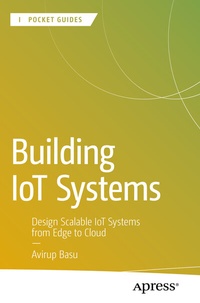
Building IoT Systems
Description

Explore the world of IoT and discover how various methodologies are used to manage edge devices and data flow through different layers. This concise guide takes a practical approach to designing scalable IoT systems and how cloud computing helps to maintain them.
With a keen eye on data flow, you'll examine how to work with different components and how to process and store data. You'll work with different protocols like MQTT and see how they can be used in combination with standard web protocols for managing IoT systems. Finally, you'll look at key topics such as device management, event handling, OTA, device security, device-to-cloud communication, cloud-to-device communication, and more.
This guide is your fast track to building IoT systems and gaining an in-depth understanding of the core components of edge and cloud computing.
What You Will Learn
- Build scalable IoT systems
- Find out how IoT components communicate
- Understand data pipelines in IoT
Who This Book Is For
Beginning to intermediate level readers who want to understand the process through which the data flows from an edge device to the cloud, to manage IoT systems.
More details
Other editions
Additional editions
Person
Avirup Basu is a technologist, founder, and a digital transformation and innovation leader based out of India. He is the CEO & Founder of Blackspektro, which specialises in industrial IoT and AI solutions for manufacturing. The focus is on enabling digital transformation from the factory floor to the cloud.
He was previously working at P360 in various roles and stepped down after 8 years as an Associate Principal Engineer. He was responsible for designing and developing SaaS products like Swittons and Zing. These products transform enterprise workflows and real-time communication through smart devices and software platforms.
Drawing on over 9 years of experience in cloud systems, and event-driven architectures and industrial and commercial IoT, he builds scalable, resilient platforms that deliver real value in complex environments.
Outside of work, he organizes Google Developer Group (GDG) Siliguri, where he mentors and engages with the tech community through meetups and workshops.
When he isn't working on product or code, he spends time cycling, capturing moments through photography and videography, rallying for a game of tennis, or chasing adrenaline through adventure sports. He believes a sharp mind needs a spirited life.
Content
Chapter 1: Internet of Things - The Beginning of a Smarter World.- Chapter 2: Getting Started with Edge Systems.- Chapter 3: Machine to Machine (M2M) Communication.- Chapter 4: IoT Data Communication Protocols.- Chapter 5: Cloud Computing.
