

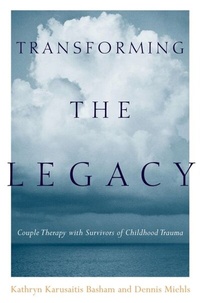
Transforming the Legacy
Couple Therapy with Survivors of Childhood Trauma
1st Edition
Published on 25. September 2015
368 pages
978-0-231-50923-7 (ISBN)
Description

To serve the increasing numbers of individuals who have survived interpersonal and domestic violence, or as refugees, have sought asylum from political violence, armed conflict, or torture, Transforming the Legacy presents an innovative relationship-based and culturally informed couple therapy practice model that is grounded in a synthesis of psychological and social theories. This unique couple therapy model encompasses three phases of clinical practice: Phase I entails a process of establishing safety, stabilization, and a context for changing legacies of emotional, sexual, and/or physical abuse. Phase II guides reflection on the trauma narrative. The goal of phase III is to consolidate new perspectives, attitudes, and behaviors.
Within these phases, the model-illustrated with rich case studies-focuses on specific issues, including: intersubjectivity between the client and clinician (such as transference and countertransference, vicarious traumatization, and racial identity development); intrapersonal, interactional, and institutional factors; the role of the "victim-victimizer-bystander" dynamic in the couple and therapeutic relationships; preserving a locus of control with clients; flexibility in decisionmaking regarding clinical processes; and specific practice themes, such as the composition of a couple, the role of violence, parenting, sexuality, affairs, dual diagnoses, and dissociation.
A dramatic departure from formulaic therapeutic approaches, this biopsychosocial model emphasizes the crafting of specific treatment plans and specific clinical interventions to show how couple therapy can transform the legacies of childhood traumatic events for a wide range of populations, including military couples and families, gay lesbian/bisexual/transgendered couples and families, and immigrant and refugee couples and families. This thorough attention to issues of cultural diversity distinguish Transforming the Legacy from the current literature and make it an invaluable resource for clinicians in a wide range of professional disciplines.
Within these phases, the model-illustrated with rich case studies-focuses on specific issues, including: intersubjectivity between the client and clinician (such as transference and countertransference, vicarious traumatization, and racial identity development); intrapersonal, interactional, and institutional factors; the role of the "victim-victimizer-bystander" dynamic in the couple and therapeutic relationships; preserving a locus of control with clients; flexibility in decisionmaking regarding clinical processes; and specific practice themes, such as the composition of a couple, the role of violence, parenting, sexuality, affairs, dual diagnoses, and dissociation.
A dramatic departure from formulaic therapeutic approaches, this biopsychosocial model emphasizes the crafting of specific treatment plans and specific clinical interventions to show how couple therapy can transform the legacies of childhood traumatic events for a wide range of populations, including military couples and families, gay lesbian/bisexual/transgendered couples and families, and immigrant and refugee couples and families. This thorough attention to issues of cultural diversity distinguish Transforming the Legacy from the current literature and make it an invaluable resource for clinicians in a wide range of professional disciplines.
All prices
More details
Other editions
Additional editions
Kathryn Karusaitis Basham | Dennis Miehls
Transforming the Legacy
Couple Therapy with Survivors of Childhood Trauma
Book
10/2004
Columbia University Press
€86.73
Article not available at the moment
Persons
Kathryn Karusaitis Basham and Dennis Miehls are both associate professors of clinical social work at Smith College School for Social Work. Each maintains a private practice in clinical social work in Northampton, Massachusetts.
Content
Preface
Section I - Context
Introduction
Historical Review
Section II - Theoretical Foundations
Social Theory
Family Theory
Trauma Theory
Object Relations Theory
Attachment Theory
Section III - Couple Therapy Practice
Biopsychosocial Assessment
Phase-Oriented Couple Therapy Model
Clinician Responses
Clinical Case Illustration
Section IV - Specific Clinical Issues
Military Couples and Families
Gay/Lesbian/Bisexual/Transgendered Couples and Families
Immigrant and Refugee Couples and Families
References
Section I - Context
Introduction
Historical Review
Section II - Theoretical Foundations
Social Theory
Family Theory
Trauma Theory
Object Relations Theory
Attachment Theory
Section III - Couple Therapy Practice
Biopsychosocial Assessment
Phase-Oriented Couple Therapy Model
Clinician Responses
Clinical Case Illustration
Section IV - Specific Clinical Issues
Military Couples and Families
Gay/Lesbian/Bisexual/Transgendered Couples and Families
Immigrant and Refugee Couples and Families
References

