

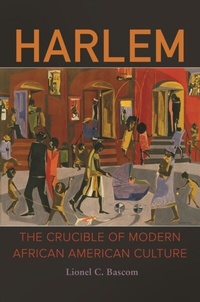
Harlem
The Crucible of Modern African American Culture
1st Edition
Published on 12. December 2016
232 pages
978-1-4408-4269-6 (ISBN)
Description

Focusing on the contributions of civic reformers and political architects who arrived in New York in the early decades of the 20th century, this book explores the wide array of sweeping social reforms and radical racial demands first conceived of and planned in Harlem that transformed African Americans into self-aware U.S. citizens for the first time in history.
When the first slave escaped bondage in the American South and migrated to the Northeast region of the United States, this act of an individual started what became known as the "great migration" of African Americans fleeing the feudal South for New York and other Northern cities. This migration fueled an intellectual, social, and personal pursuit-the long-standing quest for identity by a lost tribe of African Americans-by every black man, woman, and child in America. In Harlem, that quest was anchored by a wide array of civic, business, and prominent leaders who succeeded in establishing what we now know as modern African American culture.
In Harlem: The Crucible of Modern African American Culture, author Lionel C. Bascom examines the accuracy of the established image of Harlem during the Renaissance period-roughly between 1917 and the 1960s-as "heaven" for migrating African Americans. He establishes how mingled among the former tenant farmers, cotton pickers, maids, and farmhands were college-educated intellectuals, progressive ministers, writers, and lecturers who formed various organizations aimed at banishing images of Negroes as bumbling, ignorant, second-class citizens. The book also challenges unfounded claims that political and social movements during the Harlem Renaissance period failed and dramatizes numerous attempts by government authorities to silence black progressives who spearheaded movements that eventually ended segregation in the armed forces, drafted plans that led to the first sweeping civil rights legislation, and resulted in a U.S. Supreme Court ruling that finally made racial segregation in schools a federal crime.
When the first slave escaped bondage in the American South and migrated to the Northeast region of the United States, this act of an individual started what became known as the "great migration" of African Americans fleeing the feudal South for New York and other Northern cities. This migration fueled an intellectual, social, and personal pursuit-the long-standing quest for identity by a lost tribe of African Americans-by every black man, woman, and child in America. In Harlem, that quest was anchored by a wide array of civic, business, and prominent leaders who succeeded in establishing what we now know as modern African American culture.
In Harlem: The Crucible of Modern African American Culture, author Lionel C. Bascom examines the accuracy of the established image of Harlem during the Renaissance period-roughly between 1917 and the 1960s-as "heaven" for migrating African Americans. He establishes how mingled among the former tenant farmers, cotton pickers, maids, and farmhands were college-educated intellectuals, progressive ministers, writers, and lecturers who formed various organizations aimed at banishing images of Negroes as bumbling, ignorant, second-class citizens. The book also challenges unfounded claims that political and social movements during the Harlem Renaissance period failed and dramatizes numerous attempts by government authorities to silence black progressives who spearheaded movements that eventually ended segregation in the armed forces, drafted plans that led to the first sweeping civil rights legislation, and resulted in a U.S. Supreme Court ruling that finally made racial segregation in schools a federal crime.
More details
Edition
1. Auflage
Language
English
Place of publication
United States
Publishing group
Bloomsbury Publishing Plc
Target group
Interest Age: From 7 to 17 years
ISBN-13
978-1-4408-4269-6 (9781440842696)
Copyright in bibliographic data and cover images is held by Nielsen Book Services Limited or by the publishers or by their respective licensors: all rights reserved.
Schweitzer Classification
Other editions
Additional editions
Book
12/2016
Praeger Publishers Inc
€68.50
Shipment within 10-20 days
Person
Lionel C. Bascom is professor in the Department of Writing, Linguistics, and the Creative Process at Western Connecticut State University in Danbury, CT.
