

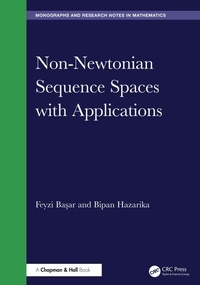
Non-Newtonian Sequence Spaces with Applications
Published on 25. June 2025
176 pages
978-1-040-33459-1 (ISBN)
Description

Non-Newtonian Sequence Spaces with Applications presents an alternative to the usual calculus based on multiplication instead of addition. The book is intended for graduate students and researchers with a special interest in non-Newtonian calculus, its applications and related topics.
Features
? Valuable material for postgraduate researchers studying non-Newtonian calculus
? Suitable as supplementary reading to a Computational Physics course
Features
? Valuable material for postgraduate researchers studying non-Newtonian calculus
? Suitable as supplementary reading to a Computational Physics course
More details
Series
Language
English
Place of publication
London
United Kingdom
Publishing group
Taylor & Francis Ltd
Target group
College/higher education
Illustrations
11 Tables, black and white; 9 Line drawings, black and white; 9 Illustrations, black and white
File size
3,91 MB
ISBN-13
978-1-040-33459-1 (9781040334591)
Copyright in bibliographic data and cover images is held by Nielsen Book Services Limited or by the publishers or by their respective licensors: all rights reserved.
Schweitzer Classification
Other editions
Additional editions

Feyzi Baosar
Non-Newtonian Sequence Spaces with Applications
Book
06/2025
CRC Press
Unfortunately, price unknown
Article exhausted; check different version
Feyzi Basar | Bipan Hazarika
Non-Newtonian Sequence Spaces with Applications
Book
05/2025
1st Edition
Chapman & Hall/CRC
€241.90
Shipment within 10-20 days
Persons
Feyzi Basar is a Professor Emeritus since July 2016, at Inoenue University, Tuerkiye. He received his PhD degree from Ankara University, Tuerkiye, in 1986. He has published four e-books for graduate students and researchers, and more than 160 scientific papers in the field of summability theory, sequence spaces, FK-spaces, Schauder bases, dual spaces, matrix transformations, spectrum of certain linear operators represented by a triangle matrix over some sequence space, the ?-, ?- and ?-duals, and some topological properties of the domains of some double and four-dimensional triangles in the certain spaces of single and double sequences, sets of the sequences of fuzzy numbers, multiplicative calculus. He has guided 17 master and 10 Ph.D. students., served as a referee 148 international scientific journals. He is the member of editorial board of 21 scientific journals. Feyzi Basar is also a member of scientific committee of 17 mathematics conference, gave talks at 14 different universities as invited speaker and participated more than 70 mathematics symposium with a paper.
Bipan Hazarika is a Professor in the Department of Mathematics at Gauhati University, Guwahati, Assam. He has worked at Rajiv Gandhi University, Rono Hills, Doimukh, Arunachal Pradesh, India from 2005 to 2017. He was Professor at Rajiv Gandhi University upto 10-08-2017. He received his PhD degree from Gauhati University, Guwahati, India. His main research interests are the _eld of sequences spaces, summability theory, applications fixed point theory, fuzzy analysis, function spaces of non absolute integrable functions. He has published over 200 research papers in several international journals. He is a regular reviewer of more than 50 different journals. He has published books on Differential Equations, Differential Calculus and Integral Calculus. He has edited books in CRC press on Sequence Space and Advances Mathematical Analysis, "Advances in Mathematical Analysis and its Applications", "Dynamic Equations on Time Scales and Applications" and a book on Fractional Differential Equations and Fixed point theory, Approximation Theory, Sequence Spaces and Applications (Industrial and Applied Mathematics), Advances in Functional Analysis and Fixed-Point Theory: An Interdisciplinary Approach (Industrial and Applied Mathematics). In 2022, 2023 and 2024 he was listed among the world's top 2% scientists by Stanford University. He is an editorial board member of more than 5 International journals and Guest Editor of the special issue Sequence spaces, Function spaces and Approximation Theory, Journal of Function Spaces.
Bipan Hazarika is a Professor in the Department of Mathematics at Gauhati University, Guwahati, Assam. He has worked at Rajiv Gandhi University, Rono Hills, Doimukh, Arunachal Pradesh, India from 2005 to 2017. He was Professor at Rajiv Gandhi University upto 10-08-2017. He received his PhD degree from Gauhati University, Guwahati, India. His main research interests are the _eld of sequences spaces, summability theory, applications fixed point theory, fuzzy analysis, function spaces of non absolute integrable functions. He has published over 200 research papers in several international journals. He is a regular reviewer of more than 50 different journals. He has published books on Differential Equations, Differential Calculus and Integral Calculus. He has edited books in CRC press on Sequence Space and Advances Mathematical Analysis, "Advances in Mathematical Analysis and its Applications", "Dynamic Equations on Time Scales and Applications" and a book on Fractional Differential Equations and Fixed point theory, Approximation Theory, Sequence Spaces and Applications (Industrial and Applied Mathematics), Advances in Functional Analysis and Fixed-Point Theory: An Interdisciplinary Approach (Industrial and Applied Mathematics). In 2022, 2023 and 2024 he was listed among the world's top 2% scientists by Stanford University. He is an editorial board member of more than 5 International journals and Guest Editor of the special issue Sequence spaces, Function spaces and Approximation Theory, Journal of Function Spaces.
Content
Preface vii
Acknowledgements ix
List of Abbreviations and Symbols x
1 Sequence and Function Spaces over the Non-newtonian ... 1
1.1 Some Basic Results on the Spaces of Sequences ... . . . . . . . . . . . . . . . . . . . . . . . . . . 1
1.1.1 Preliminaries, background and notation . . . . . . . . . . . . . . . . . . . . . . . . . . . . 1
1.1.2 Geometric complex field and related properties . . . . . . . . . . . . . . . . . . . . . . . 4
1.1.3 Geometric metric spaces . . . . . . . . . . . . . . . . . . . . . . . . . . . . . . . . . . . . 6
1.1.4 Convergence and completeness in (GC) . . . . . . . . . . . . . . . . . . . . . . . . . . . . 8
1.1.5 Sequence spaces over C(G) . . . . . . . . . . . . . . . . . . . . . . . . . . . . . . . . . . . 10
1.2 Some Results on Sequence Spaces with ... . . . . . . . . . . . . . . . . . . . . . . . . . . . . . . . 12
1.2.1 Preliminaries, backround and notations . . . . . . . . . . . . . . . . . . . . . . . . . . . . 13
1.2.2 Non-newtonian real field and related properties . . . . . . . . . . . . . . . . . . . . . . . 13
1.2.3 Non-newtonian metric spaces . . . . . . . . . . . . . . . . . . . . . . . . . . . . . . . . . 15
1.2.4 Convergence and completeness in (NC) . . . . . . . . . . . . . . . . . . . . . . . . . . . 19
1.3 Sequence Spaces Over the Non-newtonian ... . . . . . . . . . . . . . . . . . . . . . . . . . . . . . 20
1.4 Certain Non-newtonian Complex Sequence Spaces . . . . . . . . . . . . . . . . . . . . . . . . . . 23
1.4.1 Preliminaries, background and notations . . . . . . . . . . . . . . . . . . . . . . . . . . . 23
1.5 Applications . . . . . . . . . . . . . . . . . . . . . . . . . . . . . . . . . . . . . . . . . . . . . . . 25
1.6 Some Sequence Spaces and Matrix Transformations in ... . . . . . . . . . . . . . . . . . . . . . . 29
1.6.1 Introduction . . . . . . . . . . . . . . . . . . . . . . . . . . . . . . . . . . . . . . . . . . . 29
1.6.2 Preliminaries, background and notations . . . . . . . . . . . . . . . . . . . . . . . . . . . 29
1.6.3 Characterizations of some matrix classes . . . . . . . . . . . . . . . . . . . . . . . . . . . 31
1.6.4 Multiplicative dual summability methods . . . . . . . . . . . . . . . . . . . . . . . . . . . 33
1.7 Conclusion . . . . . . . . . . . . . . . . . . . . . . . . . . . . . . . . . . . . . . . . . . . . . . . . 37
2 Application of Geometric Calculus in Numerical Analysis and Difference Sequence Spaces 39
2.1 Introduction and Notations . . . . . . . . . . . . . . . . . . . . . . . . . . . . . . . . . . . . . . . 39
2.2 ?-generator and Geometric Real Field . . . . . . . . . . . . . . . . . . . . . . . . . . . . . . . . 40
2.2.1 Some useful relations between geometric operations and ordinary arithmetic operations . 40
2.3 Geometric Sequence Spaces . . . . . . . . . . . . . . . . . . . . . . . . . . . . . . . . . . . . . . 42
2.4 Dual Spaces of ?G
?(?G) . . . . . . . . . . . . . . . . . . . . . . . . . . . . . . . . . . . . . . . . . 45
2.4.1 Geometric form of Abel's partial summation formula . . . . . . . . . . . . . . . . . . . . 46
2.5 ?-, ?- and ?-duals . . . . . . . . . . . . . . . . . . . . . . . . . . . . . . . . . . . . . . . . . . . . 48
2.6 Some Applications of Geometric Difference . . . . . . . . . . . . . . . . . . . . . . . . . . . . . . 50
2.6.1 Geometric Newton-Gregory backward interpolation formula . . . . . . . . . . . . . . . . 53
2.6.2 Advantages of geometric interpolation formulae over ordinary interpolation formulae . . 55
2.7 Conclusion . . . . . . . . . . . . . . . . . . . . . . . . . . . . . . . . . . . . . . . . . . . . . . . . 55
3 Bigeometric Integral Calculus 56
3.1 Introduction . . . . . . . . . . . . . . . . . . . . . . . . . . . . . . . . . . . . . . . . . . . . . . . 56
3.2 Geometric Arithmetic and Geometric Real Field . . . . . . . . . . . . . . . . . . . . . . . . . . . 56
3.3 Definitions and Results . . . . . . . . . . . . . . . . . . . . . . . . . . . . . . . . . . . . . . . . . 57
3.3.1 G-derivative . . . . . . . . . . . . . . . . . . . . . . . . . . . . . . . . . . . . . . . . . . . 57
3.3.2 Some standard G-derivatives . . . . . . . . . . . . . . . . . . . . . . . . . . . . . . . . . . 57
iv
3.4 G-Integration . . . . . . . . . . . . . . . . . . . . . . . . . . . . . . . . . . . . . . . . . . . . . . 57
3.4.1 Some standard G-integrals . . . . . . . . . . . . . . . . . . . . . . . . . . . . . . . . . . . 58
3.4.2 Integration by transforming the function to the form ex f'(x)
f(x) . . . . . . . . . . . . . . . . 58
3.4.3 Integration by the relation between G-integral and ordinary integral . . . . . . . . . . . 58
3.4.4 Properties of G-integration . . . . . . . . . . . . . . . . . . . . . . . . . . . . . . . . . . . 59
3.5 Definite Bigeometric Integral . . . . . . . . . . . . . . . . . . . . . . . . . . . . . . . . . . . . . . 60
3.5.1 Properties of definite G-integral . . . . . . . . . . . . . . . . . . . . . . . . . . . . . . . . 60
3.5.2 Definite bigeometric integral as a limit of geometric sum . . . . . . . . . . . . . . . . . . 63
3.6 Conclusion . . . . . . . . . . . . . . . . . . . . . . . . . . . . . . . . . . . . . . . . . . . . . . . . 66
4 Bigeometric Calculus and Its Applications 67
4.1 Introduction . . . . . . . . . . . . . . . . . . . . . . . . . . . . . . . . . . . . . . . . . . . . . . . 67
4.1.1 Some useful relations between geometric operations and ordinary arithmetic operations . 67
4.2 Definitions and Notations . . . . . . . . . . . . . . . . . . . . . . . . . . . . . . . . . . . . . . . . 68
4.2.1 Geometric binomial formula . . . . . . . . . . . . . . . . . . . . . . . . . . . . . . . . . . 68
4.2.2 Geometric real number line . . . . . . . . . . . . . . . . . . . . . . . . . . . . . . . . . . 68
4.2.3 Geometric coordinate system . . . . . . . . . . . . . . . . . . . . . . . . . . . . . . . . . 69
4.2.4 Geometric factorial . . . . . . . . . . . . . . . . . . . . . . . . . . . . . . . . . . . . . . . 69
4.2.5 Generalized geometric forward difference operator ?n
G . . . . . . . . . . . . . . . . . . . . 69
4.2.6 Generalized Geometric Backward Difference Operator ?n
G . . . . . . . . . . . . . . . . . 69
4.3 Main Results . . . . . . . . . . . . . . . . . . . . . . . . . . . . . . . . . . . . . . . . . . . . . . . 70
4.3.1 Geometric Pythagorean triplets . . . . . . . . . . . . . . . . . . . . . . . . . . . . . . . . 70
4.3.2 Geometric trigonometric ratios . . . . . . . . . . . . . . . . . . . . . . . . . . . . . . . . 70
4.3.3 Relation between geometric trigonometry and ordinary trigonometry . . . . . . . . . . . 71
4.3.4 Geometric trigonometric identities . . . . . . . . . . . . . . . . . . . . . . . . . . . . . . . 71
4.3.5 G-limit . . . . . . . . . . . . . . . . . . . . . . . . . . . . . . . . . . . . . . . . . . . . . . 72
4.3.6 G-continuity . . . . . . . . . . . . . . . . . . . . . . . . . . . . . . . . . . . . . . . . . . . 73
4.4 Basic Properties of G-Calculus . . . . . . . . . . . . . . . . . . . . . . . . . . . . . . . . . . . . . 73
4.4.1 G-derivative and its interpretation . . . . . . . . . . . . . . . . . . . . . . . . . . . . . . 73
4.4.2 Relation between G-derivative and ordinary derivative . . . . . . . . . . . . . . . . . . . 77
4.4.3 G-derivatives of some standard functions . . . . . . . . . . . . . . . . . . . . . . . . . . . 77
4.4.4 Geometric Taylor's series . . . . . . . . . . . . . . . . . . . . . . . . . . . . . . . . . . . . 83
4.5 Some Applications of G-Calculus . . . . . . . . . . . . . . . . . . . . . . . . . . . . . . . . . . . 83
4.5.1 Expansion of some useful functions in Taylor's product . . . . . . . . . . . . . . . . . . . 83
4.6 Conclusion . . . . . . . . . . . . . . . . . . . . . . . . . . . . . . . . . . . . . . . . . . . . . . . . 86
5 Solution of Bigeometric-Differential Equations by Numerical Methods 87
5.1 Introduction . . . . . . . . . . . . . . . . . . . . . . . . . . . . . . . . . . . . . . . . . . . . . . . 87
5.2 Basic Definitions and Results . . . . . . . . . . . . . . . . . . . . . . . . . . . . . . . . . . . . . 88
5.2.1 Geometric factorial . . . . . . . . . . . . . . . . . . . . . . . . . . . . . . . . . . . . . . . 88
5.2.2 Geometric Newton-Gregory formula for forward interpolation . . . . . . . . . . . . . . . 88
5.2.3 Geometric Newton-Gregory formula for backward interpolation . . . . . . . . . . . . . . 88
5.2.4 G-derivative . . . . . . . . . . . . . . . . . . . . . . . . . . . . . . . . . . . . . . . . . . . 88
5.2.5 Some standard G-derivatives . . . . . . . . . . . . . . . . . . . . . . . . . . . . . . . . . . 89
5.2.6 Geometric Taylor's series . . . . . . . . . . . . . . . . . . . . . . . . . . . . . . . . . . . . 89
5.3 Numerical Methods and Solution of G-Differential Equations . . . . . . . . . . . . . . . . . . . . 89
5.3.1 G-Euler's method . . . . . . . . . . . . . . . . . . . . . . . . . . . . . . . . . . . . . . . . 89
5.3.2 Taylor's G-series method . . . . . . . . . . . . . . . . . . . . . . . . . . . . . . . . . . . . 91
5.3.3 G-Runge-Kutta method . . . . . . . . . . . . . . . . . . . . . . . . . . . . . . . . . . . . 95
5.3.4 G-Runge-Kutta method of order four . . . . . . . . . . . . . . . . . . . . . . . . . . . . . 95
5.4 Conclusion . . . . . . . . . . . . . . . . . . . . . . . . . . . . . . . . . . . . . . . . . . . . . . . . 99
6 Certain Spaces of Functions over the Set of Non-Newtonian Complex Numbers 100
6.1 Preliminaries, Backround and Notations . . . . . . . . . . . . . . . . . . . . . . . . . . . . . . . 100
6.2 The Set of ?-Complex Numbers and ?-Inequalities . . . . . . . . . . . . . . . . . . . . . . . . . . 103
6.3 Continuous Function Space over the Field C? . . . . . . . . . . . . . . . . . . . . . . . . . . . . 104
6.4 Applications . . . . . . . . . . . . . . . . . . . . . . . . . . . . . . . . . . . . . . . . . . . . . . . 108
7 Multiplicative Type Complex Calculus 110
7.1 Introduction . . . . . . . . . . . . . . . . . . . . . . . . . . . . . . . . . . . . . . . . . . . . . . . 110
7.2 Definitions, Methods, and Theorems . . . . . . . . . . . . . . . . . . . . . . . . . . . . . . . . . 111
7.2.1 A multiplicative group, an additive group, and an isomorphism . . . . . . . . . . . . . . 111
7.2.2 Remoteness of two values . . . . . . . . . . . . . . . . . . . . . . . . . . . . . . . . . . . . 112
7.2.3 Change rate of a function . . . . . . . . . . . . . . . . . . . . . . . . . . . . . . . . . . . 114
7.2.4 Derivative and integral operators . . . . . . . . . . . . . . . . . . . . . . . . . . . . . . . 114
7.2.5 Euler's simple method in differential equation solving . . . . . . . . . . . . . . . . . . . . 117
7.2.6 Some fundamental theorems . . . . . . . . . . . . . . . . . . . . . . . . . . . . . . . . . . 119
7.3 Conclusion . . . . . . . . . . . . . . . . . . . . . . . . . . . . . . . . . . . . . . . . . . . . . . . . 123
8 Function Sequences and Series ... 124
8.1 Introduction and Preliminaries . . . . . . . . . . . . . . . . . . . . . . . . . . . . . . . . . . . . . 124
8.2 ?-Function Sequences and Series . . . . . . . . . . . . . . . . . . . . . . . . . . . . . . . . . . . . 126
8.2.1 ?-function sequences . . . . . . . . . . . . . . . . . . . . . . . . . . . . . . . . . . . . . . 126
8.2.2 ?-function series and consequences of ?-uniform convergence . . . . . . . . . . . . . . . . 129
8.2.3 ?-uniform convergence and ?-continuity . . . . . . . . . . . . . . . . . . . . . . . . . . . . 132
8.2.4 ?-uniform convergence and ?-integral . . . . . . . . . . . . . . . . . . . . . . . . . . . . . 133
8.2.5 ?-Uniform Convergence and ?-Derivative . . . . . . . . . . . . . . . . . . . . . . . . . . . 136
9 On Non-newtonian Power Series and its Applications 139
9.1 Introduction and Preliminaries . . . . . . . . . . . . . . . . . . . . . . . . . . . . . . . . . . . . . 139
9.2 Results and Discussion . . . . . . . . . . . . . . . . . . . . . . . . . . . . . . . . . . . . . . . . . 140
9.2.1 ?-Dirichlet's and ?-Abel's tests . . . . . . . . . . . . . . . . . . . . . . . . . . . . . . . . . 140
9.2.2 ?-power series . . . . . . . . . . . . . . . . . . . . . . . . . . . . . . . . . . . . . . . . . . 142
Bibliography 150
Index 153
Acknowledgements ix
List of Abbreviations and Symbols x
1 Sequence and Function Spaces over the Non-newtonian ... 1
1.1 Some Basic Results on the Spaces of Sequences ... . . . . . . . . . . . . . . . . . . . . . . . . . . 1
1.1.1 Preliminaries, background and notation . . . . . . . . . . . . . . . . . . . . . . . . . . . . 1
1.1.2 Geometric complex field and related properties . . . . . . . . . . . . . . . . . . . . . . . 4
1.1.3 Geometric metric spaces . . . . . . . . . . . . . . . . . . . . . . . . . . . . . . . . . . . . 6
1.1.4 Convergence and completeness in (GC) . . . . . . . . . . . . . . . . . . . . . . . . . . . . 8
1.1.5 Sequence spaces over C(G) . . . . . . . . . . . . . . . . . . . . . . . . . . . . . . . . . . . 10
1.2 Some Results on Sequence Spaces with ... . . . . . . . . . . . . . . . . . . . . . . . . . . . . . . . 12
1.2.1 Preliminaries, backround and notations . . . . . . . . . . . . . . . . . . . . . . . . . . . . 13
1.2.2 Non-newtonian real field and related properties . . . . . . . . . . . . . . . . . . . . . . . 13
1.2.3 Non-newtonian metric spaces . . . . . . . . . . . . . . . . . . . . . . . . . . . . . . . . . 15
1.2.4 Convergence and completeness in (NC) . . . . . . . . . . . . . . . . . . . . . . . . . . . 19
1.3 Sequence Spaces Over the Non-newtonian ... . . . . . . . . . . . . . . . . . . . . . . . . . . . . . 20
1.4 Certain Non-newtonian Complex Sequence Spaces . . . . . . . . . . . . . . . . . . . . . . . . . . 23
1.4.1 Preliminaries, background and notations . . . . . . . . . . . . . . . . . . . . . . . . . . . 23
1.5 Applications . . . . . . . . . . . . . . . . . . . . . . . . . . . . . . . . . . . . . . . . . . . . . . . 25
1.6 Some Sequence Spaces and Matrix Transformations in ... . . . . . . . . . . . . . . . . . . . . . . 29
1.6.1 Introduction . . . . . . . . . . . . . . . . . . . . . . . . . . . . . . . . . . . . . . . . . . . 29
1.6.2 Preliminaries, background and notations . . . . . . . . . . . . . . . . . . . . . . . . . . . 29
1.6.3 Characterizations of some matrix classes . . . . . . . . . . . . . . . . . . . . . . . . . . . 31
1.6.4 Multiplicative dual summability methods . . . . . . . . . . . . . . . . . . . . . . . . . . . 33
1.7 Conclusion . . . . . . . . . . . . . . . . . . . . . . . . . . . . . . . . . . . . . . . . . . . . . . . . 37
2 Application of Geometric Calculus in Numerical Analysis and Difference Sequence Spaces 39
2.1 Introduction and Notations . . . . . . . . . . . . . . . . . . . . . . . . . . . . . . . . . . . . . . . 39
2.2 ?-generator and Geometric Real Field . . . . . . . . . . . . . . . . . . . . . . . . . . . . . . . . 40
2.2.1 Some useful relations between geometric operations and ordinary arithmetic operations . 40
2.3 Geometric Sequence Spaces . . . . . . . . . . . . . . . . . . . . . . . . . . . . . . . . . . . . . . 42
2.4 Dual Spaces of ?G
?(?G) . . . . . . . . . . . . . . . . . . . . . . . . . . . . . . . . . . . . . . . . . 45
2.4.1 Geometric form of Abel's partial summation formula . . . . . . . . . . . . . . . . . . . . 46
2.5 ?-, ?- and ?-duals . . . . . . . . . . . . . . . . . . . . . . . . . . . . . . . . . . . . . . . . . . . . 48
2.6 Some Applications of Geometric Difference . . . . . . . . . . . . . . . . . . . . . . . . . . . . . . 50
2.6.1 Geometric Newton-Gregory backward interpolation formula . . . . . . . . . . . . . . . . 53
2.6.2 Advantages of geometric interpolation formulae over ordinary interpolation formulae . . 55
2.7 Conclusion . . . . . . . . . . . . . . . . . . . . . . . . . . . . . . . . . . . . . . . . . . . . . . . . 55
3 Bigeometric Integral Calculus 56
3.1 Introduction . . . . . . . . . . . . . . . . . . . . . . . . . . . . . . . . . . . . . . . . . . . . . . . 56
3.2 Geometric Arithmetic and Geometric Real Field . . . . . . . . . . . . . . . . . . . . . . . . . . . 56
3.3 Definitions and Results . . . . . . . . . . . . . . . . . . . . . . . . . . . . . . . . . . . . . . . . . 57
3.3.1 G-derivative . . . . . . . . . . . . . . . . . . . . . . . . . . . . . . . . . . . . . . . . . . . 57
3.3.2 Some standard G-derivatives . . . . . . . . . . . . . . . . . . . . . . . . . . . . . . . . . . 57
iv
3.4 G-Integration . . . . . . . . . . . . . . . . . . . . . . . . . . . . . . . . . . . . . . . . . . . . . . 57
3.4.1 Some standard G-integrals . . . . . . . . . . . . . . . . . . . . . . . . . . . . . . . . . . . 58
3.4.2 Integration by transforming the function to the form ex f'(x)
f(x) . . . . . . . . . . . . . . . . 58
3.4.3 Integration by the relation between G-integral and ordinary integral . . . . . . . . . . . 58
3.4.4 Properties of G-integration . . . . . . . . . . . . . . . . . . . . . . . . . . . . . . . . . . . 59
3.5 Definite Bigeometric Integral . . . . . . . . . . . . . . . . . . . . . . . . . . . . . . . . . . . . . . 60
3.5.1 Properties of definite G-integral . . . . . . . . . . . . . . . . . . . . . . . . . . . . . . . . 60
3.5.2 Definite bigeometric integral as a limit of geometric sum . . . . . . . . . . . . . . . . . . 63
3.6 Conclusion . . . . . . . . . . . . . . . . . . . . . . . . . . . . . . . . . . . . . . . . . . . . . . . . 66
4 Bigeometric Calculus and Its Applications 67
4.1 Introduction . . . . . . . . . . . . . . . . . . . . . . . . . . . . . . . . . . . . . . . . . . . . . . . 67
4.1.1 Some useful relations between geometric operations and ordinary arithmetic operations . 67
4.2 Definitions and Notations . . . . . . . . . . . . . . . . . . . . . . . . . . . . . . . . . . . . . . . . 68
4.2.1 Geometric binomial formula . . . . . . . . . . . . . . . . . . . . . . . . . . . . . . . . . . 68
4.2.2 Geometric real number line . . . . . . . . . . . . . . . . . . . . . . . . . . . . . . . . . . 68
4.2.3 Geometric coordinate system . . . . . . . . . . . . . . . . . . . . . . . . . . . . . . . . . 69
4.2.4 Geometric factorial . . . . . . . . . . . . . . . . . . . . . . . . . . . . . . . . . . . . . . . 69
4.2.5 Generalized geometric forward difference operator ?n
G . . . . . . . . . . . . . . . . . . . . 69
4.2.6 Generalized Geometric Backward Difference Operator ?n
G . . . . . . . . . . . . . . . . . 69
4.3 Main Results . . . . . . . . . . . . . . . . . . . . . . . . . . . . . . . . . . . . . . . . . . . . . . . 70
4.3.1 Geometric Pythagorean triplets . . . . . . . . . . . . . . . . . . . . . . . . . . . . . . . . 70
4.3.2 Geometric trigonometric ratios . . . . . . . . . . . . . . . . . . . . . . . . . . . . . . . . 70
4.3.3 Relation between geometric trigonometry and ordinary trigonometry . . . . . . . . . . . 71
4.3.4 Geometric trigonometric identities . . . . . . . . . . . . . . . . . . . . . . . . . . . . . . . 71
4.3.5 G-limit . . . . . . . . . . . . . . . . . . . . . . . . . . . . . . . . . . . . . . . . . . . . . . 72
4.3.6 G-continuity . . . . . . . . . . . . . . . . . . . . . . . . . . . . . . . . . . . . . . . . . . . 73
4.4 Basic Properties of G-Calculus . . . . . . . . . . . . . . . . . . . . . . . . . . . . . . . . . . . . . 73
4.4.1 G-derivative and its interpretation . . . . . . . . . . . . . . . . . . . . . . . . . . . . . . 73
4.4.2 Relation between G-derivative and ordinary derivative . . . . . . . . . . . . . . . . . . . 77
4.4.3 G-derivatives of some standard functions . . . . . . . . . . . . . . . . . . . . . . . . . . . 77
4.4.4 Geometric Taylor's series . . . . . . . . . . . . . . . . . . . . . . . . . . . . . . . . . . . . 83
4.5 Some Applications of G-Calculus . . . . . . . . . . . . . . . . . . . . . . . . . . . . . . . . . . . 83
4.5.1 Expansion of some useful functions in Taylor's product . . . . . . . . . . . . . . . . . . . 83
4.6 Conclusion . . . . . . . . . . . . . . . . . . . . . . . . . . . . . . . . . . . . . . . . . . . . . . . . 86
5 Solution of Bigeometric-Differential Equations by Numerical Methods 87
5.1 Introduction . . . . . . . . . . . . . . . . . . . . . . . . . . . . . . . . . . . . . . . . . . . . . . . 87
5.2 Basic Definitions and Results . . . . . . . . . . . . . . . . . . . . . . . . . . . . . . . . . . . . . 88
5.2.1 Geometric factorial . . . . . . . . . . . . . . . . . . . . . . . . . . . . . . . . . . . . . . . 88
5.2.2 Geometric Newton-Gregory formula for forward interpolation . . . . . . . . . . . . . . . 88
5.2.3 Geometric Newton-Gregory formula for backward interpolation . . . . . . . . . . . . . . 88
5.2.4 G-derivative . . . . . . . . . . . . . . . . . . . . . . . . . . . . . . . . . . . . . . . . . . . 88
5.2.5 Some standard G-derivatives . . . . . . . . . . . . . . . . . . . . . . . . . . . . . . . . . . 89
5.2.6 Geometric Taylor's series . . . . . . . . . . . . . . . . . . . . . . . . . . . . . . . . . . . . 89
5.3 Numerical Methods and Solution of G-Differential Equations . . . . . . . . . . . . . . . . . . . . 89
5.3.1 G-Euler's method . . . . . . . . . . . . . . . . . . . . . . . . . . . . . . . . . . . . . . . . 89
5.3.2 Taylor's G-series method . . . . . . . . . . . . . . . . . . . . . . . . . . . . . . . . . . . . 91
5.3.3 G-Runge-Kutta method . . . . . . . . . . . . . . . . . . . . . . . . . . . . . . . . . . . . 95
5.3.4 G-Runge-Kutta method of order four . . . . . . . . . . . . . . . . . . . . . . . . . . . . . 95
5.4 Conclusion . . . . . . . . . . . . . . . . . . . . . . . . . . . . . . . . . . . . . . . . . . . . . . . . 99
6 Certain Spaces of Functions over the Set of Non-Newtonian Complex Numbers 100
6.1 Preliminaries, Backround and Notations . . . . . . . . . . . . . . . . . . . . . . . . . . . . . . . 100
6.2 The Set of ?-Complex Numbers and ?-Inequalities . . . . . . . . . . . . . . . . . . . . . . . . . . 103
6.3 Continuous Function Space over the Field C? . . . . . . . . . . . . . . . . . . . . . . . . . . . . 104
6.4 Applications . . . . . . . . . . . . . . . . . . . . . . . . . . . . . . . . . . . . . . . . . . . . . . . 108
7 Multiplicative Type Complex Calculus 110
7.1 Introduction . . . . . . . . . . . . . . . . . . . . . . . . . . . . . . . . . . . . . . . . . . . . . . . 110
7.2 Definitions, Methods, and Theorems . . . . . . . . . . . . . . . . . . . . . . . . . . . . . . . . . 111
7.2.1 A multiplicative group, an additive group, and an isomorphism . . . . . . . . . . . . . . 111
7.2.2 Remoteness of two values . . . . . . . . . . . . . . . . . . . . . . . . . . . . . . . . . . . . 112
7.2.3 Change rate of a function . . . . . . . . . . . . . . . . . . . . . . . . . . . . . . . . . . . 114
7.2.4 Derivative and integral operators . . . . . . . . . . . . . . . . . . . . . . . . . . . . . . . 114
7.2.5 Euler's simple method in differential equation solving . . . . . . . . . . . . . . . . . . . . 117
7.2.6 Some fundamental theorems . . . . . . . . . . . . . . . . . . . . . . . . . . . . . . . . . . 119
7.3 Conclusion . . . . . . . . . . . . . . . . . . . . . . . . . . . . . . . . . . . . . . . . . . . . . . . . 123
8 Function Sequences and Series ... 124
8.1 Introduction and Preliminaries . . . . . . . . . . . . . . . . . . . . . . . . . . . . . . . . . . . . . 124
8.2 ?-Function Sequences and Series . . . . . . . . . . . . . . . . . . . . . . . . . . . . . . . . . . . . 126
8.2.1 ?-function sequences . . . . . . . . . . . . . . . . . . . . . . . . . . . . . . . . . . . . . . 126
8.2.2 ?-function series and consequences of ?-uniform convergence . . . . . . . . . . . . . . . . 129
8.2.3 ?-uniform convergence and ?-continuity . . . . . . . . . . . . . . . . . . . . . . . . . . . . 132
8.2.4 ?-uniform convergence and ?-integral . . . . . . . . . . . . . . . . . . . . . . . . . . . . . 133
8.2.5 ?-Uniform Convergence and ?-Derivative . . . . . . . . . . . . . . . . . . . . . . . . . . . 136
9 On Non-newtonian Power Series and its Applications 139
9.1 Introduction and Preliminaries . . . . . . . . . . . . . . . . . . . . . . . . . . . . . . . . . . . . . 139
9.2 Results and Discussion . . . . . . . . . . . . . . . . . . . . . . . . . . . . . . . . . . . . . . . . . 140
9.2.1 ?-Dirichlet's and ?-Abel's tests . . . . . . . . . . . . . . . . . . . . . . . . . . . . . . . . . 140
9.2.2 ?-power series . . . . . . . . . . . . . . . . . . . . . . . . . . . . . . . . . . . . . . . . . . 142
Bibliography 150
Index 153
