

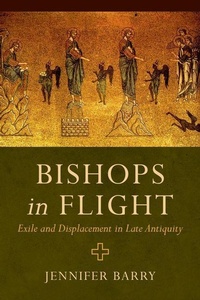
Bishops in Flight
Exile and Displacement in Late Antiquity
1st Edition
Published on 23. April 2019
224 pages
978-0-520-97180-6 (ISBN)
Description

A free open access ebook is upon publication. Learn more at www.luminosoa.org.
Flight during times of persecution has a long and fraught history in early Christianity. In the third century, bishops who fled were considered cowards or, worse yet, heretics. On the face, flight meant denial of Christ and thus betrayal of faith and community. But by the fourth century, the terms of persecution changed as Christianity became the favored cult of the Roman Empire. Prominent Christians who fled and survived became founders and influencers of Christianity over time.
Bishops in Flight examines the various ways these episcopal leaders both appealed to and altered the discourse of Christian flight to defend their status as purveyors of Christian truth, even when their exiles appeared to condemn them. Their stories illuminate how profoundly Christian authors deployed theological discourse and the rhetoric of heresy to respond to the phenomenal political instability of the fourth and fifth centuries.
Flight during times of persecution has a long and fraught history in early Christianity. In the third century, bishops who fled were considered cowards or, worse yet, heretics. On the face, flight meant denial of Christ and thus betrayal of faith and community. But by the fourth century, the terms of persecution changed as Christianity became the favored cult of the Roman Empire. Prominent Christians who fled and survived became founders and influencers of Christianity over time.
Bishops in Flight examines the various ways these episcopal leaders both appealed to and altered the discourse of Christian flight to defend their status as purveyors of Christian truth, even when their exiles appeared to condemn them. Their stories illuminate how profoundly Christian authors deployed theological discourse and the rhetoric of heresy to respond to the phenomenal political instability of the fourth and fifth centuries.
More details
Other editions
Additional editions
Book
04/2019
1st Edition
University of California Press
€37.20
Shipment within 10-20 days
Person
Jennifer Barry is Assistant Professor of Religion at University of Mary Washington.
Content
Prologue
Abbreviations
Introduction
The Discourse of Flight
Explorations of Exile
Episcopal Exile
Models of Exile
Heresiology and Exile
Episcopal Exile and Displacement
Outline of Book
1. Athanasius of Alexandria in Flight
How to Construct a Model City: Alexandria
If These Walls Could Talk: Defense Before Constantius
A Wall-Less Desert: Defense of His Flight
A Model City without Walls: Life of Antony
Conclusion
Contents
2. How to Return from Flight
How to Rehabilitate a Failed Bishop: Gregory of Nazianzus
How to Construct a Model City: Constantinople
A Model Exile: In Praise of Basil the Great
A Model Return: In Praise of Athanasius
Conclusion
3. John Chrysostom in Flight
A Man in Flight: John Chrysostom
How to Construct a Model City: Antioch
Bishops Who Die in Flight: Meletius of Antioch
How Not to Flee: Theophilus of Alexandria
Bishops Who Do Not Return
Conclusion
4. To Rehabilitate and Return a Bishop in Flight
How to Diagnose Exile: Ps.-Martyrius's Funerary Speech
How to Interpret Exile: Palladius of Helenopolis's Dialogue on the
Life of John Chrysostom
How to Return from Exile: Athanasius and John Chrysostom
Conclusion
5. To Condemn a Bishop in Flight
How to Condemn a Model City: Nicomedia
An Unorthodox Return from Flight: Eusebius of Nicomedia
How to Rehabilitate a Bishop: Philostorgius of Cappadocia's
Ecclesiastical History
How to Condemn a Model Exile: Socrates of Constantinople's
Ecclesiastical History
How to Rehabilitate a Condemned City: Theodoret of Cyrrhus's
Ecclesiastical History
Conclusion
Contents
6. Remembering Exile
Remembering a Not-So-Model City: Antioch
Martyrs and Bishops in Flight
How to Remember Orthodox Flight: Sozomen of Constantinople's
Ecclesiastical History
Competing Memories: Socrates and Sozomen
Conclusion
Epilogue
Bibliography
Index
Abbreviations
Introduction
The Discourse of Flight
Explorations of Exile
Episcopal Exile
Models of Exile
Heresiology and Exile
Episcopal Exile and Displacement
Outline of Book
1. Athanasius of Alexandria in Flight
How to Construct a Model City: Alexandria
If These Walls Could Talk: Defense Before Constantius
A Wall-Less Desert: Defense of His Flight
A Model City without Walls: Life of Antony
Conclusion
Contents
2. How to Return from Flight
How to Rehabilitate a Failed Bishop: Gregory of Nazianzus
How to Construct a Model City: Constantinople
A Model Exile: In Praise of Basil the Great
A Model Return: In Praise of Athanasius
Conclusion
3. John Chrysostom in Flight
A Man in Flight: John Chrysostom
How to Construct a Model City: Antioch
Bishops Who Die in Flight: Meletius of Antioch
How Not to Flee: Theophilus of Alexandria
Bishops Who Do Not Return
Conclusion
4. To Rehabilitate and Return a Bishop in Flight
How to Diagnose Exile: Ps.-Martyrius's Funerary Speech
How to Interpret Exile: Palladius of Helenopolis's Dialogue on the
Life of John Chrysostom
How to Return from Exile: Athanasius and John Chrysostom
Conclusion
5. To Condemn a Bishop in Flight
How to Condemn a Model City: Nicomedia
An Unorthodox Return from Flight: Eusebius of Nicomedia
How to Rehabilitate a Bishop: Philostorgius of Cappadocia's
Ecclesiastical History
How to Condemn a Model Exile: Socrates of Constantinople's
Ecclesiastical History
How to Rehabilitate a Condemned City: Theodoret of Cyrrhus's
Ecclesiastical History
Conclusion
Contents
6. Remembering Exile
Remembering a Not-So-Model City: Antioch
Martyrs and Bishops in Flight
How to Remember Orthodox Flight: Sozomen of Constantinople's
Ecclesiastical History
Competing Memories: Socrates and Sozomen
Conclusion
Epilogue
Bibliography
Index
