


Faith in Rights
Christian-Inspired NGOs at Work in the United Nations
Published on 24. September 2024
234 pages
978-1-5036-4049-8 (ISBN)
Available for download
Description

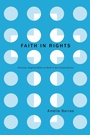
Faith in Rights explores why and how Christian nongovernmental organizations conduct human rights work at the United Nations. The book interrogates the idea that the secular and the religious are distinct categories, and more specifically that human rights, understood as secular, can be neatly distinguished from religion. It argues that Christianity is deeply entangled in the texture of the United Nations and shapes the methods and areas of work of Christian NGOs. To capture these entanglements, Amelie Barras analyzes-through interviews, ethnography, and document and archive analysis-the everyday human rights work of Christian NGOs at the United Nations Human Rights Council. She documents how these NGOs are involved in a constant work of double translation: they translate their human rights work into a religious language to make it relevant to their on-the-ground membership, but they also reframe the concerns of their membership in human rights terms to make them audible to UN actors. Faith in Rights is a crucial new evaluation of how religion informs Christian nongovernmental organizations' understandings of human rights and their methods of work, as well as how being engaged in human rights work influences these organizations' own religious identity and practice.
Reviews / Votes
"Are international human rights religious or secular? Developments at the Human Rights Council, Amelie Barras suggests, attest to the limits of this question. Barras alternates skillfully between explaining the pragmatic ways in which a commitment to this binary persists in shaping possibilities at the Human Rights Council with a perceptive account of the limits of such interpretations and the political possibilities that emerge in the wake of their displacement. Her expert account of the Quakers' role in advocating for conscientious objection as an international human right powerfully illustrates this argument."-Elizabeth Shakman Hurd, Northwestern University "This book offers an elegantly-written challenge: to disrupt the ways that we 'look' for religion and to question what it means to be a 'secular' space. In challenging these binaries, Barras renders visible how religion functions in complex and surprising ways through advocacy practices at the Human Rights Council. This is essential reading for all human rights scholars and practitioners."
-Andrea Paras, University of Guelph
More details
Series
Edition
New edition
Language
English
Place of publication
Palo Alto
United States
Target group
College/higher education
Edition type
New edition
Illustrations
11 halftones
ISBN-13
978-1-5036-4049-8 (9781503640498)
Copyright in bibliographic data and cover images is held by Nielsen Book Services Limited or by the publishers or by their respective licensors: all rights reserved.
Schweitzer Classification
Other editions
Additional editions
Book
09/2024
Stanford University Press
€71.00
Shipment within 15-20 days
Person
Amelie Barras is Associate Professor in the Law and Society Program at York University.
Content
Introduction
1. Catholic NGOS at the Human Rights Council: Everyday Human Rights Practice in a "Secular" Environment
2. Practicing Solidarity: The Social Doctrine of the Church and the Advocacy of Catholic-Inspired NGOS
3. Perseverance and Patience in Crafting International Human Rights Norms: The Work of Quaker Representatives at the Human Rights Council
4. Building the Capacity of Local Networks: Post-Secular Moments through the Practice of Education
Conclusion
1. Catholic NGOS at the Human Rights Council: Everyday Human Rights Practice in a "Secular" Environment
2. Practicing Solidarity: The Social Doctrine of the Church and the Advocacy of Catholic-Inspired NGOS
3. Perseverance and Patience in Crafting International Human Rights Norms: The Work of Quaker Representatives at the Human Rights Council
4. Building the Capacity of Local Networks: Post-Secular Moments through the Practice of Education
Conclusion

