

The Natural History of the Sign
Description
Alles über E-Books | Antworten auf Fragen rund um E-Books, Kopierschutz und Dateiformate finden Sie in unserem Info- & Hilfebereich.
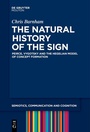
Our understanding of CS Peirce, and his semiotics, is largely influenced by a twentieth century perspective that prioritizes the sign as a cultural artifact, or as one that that 'distorts', in some way, our understanding of the empirical world. Such a perspective will always undermine appreciation of Peirce as a philosopher who viewed signs as the very mechanisms that enable us to understand reality through concept formation.
The key to this repositioning of Peirce is to place his work in the broad frame of Hegelian philosophy. This book evaluates, in detail, the parallels that exist between Peircean and Hegelian thought, highlighting their convergences and also the points at which Peirce departs from Hegel's position. It also considers the work of Vygotsky on concept formation showing that both are, in fact, working within the same Hegelian template.
This book, therefore, contributes to our broader understanding of Peircean semiotics. But by drawing in Vygotsky, under the same theoretical auspices, it demonstrates that Peirce has much to offer contemporary educational learning theory.
More details
Other editions
Additional editions

Person
System requirements
File format: ePUB
Copy protection: Watermark-DRM (Digital Rights Management)
System requirements:
- Computer (Windows; MacOS X; Linux): Use a reading software that can process the file format ePUB: e.g., Adobe Digital Editions or FBReader – both free (see eBook Help).
- Tablet/Smartphone (Android; iOS): Before downloading, install the free app Adobe Digital Editions (see eBook Help).
- E-reader: Bookeen, Kobo, Pocketbook, Sony, Tolino and many more (not Kindle).
The file format ePUB works well for novels and non-fiction books – i.e., „flowing” text without complex layout. On an e-reader or smartphone, line and page breaks automatically adjust to fit the small displays.
This eBook uses Watermark-DRM, a „soft” copy protection. This means that there are no technical restrictions to prevent illegal distribution. However, there is a personalised watermark embedded in the eBook that can be used to identify the purchaser of the eBook in the event of misuse and to provide evidence for legal purposes.
For more information, see our eBook Help page.