

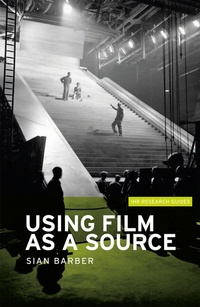
Using Film as a Source
Published on 1. July 2015
192 pages
978-0-7190-9874-1 (ISBN)
Description

This book is a hands-on study skills guide that explores how film and moving image can be used as sources. It is aimed at those who want to use film and moving image as the basis for research and offers advice on research methods, theory and methodology, archival work and film-based analysis. It draws on the disciplines of film and history to offer advice for students and researchers in these fields.
The book includes sections on working with different kinds of moving images, how to explore visual sources, how to undertake film-related research and how to use film theory. In addition to providing detailed case studies, the guide also offers advice on research, writing and studying, creating a methodology, visiting archives, accessing material and exploring films from a historical perspective. The guide's focus is on good research practice, whether it be conducting an interview, visiting an archive, undertaking textual analysis or defining a research question. -- .
The book includes sections on working with different kinds of moving images, how to explore visual sources, how to undertake film-related research and how to use film theory. In addition to providing detailed case studies, the guide also offers advice on research, writing and studying, creating a methodology, visiting archives, accessing material and exploring films from a historical perspective. The guide's focus is on good research practice, whether it be conducting an interview, visiting an archive, undertaking textual analysis or defining a research question. -- .
Reviews / Votes
'Using Film as a Source is a true research guide. It will succeed in familiarizing students new to the medium film with its characteristics, and can also inspire those already pursuing film studies to understand film as more than a text. Most importantly, Barber's direct style of writing and the structure of the book can convince that the at times challenging or even intimidating project of conducting genuine research is not only manageable but also exciting.'Maraike M. Marxsen, Hamburg University, HJFRT Vol 36, No 4
'Using Film as a Source offers a concise summary for those wanting an intelligent and intelligible general introduction to the use of film as a scholarly resource, while also acting as a jumping-off point for those wanting to delve deeper.'
Richard Farmer, University of East Anglia, Journal of British Cinema and Television, Volume 14 Issue 2 -- .
More details
Other editions
Additional editions
Sian Barber
Using Film as a Source
Book
06/2015
Manchester University Press
€21.50
Shipment within 15-20 days
Person
Sian Barber is a Lecturer in Film Studies at Queen's University Belfast -- .
Content
1. Introduction
2. Film and history
3. Film form and aesthetics
4. Film historiography
5. Formulating research questions
6. Theory and methodology
7. Resources
8. Using sources
9. Writing up your findings
Bibliography
Index -- .
2. Film and history
3. Film form and aesthetics
4. Film historiography
5. Formulating research questions
6. Theory and methodology
7. Resources
8. Using sources
9. Writing up your findings
Bibliography
Index -- .
