

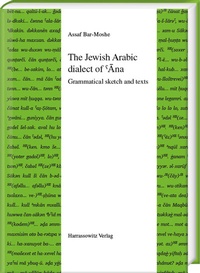
The Jewish Arabic dialect of ?Ana
Grammatical sketch and texts
1st Edition
Published on 19. June 2024
XXIV, 372 pages
978-3-447-39536-6 (ISBN)
Description

?Ana, a city situated in western Iraq near the Syrian border, was home to an ancient Jewish community. The Jewish community of ?Ana spoke a dialect that bears witness to centuries of cultural evolution and linguistic diversity. The Jewish Arabic dialect of ?Ana, which differs from both the local Muslim dialect of the city and the Jewish dialect of Baghdad, served as the community's mother tongue for centuries until Iraqi Jews emigrated en masse to Israel after the state was founded. Today, with few remaining speakers, this unique dialect is on the brink of extinction. As a member of the Euphrates branch of the Mesopotamian q?ltu dialects, it was profoundly influenced by the Bedouin dialects prevalent in the Syro-Mesopotamian desert, resulting in a plethora of distinctive characteristics that are thoroughly examined in this monograph.
Divided into two main parts, the first section of this monograph offers a comprehensive analysis of the phonology, morphosyntax and lexicon of the dialect. The second section presents transcriptions and translations of original oral texts by native speakers, offering valuable insights into various aspects of the community's life, including its history, traditions, cuisine, and folklore. These authentic narratives provide a firsthand glimpse into the linguistic and cultural heritage of ?Ana's Jewish community and are a vital resource for scholars and enthusiasts alike.
All prices
More details
Other editions
Additional editions
Book
06/2024
Harrassowitz Verlag
€78.00
Shipment within 5-7 days
Person
Content
- Cover
- Front matter
- Contents
- Preface
- Symbols and abbreviations
- 0 Introduction
- 0.1 Historical Background
- 0.2 Linguistic setup
- 0.3 Book structure and research methodology
- 0.3.1 The grammatical sketch
- 0.3.2 The texts
- 0.3.2.1 The transcription
- 0.3.3 The translation
- 0.3.3.1 Text themes
- 0.3.4 The informants
- 0.3.4.1 Speech varieties among the informants
- 0.3.5 Sound files
- Part one - Grammatical sketch
- 1 Phonology
- 1.1 Consonants
- 1.1.1 General overview
- 1.1.2 The diachronic development of JA consonants
- 1.1.2.1 The glottal stop and semivowels
- 1.1.2.2 Reflexes of OA q
- 1.1.2.3 Reflexes of OA r
- 1.1.2.4 Reflexes of OA kTypically to the dialects
- 1.1.2.5 Reflexes of OA interdentals
- 1.1.2.6 Reflexes of OA g
- 1.1.2.7 Reflexes of OA h
- 1.1.2.8 Non-Arabic consonants
- 1.1.2.9 Emphatic consonants
- 1.1.3 Phonetic changes in consonants
- 1.2 Vowels
- 1.2.1 Long vowels
- 1.2.1.1 General overview
- 1.2.1.2 Reflexes of OA long vowels
- 1.2.1.3 The long vowels e and o
- 1.2.1.4 Medial imala
- 1.2.2 Short vowels
- 1.2.2.1 General overview
- 1.2.2.2 Synchronic and diachronic vowel changes
- 1.2.2.2.1 Diachronic vowel changes
- 1.2.2.2.1.1 Reflexes of OA a
- 1.2.2.2.1.2 Reflexes of OA i and u
- 1.2.2.2.2 Phonetic vowel changes
- 1.2.2.2.2.1 Vowel coloring environments
- 1.2.2.2.2.2 Vowel harmony
- 1.2.2.2.3 Paradigmatic changes in vowels
- 1.2.3 Final vowels
- 1.2.3.1 Final imala
- 1.2.3.2 Reflexes of final OA a?
- 1.3 Stress
- 1.4 Syllable structure, anaptyxis, prosthesis, and resyllabification
- 1.4.1 Syllable Structure
- 1.4.2 Anaptyxis and prosthesis
- 1.4.2.1 A cluster of three or more consonants
- 1.4.2.2 A cluster of two consonants
- 1.4.3 Resyllabification
- 1.5 Glide
- 2 Morphosyntax
- 2.1 The pronoun
- 2.1.1 Person pronouns
- 2.1.2 Pronominal suffixes
- 2.1.3 Double object pronouns
- 2.1.4 Demonstratives and deixis
- 2.1.4.1 Demonstrative pronouns and modifiers
- 2.1.4.2 Adverbial demonstratives
- 2.1.4.2.1 Place
- 2.1.4.2.2 Time
- 2.1.4.2.3 Manner
- 2.1.4.3 The demonstrative exponent
- 2.1.5 Indefinite pronouns
- 2.1.6 Reflexive pronouns
- 2.1.7 Interrogative pronouns and interrogative clauses
- 2.1.7.1 Interrogative pronouns
- 2.1.7.1.1 Who?
- 2.1.7.1.2 What?
- 2.1.7.2 Interrogative adverbs
- 2.1.7.2.1 Where? and Whence?
- 2.1.7.2.2 When?
- 2.1.7.2.3 How?
- 2.1.7.3 Interrogative determiners
- 2.1.7.3.1 How much/many?
- 2.1.7.3.2 Which?
- 2.1.8 The relative pronoun and relative clauses
- 2.2 The verb
- 2.2.1 General overview
- 2.2.2 Inflection
- 2.2.2.1 Subject pronouns of the SC
- 2.2.2.2 Subject pronouns of the PC
- 2.2.2.3 Subject pronouns of the imperative
- 2.2.2.4 Subject pronouns of the participles
- 2.2.3 Derivation
- 2.2.3.1 First stem
- 2.2.3.1.1 Strong roots
- 2.2.3.1.1.1 The SC
- 2.2.3.1.1.2 The PC
- 2.2.3.1.1.3 The IMP
- 2.2.3.1.1.4 The AP
- 2.2.3.1.1.5 The PP
- 2.2.3.1.2 Weak roots
- 2.2.3.1.2.1 Roots with ? as ?rst consonant
- 2.2.3.1.2.2 Roots with w/y as first consonant
- 2.2.3.1.2.3 Roots with ? as second consonant
- 2.2.3.1.2.4 Hollow roots
- 2.2.3.1.2.5 Roots with y as third consonant
- 2.2.3.1.2.6 Roots with ? as third consonant
- 2.2.3.1.2.7 Geminate roots
- 2.2.3.1.2.8 The double weak root *?gy
- 2.2.3.2 Second stem
- 2.2.3.3 Third stem
- 2.2.3.4 Fifth and sixth stems
- 2.2.3.5 Seventh stem
- 2.2.3.6 Eighth stem
- 2.2.3.7 Ninth stem
- 2.2.3.8 Tenth stem
- 2.2.4 Paradigms
- 2.2.4.1 Strong roots
- 2.2.4.1.1 The SC
- 2.2.4.1.2 The PC
- 2.2.4.1.3 The IMP
- 2.2.4.1.4 The participles
- 2.2.4.2 Weak roots
- 2.2.4.2.1 First Stem
- 2.2.4.2.2 Weak roots in the second-tenth stem
- 2.2.5 Pseudo verbs
- 2.2.6 Tense, aspect, modality, and discourse markers
- 2.2.6.1 Tense-aspect
- 2.2.6.2 Mood and modality
- 2.2.6.3 Discourse markers
- 2.3 Nouns and adjectives
- 2.3.1 Declension
- 2.3.1.1 Gender
- 2.3.1.2 Number
- 2.3.1.2.1 The dual
- 2.3.1.2.2 The plural
- 2.3.1.2.2.1 The sound plural
- 2.3.1.2.2.2 The broken plural
- 2.3.1.2.2.3 Suppletive plural
- 2.3.2 Derivation
- 2.3.2.1 Biradical patterns
- 2.3.2.2 Triradical patterns
- 2.3.2.2.1 Monosyllabic patterns with a short vowel
- 2.3.2.2.1.1 OA CaCC
- 2.3.2.2.1.2 OA CaCCa
- 2.3.2.2.1.3 OA CiCC/CuCC
- 2.3.2.2.1.4 OA CiCCa/CuCCa
- 2.3.2.2.2 Monosyllabic patterns with a long vowel
- 2.3.2.2.3 Bisyllabic patterns with two short vowels
- 2.3.2.2.3.1 OA CaCaC
- 2.3.2.2.3.2 OA CaCaCa
- 2.3.2.2.3.3 OA CaCiC
- 2.3.2.2.3.4 OA CiCaC/CuCaC
- 2.3.2.2.3.5 OA CuCuC
- 2.3.2.2.4 Bisyllabic patterns with one long vowel
- 2.3.2.2.4.1 OA CaCiC(a)
- 2.3.2.2.4.2 OA CVCaC(a)
- 2.3.2.2.4.3 OA CVCuC(a)
- 2.3.2.2.5 Bisyllabic patterns with two long vowels
- 2.3.2.2.5.1 OA CaCuC(a)
- 2.3.2.3 Patterns with gemination and quadrilateral patterns
- 2.3.2.3.1 OA CaCCaC(a), CiCCaC(a), and CuCCaC(a)
- 2.3.2.3.2 OA CVCCuC(a)
- 2.3.2.3.3 OA CaCCiC
- 2.3.2.3.4 OA CaCaCiC
- 2.3.2.3.5 OA CaCaCiC
- 2.3.2.3.6 OA CuCayC(a) and CuCayyiC(a)
- 2.3.2.3.7 OA CVCCVC(a)
- 2.3.2.4 Patterns with prefixes
- 2.3.2.4.1 The elative (OA ?aCCaC) and its derived feminine and plural patterns
- 2.3.2.4.2 OA ?aCCiC(a)
- 2.3.2.4.3 OA ?aCCaC(a) and ?uCCaC
- 2.3.2.4.4 OA ?uCCuC
- 2.3.2.4.5 OA ?aCaCiC
- 2.3.2.4.6 OA maCCaC(a) and maCaCiC
- 2.3.2.4.7 OA miCCaC
- 2.3.2.5 Patterns with the ending -an
- 2.3.2.5.1 OA CaCCan
- 2.3.2.5.2 OA CuCCan and CiCCan
- 2.3.2.6 Nominal patterns derived from verbal stems
- 2.3.2.6.1 Participles
- 2.3.2.6.1.1 OA CaCiC(a)
- 2.3.2.6.1.2 Other participles
- 2.3.2.6.2 Infinitives
- 2.3.3 Other nominal morphemes
- 2.3.3.1 The relational suffix
- 2.3.3.2 The diminutive suffix
- 2.3.3.3 The kinship suffix
- 2.3.3.4 Singulative nouns
- 2.3.4 Definiteness
- 2.3.4.1 The definite article
- 2.3.4.2 Other means of definiteness marking
- 2.3.4.3 Means of indefiniteness marking
- 2.3.5 The genitive
- 2.3.6 Agreement
- 2.4 Numerals
- 2.4.1 Cardinal numbers
- 2.4.1.1 The numeral 'one'
- 2.4.1.2 The numeral 'two'
- 2.4.1.3 The numerals 3-10
- 2.4.1.4 The numerals 11-19
- 2.4.1.5 Tens
- 2.4.1.6 Hundreds
- 2.4.1.7 Thousands
- 2.4.1.8 Compound numbers
- 2.4.2 Ordinal numbers
- 2.4.3 The days of the week
- 2.5 Prepositions
- 2.6 Adverbs
- 2.7 Conjunctions and clauses
- 2.7.1 Coordinating conjunctions
- 2.7.1.1 Cumulative conjunctions
- 2.7.1.2 Alternative conjunctions
- 2.7.1.3 Adversative conjunctions
- 2.7.2 Subordinating conjunctions
- 2.7.2.1 Content and object clauses
- 2.7.2.2 Time
- 2.7.2.3 Location
- 2.7.2.4 Cause
- 2.7.2.5 Purpose
- 2.7.2.6 Concession
- 2.7.2.7 Condition
- 2.7.2.8 Manner
- 2.8 Interjections
- 2.9 Vocative
- 2.10 Negation
- 2.11 Argument marking
- 3 Lexicon
- Part Two - Texts
- 4 Life in ?Ana
- 4.1 namsi l-?Ana (Let's go to ?Ana)
- 4.2 na?b?r b-?l-q???a (We cross using a raft)
- 4.3 n??la? ?a-s-sa?? (We go out to the riverbank)
- 4.4 s?bba?in (Experienced swimmers)
- 4.5 slon ?sgabtum mayy? (How did you drink water?)
- 4.6 bet-na (Our house)
- 4.7 yc?bs-u (They would preserve it)
- 4.8 k?ig masu le-Rumadi (Many left for Ramadi)
- 4.9 c?ma (Truffles)
- 4.10 kull-a n?st?gi-ha mn-?l-?arab (We buy everything from the Muslims)
- 4.11 ma canu-yb?dlun (They did not use to change clothes)
- 4.12 xalli-hum b-?d-darub (Let them be on the street)
- 4.13 n??la? li-foq (We would go up)
- 5 Life in Iraq
- 5.1 Madam ?Ad?l
- 5.2 ma??ad ga? l-?l-madrasa (No one went to school)
- 5.3 yitzuwgon wiya-garay?b-?m (They used to marry their relatives)
- 5.4 lí-had-daraga gah?l (So ignorant)
- 5.5 radio (Radio)
- 5.6 ??allat b?la-d?zdan (She remained without her wallet)
- 6 Jewish-Muslim relations
- 6.1 qawagci (Revolt)
- 6.2 aggar ?as?r ?arban (He hired ten Bedouins)
- 6.3 agu?? a?abi?-?c wu-?axo? ?l-?m?ab?s (I will cut your fingers and take your rings)
- 6.4 ??(m?sl?m)?? yarko?? waga-ya (A Muslim is chasing me)
- 6.5 barb?nnan (God forbid!)
- 6.6 ??b?u-hum! (Slaughter them!)
- 6.7 m?n sagat lelt ?id ?z-zyaga sag ?l-farhud (On the eve of Shavuot the Farhud took place)
- 6.8 q?tlu-ni b-?l-awwal ana! (Kill me first!)
- 6.9 y??l?un l-ihud kúllat-hum (All the Jews, leave)
- 6.10 farhud (Farhud)
- 6.11 ges ?l-maksur (The defeated army)
- 6.12 abul ?ala-Falas?in (I am urinating over Palestine)
- 6.13 fargat l-ulaya (The city emptied)
- 6.14 t?abbun ?s-siyu?iyya? (Are you fans of communism?)
- 7 Personal stories
- 7.1 axu-ya l?-zgayy?g garag (My little brother drowned)
- 7.2 gragtu b-?n-nahag (I drowned in the river)
- 7.3 ?mm-i l?-kbiga wu-??mm-i l?-zgayyga ("My elder and my younger mother")
- 7.4 ta?al nam! (Come sleep!)
- 7.5 max?uba l-Yamin (She is engaged to Yamin)
- 8 Jewish life
- 8.1 ??-??a mal-?s-Sri?a (The synagogue in Sri?a)
- 8.2 l?-??a cant ?kbiga (The synagogue was big)
- 8.3 yom ?s-s?bba? (Sabbath)
- 8.4 kull ?id wa-?id (Each and every holiday)
- 8.5 ?l-k?ppur ?b-?Ana (Yom Kippur in ?Ana)
- 8.6 ?id l?-f?ig (Passover)
- 8.7 Pesa? (Passover)
- 8.8 l-m??ara nqaflat (The burial cave was sealed)
- 8.9 ?l-?arabi l-ihudi mal-ihud ?Ana (The Judeo-Arabic of the Jews of ?Ana)
- 8.10 ?l-?arabi mal-na (Our Arabic)
- 8.11 na?na ma nqul (We do not say)
- 9 Life in Israel
- 9.1 ?barya (Tiberias)
- 9.2 waqa? ?l-ohel (The tent fell down)
- 9.3 aku ?ayya! (There is a snake!)
- 9.4 Or Akiva (Or Akiva)
- 9.5 wen ?mm-i? (Where is my mother?)
- 9.6 ?alawiyat (Candy)
- 9.7 ?s-siyara waqfa (The car was parking)
- 10 Cuisine
- 10.1 laban
- 10.2 samak (Fish)
- 10.3 tbit 1
- 10.4 tbit 2
- 10.5 mxall?la wu-?orsi (Pickles)
- 10.6 xub?z (Bread)
- 10.7 q?ddus (Grape must)
- 10.8 d?b?s (Date syrup)
- 10.9 cay (Tea)
- 11 Folklore
- 11.1 ?ataba (Folk songs)
- 11.2 Children songs
- 11.3 copi
- 11.4 yd?hhn-u l-?l-walad (They would anoint the child)
- 11.5 g?a?a (lead bullet)
- 11.6 ?af?a
- Bibliography
