

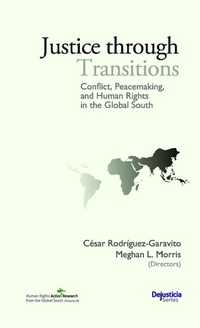
Justice through Transitions
Conflict, Peacemaking and Human Rights in the Global South
Published on 1. July 2018
284 pages
978-958-5441-41-5 (ISBN)
Description

What does justice mean in times of transition? What kinds of possibilities and dissapointments emerge from processes of seeking justice through transition? How might we understand these processes through narrative?
In August 2015, a group of Global South human rights activists and researchers gathered in Colombia for a workshop organized around the theme of transitional justice. This book, the third in a series, is the result of the discussions performed in that encounter.
The chapters in this volume illustrate many complexities of transitional justice processes from the perspective of young human rights advocates involved in these struggles, many with their own complicated personal connections to the search for justice. These advocates hail from countries that have divergent relationships with the notion of transitional justice, from places deeply embedded in its norms and processes, such as Argentina and Colombia, to countries undergoing various kinds of transitions on very different terms, such as Turkey and Mexico. All of the chapters, however, write the messiness of seeking justice through transitions, spanning from the personal and intimate to the national and global.
Together, these chapters beautifully illustrate both the pain and the political possibilities that come from the inability to leave history in the past, as well as the creativity of individual and collective efforts to seek justice through transitions. They also demonstrate the beauty of speaking, working, and writing justice from the hear.
In August 2015, a group of Global South human rights activists and researchers gathered in Colombia for a workshop organized around the theme of transitional justice. This book, the third in a series, is the result of the discussions performed in that encounter.
The chapters in this volume illustrate many complexities of transitional justice processes from the perspective of young human rights advocates involved in these struggles, many with their own complicated personal connections to the search for justice. These advocates hail from countries that have divergent relationships with the notion of transitional justice, from places deeply embedded in its norms and processes, such as Argentina and Colombia, to countries undergoing various kinds of transitions on very different terms, such as Turkey and Mexico. All of the chapters, however, write the messiness of seeking justice through transitions, spanning from the personal and intimate to the national and global.
Together, these chapters beautifully illustrate both the pain and the political possibilities that come from the inability to leave history in the past, as well as the creativity of individual and collective efforts to seek justice through transitions. They also demonstrate the beauty of speaking, working, and writing justice from the hear.
More details
Persons
Hussein Baoumi
Is Amnesty International's Egypt campaigner. Previously, he served as a human rights researcher, fellow, and programs director at the Egyptian Commission for Rights and Freedoms.
Nina Chaparro
Is a lawyer with a master's degree in public policy. Her areas of expertise include transitional justice, gender, and education for peace. She currently serves as gender coordinator at the Center for Law, Justice and Society (Dejusticia) in Colombia.
Horacio Coutaz
Is a lawyer involved in the prosecution of various cases for crimes against humanity committed during Argentina's last dictatorship. Previously, he served as human rights secretary at the Provincial Government of Santa Fe in Argentina.
Ana Daneri
Is a journalist, audiovisual producer, and coordinator of the memory, truth, and justice area of ANDHES (Human Rights and Social Studies Lawyers from Northwestern Argentina), a nongovernmental organization in Tucumán, Argentina.
Enis Köstepen
Is a film producer and coordinator of project development and fundraising at the nongovernmental organization Hafiza Merkezi (Truth, Justice, and Memory Center) in Istanbul, Turkey.
Meghan L. Morris
Is a postdoctoral fellow in law and inequality at the American Bar Foundation and a senior researcher at the Center for Law, Justice and Society (Dejusticia) in Colombia.
Richard O'Diana
Is a lawyer currently pursuing a master's degree in political and institutional communication at Pompeu Fabra University in Spain. Previously, he served as an activist at the Amazon Center of Anthropology and Practical Application in Peru.
Adebayo Okeowo
Is a human rights lawyer currently pursuing a PhD in the area of international criminal accountability at the University of Pretoria in South Africa. He is the founder of the White Code Centre.
Nelson Fredy Padilla
Is an editor at the Colombian daily El Espectador, author of several books, and creative writing professor for international workshops organized by Dejusticia and the Ford Foundation, as well as at the National University of Colombia.
César Rodríguez-Garavito
Is a founding member and director of the Center for Law, Justice and Society (Dejusticia) and a founding director of the Program on Global Justice and Human Rights at the University of los Andes in Colombia.
Nelson Camilo Sánchez
Is an associate professor at the National University of Colombia and research director for transitional justice at the Center for Law, Justice and Society (Dejusticia) in Colombia.
Vani Sathisan
Is a Singaporean litigator specializing in public international law. Previously, she advised the International Commission of Jurists in Burma and was part of a litigation team representing survivors of mass crimes at the United Nations Khmer Rouge Tribunal in Cambodia.
Isadora Vasconcelos
Is a Brazilian lawyer, law professor, and human rights researcher with expertise in environment, land management, and religion.
Meyatzin Velasco
Is a social anthropologist and human rights defender who works in the education department of the Miguel Agustín Pro Juárez Human Rights Center in Mexico.
Is Amnesty International's Egypt campaigner. Previously, he served as a human rights researcher, fellow, and programs director at the Egyptian Commission for Rights and Freedoms.
Nina Chaparro
Is a lawyer with a master's degree in public policy. Her areas of expertise include transitional justice, gender, and education for peace. She currently serves as gender coordinator at the Center for Law, Justice and Society (Dejusticia) in Colombia.
Horacio Coutaz
Is a lawyer involved in the prosecution of various cases for crimes against humanity committed during Argentina's last dictatorship. Previously, he served as human rights secretary at the Provincial Government of Santa Fe in Argentina.
Ana Daneri
Is a journalist, audiovisual producer, and coordinator of the memory, truth, and justice area of ANDHES (Human Rights and Social Studies Lawyers from Northwestern Argentina), a nongovernmental organization in Tucumán, Argentina.
Enis Köstepen
Is a film producer and coordinator of project development and fundraising at the nongovernmental organization Hafiza Merkezi (Truth, Justice, and Memory Center) in Istanbul, Turkey.
Meghan L. Morris
Is a postdoctoral fellow in law and inequality at the American Bar Foundation and a senior researcher at the Center for Law, Justice and Society (Dejusticia) in Colombia.
Richard O'Diana
Is a lawyer currently pursuing a master's degree in political and institutional communication at Pompeu Fabra University in Spain. Previously, he served as an activist at the Amazon Center of Anthropology and Practical Application in Peru.
Adebayo Okeowo
Is a human rights lawyer currently pursuing a PhD in the area of international criminal accountability at the University of Pretoria in South Africa. He is the founder of the White Code Centre.
Nelson Fredy Padilla
Is an editor at the Colombian daily El Espectador, author of several books, and creative writing professor for international workshops organized by Dejusticia and the Ford Foundation, as well as at the National University of Colombia.
César Rodríguez-Garavito
Is a founding member and director of the Center for Law, Justice and Society (Dejusticia) and a founding director of the Program on Global Justice and Human Rights at the University of los Andes in Colombia.
Nelson Camilo Sánchez
Is an associate professor at the National University of Colombia and research director for transitional justice at the Center for Law, Justice and Society (Dejusticia) in Colombia.
Vani Sathisan
Is a Singaporean litigator specializing in public international law. Previously, she advised the International Commission of Jurists in Burma and was part of a litigation team representing survivors of mass crimes at the United Nations Khmer Rouge Tribunal in Cambodia.
Isadora Vasconcelos
Is a Brazilian lawyer, law professor, and human rights researcher with expertise in environment, land management, and religion.
Meyatzin Velasco
Is a social anthropologist and human rights defender who works in the education department of the Miguel Agustín Pro Juárez Human Rights Center in Mexico.
