


Introduction to Computational Health Informatics
1st Edition
Published on 23. December 2019
610 pages
978-1-000-76159-7 (ISBN)
Description

This class-tested textbook is designed for a semester-long graduate or senior undergraduate course on Computational Health Informatics. The focus of the book is on computational techniques that are widely used in health data analysis and health informatics and it integrates computer science and clinical perspectives. This book prepares computer science students for careers in computational health informatics and medical data analysis.
Features
Integrates computer science and clinical perspectives
Describes various statistical and artificial intelligence techniques, including machine learning techniques such as clustering of temporal data, regression analysis, neural networks, HMM, decision trees, SVM, and data mining, all of which are techniques used widely used in health-data analysis
Describes computational techniques such as multidimensional and multimedia data representation and retrieval, ontology, patient-data deidentification, temporal data analysis, heterogeneous databases, medical image analysis and transmission, biosignal analysis, pervasive healthcare, automated text-analysis, health-vocabulary knowledgebases and medical information-exchange
Includes bioinformatics and pharmacokinetics techniques and their applications to vaccine and drug development
Features
Integrates computer science and clinical perspectives
Describes various statistical and artificial intelligence techniques, including machine learning techniques such as clustering of temporal data, regression analysis, neural networks, HMM, decision trees, SVM, and data mining, all of which are techniques used widely used in health-data analysis
Describes computational techniques such as multidimensional and multimedia data representation and retrieval, ontology, patient-data deidentification, temporal data analysis, heterogeneous databases, medical image analysis and transmission, biosignal analysis, pervasive healthcare, automated text-analysis, health-vocabulary knowledgebases and medical information-exchange
Includes bioinformatics and pharmacokinetics techniques and their applications to vaccine and drug development
More details
Series
Edition
1. Auflage
Language
English
Place of publication
London
United Kingdom
Publishing group
Taylor & Francis Ltd
Target group
College/higher education
Product notice
Reflowable
Illustrations
44 Tables, black and white; 219 Illustrations, black and white
ISBN-13
978-1-000-76159-7 (9781000761597)
Copyright in bibliographic data and cover images is held by Nielsen Book Services Limited or by the publishers or by their respective licensors: all rights reserved.
Schweitzer Classification
Other editions
Additional editions
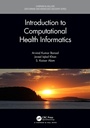
Arvind Kumar Bansal | Javed Iqbal Khan | S. Kaisar Alam
Introduction to Computational Health Informatics
Book
01/2020
1st Edition
Chapman & Hall/CRC
€77.10
Shipment within 15-20 days

Arvind Kumar Bansal | Javed Iqbal Khan | S. Kaisar Alam
Introduction to Computational Health Informatics
Book
01/2020
1st Edition
Chapman & Hall/CRC
€205.40
Shipment within 15-20 days
Persons
Arvind Kumar Bansal is a full professor of Computer Science at Kent State University, Kent, Ohio, USA. He received his PhD (1988) from Case Western Reserve University, Cleveland, Ohio, USA. His research publications and undergraduate and graduate teaching are in the fields of artificial intelligence, multimedia systems and languages, bioinformatics, and computational health informatics.
Javed Iqbal Khan is a full professor of Computer Science at Kent State University, Kent, Ohio, USA. He received his PhD (1995) from the University of Hawaii at Manoa, USA. His research publications and undergraduate and graduate teachings are in the fields of artificial intelligence, computer networking protocols, educational networks, medical image processing and communication, perceptual enhancement, and automated knowledge acquisition. He has been a long-term Fulbright area expert.
S. Kaisar Alam received his PhD (1996) in Electrical Engineering from the University of Rochester, New York, USA. His research publications and teaching have been primarily in signal/image processing with applications to medical imaging. He was a Principal Investigator at Riverside Research, the Chief Research Officer at a Singapore tech startup, and a visiting/adjunct faculty at two New Jersey universities. Dr. Alam has been a Fulbright Scholar and he currently runs his own consulting company specializing in medical image analysis and diagnostic and therapeutic applications of ultrasound.
Javed Iqbal Khan is a full professor of Computer Science at Kent State University, Kent, Ohio, USA. He received his PhD (1995) from the University of Hawaii at Manoa, USA. His research publications and undergraduate and graduate teachings are in the fields of artificial intelligence, computer networking protocols, educational networks, medical image processing and communication, perceptual enhancement, and automated knowledge acquisition. He has been a long-term Fulbright area expert.
S. Kaisar Alam received his PhD (1996) in Electrical Engineering from the University of Rochester, New York, USA. His research publications and teaching have been primarily in signal/image processing with applications to medical imaging. He was a Principal Investigator at Riverside Research, the Chief Research Officer at a Singapore tech startup, and a visiting/adjunct faculty at two New Jersey universities. Dr. Alam has been a Fulbright Scholar and he currently runs his own consulting company specializing in medical image analysis and diagnostic and therapeutic applications of ultrasound.
Content
Preface
Chapter Outlines
Classroom Use of this Textbook
Acknowledgments
About the Authors
1 Introduction
2 Fundamentals
3 Intelligent Data Analysis Techniques
4 Healthcare Data Organization
5 Medical Imaging Informatics
6 DICOM - Medical Image Communication
7 Bioelectric and Biomagnetic Signal Analysis
8 Clinical Data Analytics
9 Pervasive Health and Remote Care
10 Disease Prediction and Drug Development
11 End-User's Emotion and Satisfaction
Contributed by Leon Sterling
12 Conclusion
Appendix I: Websites for Healthcare Standards
Appendix II: Healthcare-Related Conferences and Journals
Appendix III: Health Informatics Related Organizations
Appendix IV: Health Informatics Database Resources
Appendix V: Selected Companies in Healthcare Industry
Index
Chapter Outlines
Classroom Use of this Textbook
Acknowledgments
About the Authors
1 Introduction
2 Fundamentals
3 Intelligent Data Analysis Techniques
4 Healthcare Data Organization
5 Medical Imaging Informatics
6 DICOM - Medical Image Communication
7 Bioelectric and Biomagnetic Signal Analysis
8 Clinical Data Analytics
9 Pervasive Health and Remote Care
10 Disease Prediction and Drug Development
11 End-User's Emotion and Satisfaction
Contributed by Leon Sterling
12 Conclusion
Appendix I: Websites for Healthcare Standards
Appendix II: Healthcare-Related Conferences and Journals
Appendix III: Health Informatics Related Organizations
Appendix IV: Health Informatics Database Resources
Appendix V: Selected Companies in Healthcare Industry
Index
