

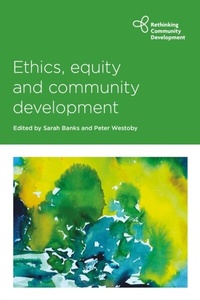
Ethics, Equity and Community Development
1st Edition
Published on 22. May 2019
228 pages
978-1-4473-4513-8 (ISBN)
Description

This book offers a unique focus on the everyday ethics of community development practice in the context of local and global struggles for equity and social justice.
Contributors from around the world (from India to the Netherlands and USA) grapple with ethical dilemmas and tensions, including how to: respect and learn from Indigenous values and philosophies; challenge environmental destruction; gain consent in divided communities; maintain or breach professional boundaries; and develop new paradigms for transformative community organising, sustainable development and ethically-sensitive practice.
Offering theoretical frameworks, philosophical perspectives and practical case examples (from sex worker collectives to tree action groups and Australian Indigenous communities) this book is essential reading for community-based practitioners, students and academics.
Contributors from around the world (from India to the Netherlands and USA) grapple with ethical dilemmas and tensions, including how to: respect and learn from Indigenous values and philosophies; challenge environmental destruction; gain consent in divided communities; maintain or breach professional boundaries; and develop new paradigms for transformative community organising, sustainable development and ethically-sensitive practice.
Offering theoretical frameworks, philosophical perspectives and practical case examples (from sex worker collectives to tree action groups and Australian Indigenous communities) this book is essential reading for community-based practitioners, students and academics.
Reviews / Votes
"This book gave me a lot to think about and provided important new perspectives. Community development can sometimes take its values for granted; this certainly challenges that way of thinking. I thoroughly recommend it." Marilyn Taylor, Birkbeck College, University of LondonMore details
Series
Edition
First Edition
Language
English
Place of publication
Bristol
United Kingdom
Publishing group
Bristol University Press
Target group
Professional and scholarly
Illustrations
3 s/w Abbildungen, 3 s/w Tabellen
3 Tables, black and white; 3 Illustrations, black and white
File size
1,64 MB
ISBN-13
978-1-4473-4513-8 (9781447345138)
Copyright in bibliographic data and cover images is held by Nielsen Book Services Limited or by the publishers or by their respective licensors: all rights reserved.
Schweitzer Classification
Other editions
Additional editions
Sarah Banks | Peter Westoby
Ethics, Equity and Community Development
Book
05/2019
1st Edition
Policy Press
€107.90
Article not available at the moment
Book
05/2019
1st Edition
Policy Press
€45.80
Shipment within 15-20 days
Sarah Banks | Peter Westoby
Ethics, Equity and Community Development
E-Book
05/2019
1st Edition
Policy Press
€231.99
Available for download
Persons
Sarah Banks is Co-Director for the Centre for Social Justice and Community Action and a Professor in the School of Applied Social Sciences at Durham University.
Peter Westoby is a Senior Lecturer in Community Development at the University of Queensland and a Senior Research Associate at the Centre for Development Support at the University of Free State, South Africa.
Peter Westoby is a Senior Lecturer in Community Development at the University of Queensland and a Senior Research Associate at the Centre for Development Support at the University of Free State, South Africa.
Content
Part 1: The ethico-political context
Chapter 1: Ethics, equity and community development: Mapping the terrain; Sarah Banks
Chapter 2: Community development in an unequal world: Challenging neo-liberal values; Keith Popple
Part 2: Everyday ethics in community development practice
Chapter 3: Negotiating roles and boundaries: Ethical challenges in community development work; Lynda Shevellar and Neil Barringham
Chapter 4: Negotiating consent in neighbourhood-based community development work; Jeroen Gradener & Mike de Kreek
Chapter 5: Whose ethics count? Ethical issues in community development and action research with communities facing stigmatisation; Pradeep Narayanan and Sowmyaa Bharadwaj
Chapter 6: Koorliny birniny, ni, quoppa katatjin: Respect and ethics in working with Indigenous Australian communities; Jennie Buchanan, Len Collard and Dave Palmer
Chapter 7: Corporate social responsibility and community development in a mining region in India: Issues of power, control and co-option; Satu Ranta-Tyrkkoe and Bipin Jojo
Part 3: Envisioning an ethical space for community development
Chapter 8: Relational ethics and transformative community organising in the neoliberal U.S. context; Loretta Pyles
Chapter 9: A Community Economies perspective for ethical community development; Gradon Diprose and Ann Hill
Chapter 10: Concluding reflections: Philosophical perspectives on community and community development; Peter Westoby
Chapter 1: Ethics, equity and community development: Mapping the terrain; Sarah Banks
Chapter 2: Community development in an unequal world: Challenging neo-liberal values; Keith Popple
Part 2: Everyday ethics in community development practice
Chapter 3: Negotiating roles and boundaries: Ethical challenges in community development work; Lynda Shevellar and Neil Barringham
Chapter 4: Negotiating consent in neighbourhood-based community development work; Jeroen Gradener & Mike de Kreek
Chapter 5: Whose ethics count? Ethical issues in community development and action research with communities facing stigmatisation; Pradeep Narayanan and Sowmyaa Bharadwaj
Chapter 6: Koorliny birniny, ni, quoppa katatjin: Respect and ethics in working with Indigenous Australian communities; Jennie Buchanan, Len Collard and Dave Palmer
Chapter 7: Corporate social responsibility and community development in a mining region in India: Issues of power, control and co-option; Satu Ranta-Tyrkkoe and Bipin Jojo
Part 3: Envisioning an ethical space for community development
Chapter 8: Relational ethics and transformative community organising in the neoliberal U.S. context; Loretta Pyles
Chapter 9: A Community Economies perspective for ethical community development; Gradon Diprose and Ann Hill
Chapter 10: Concluding reflections: Philosophical perspectives on community and community development; Peter Westoby
