

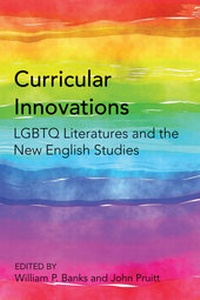
Curricular Innovations
Description

Where others have explored the teaching of LGBTQ literature courses, Curricular Innovations: LGBTQ Literatures and the New English Studies explores the impact that queer writers and their works are having across the broader undergraduate curriculum of English departments, as well as beyond those department spaces. While courses that focus on queer texts provide more space for students to think about the complexities of queer lives, this book breaks out of the specialized LGBTQ classroom to consider how we might also restructure and reframe a diverse set of undergraduate courses by paying attention to the contributions that LGBTQ writers make. Beyond simply including a text or two to represent "difference," contributors to this volume take a more structural approach in order to demonstrate ways of theming or designing courses around language, desire, and sexuality. They also demonstrate what happens when queer texts are given freedom to shape other classroom spaces, discussions, and reading/writing practices. This collection offers a practical intervention into conversations about the purposes and places of LGBTQ literatures by making good on the challenges that queer theories have posed to higher education over the last forty years.
More details
Other editions
Additional editions
Persons
William P. Banks (PhD, Illinois State University) is Professor of English at East Carolina University, where he teaches courses in writing, research, pedagogy, LGBT literature, and young adult literature. His essays on queer rhetorics and LGBT and young adult literatures have appeared in College English, College Composition and Communication, and English Journal.
John Pruitt (PhD, Ohio University) is Associate Professor of English at the University of Wisconsin-Whitewater at Rock County and editor of Wisconsin English Journal. His publications on LGBT pedagogy have appeared in journals such as College English and Teaching English in the Two-Year College.
Content
William P. Banks/John Pruitt: Queer Pedagogies, Queer Literacies: LGBTQ Texts Across the English Studies Curriculum - Tom Sarmiento: Contingently Queer: Decolonizing and Unsettling the Boundaries of Identitarian-Based Literatures - Juliane Römhild/Damien Barlow/Karyn Lehner: Queering the English Core: Middlesex and Queer Pedagogy - Eric Keenaghan: Past, Present, and Potential: Teaching LGBT+ Poetry Historically - Lance Weldy: Mainstreaming Difference in Youth Sexualities/Identities: Demystifying the Otherness of LGBT Youth Literature Through the Hetero-Corollary - Mica Hilson: Slipping Queer Underneath the Radar: A Reflection on Teaching "Bizarre Love Triangles in Fiction"- Cathy Rex: Cross Dressing in Early America: A Course in Transgressive Figures Before 1865 - Veronica Keiffer-Lewis/Julie Keiffer-Lewis: Centering the Queer, Black, Female Voice: A Case Study of Reclaiming the Soul Through Literature - Contributors - Index.
