

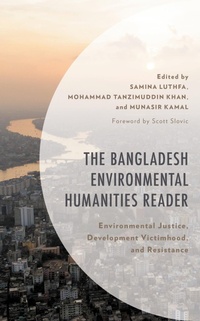
The Bangladesh Environmental Humanities Reader
Environmental Justice, Development Victimhood, and Resistance
Lexington Books (Publisher)
1st Edition
Published on 23. August 2022
1 pages
978-1-9787-7368-4 (ISBN)
Description

This volume analyses Bangladesh's human-nature/environment relationships in terms of development victimhood, environmental injustices, and resistance of the marginalized. It demonstrates how the popular GDP-based economic growth model helps governments undertake "development" projects, threatening the environment and livelihood of the poor while benefiting the affluent. It represents the extant environmentalism in the literary works in Bangla, and tales of pollution, depletion; and human-nature/environment symbiosis that shows ways to resist victimhood. Against current environmental challenges and other environmental issues, this volume presents the epitome of how politics, biodiversity, and technology meet in many cross-cutting pathways.
More details
Series
Edition
1. Auflage
Language
English
Place of publication
United States
Publishing group
Bloomsbury Publishing Plc
Target group
Professional and scholarly
Illustrations
21 b/w illustrations; 2 tables; 1 textboxes;
ISBN-13
978-1-9787-7368-4 (9781978773684)
Copyright in bibliographic data and cover images is held by Nielsen Book Services Limited or by the publishers or by their respective licensors: all rights reserved.
Schweitzer Classification
Other editions
Additional editions
Samina Luthfa | Mohammad Tanzimuddin Khan | Munasir Kamal
The Bangladesh Environmental Humanities Reader
Environmental Justice, Development Victimhood, and Resistance
Book
08/2022
Lexington Books
€120.80
Shipment within 15-20 days
Persons
Samina Luthfa is associate professor in the Department of Sociology, University of Dhaka.
Mohammad Tanzimuddin Khan is professor in the Department of International Relations, University of Dhaka.
Munasir Kamal is assistant professor in the Department of English, University of Dhaka.
Mohammad Tanzimuddin Khan is professor in the Department of International Relations, University of Dhaka.
Munasir Kamal is assistant professor in the Department of English, University of Dhaka.
Content
List of Tables and Figures
Foreword by Scott Slovic
Acknowledgments
Introduction
Samina Luthfa, Mohammad Tanzimuddin Khan, and Munasir Kamal
Part I: Industrialization, Urbanization, and Space
Part Ia: Environment and New Politics of Space
Chapter 1: Growth and Disaster: A Tale of Environmental Disaster in the Time of High Growth in Bangladesh
Anu Muhammad
Chapter 2: Co-management Approach for Nature/Forest Conservation, Corporate Interests, and the Nishorgo Support Project in Bangladesh
Mohammad Tanzimuddin Khan
Chapter 3: Resisting a Coal Mine in Bangladesh and Immigrants in the United Kingdom: The New Agent/Actors in Transnational Environmental Politics
Samina Luthfa
Chapter 4: Pursuing Justice for All: Eviction and Environmental Injustice in Dhaka
Lutfun Nahar Lata
Chapter 5: Rohingya Influx: Impacts on Environment and Local Host Communities in Bangladesh
Mrittika Kamal
Part Ib: Hazardous Work Environment
Chapter 6: Iron Eaters: A Story of Scrapped Men
Fahmidul Haq
Chapter 7: Work Environment and Its Effect on Job Satisfaction in the Ready-Made Garments Industry in Bangladesh
Zahid ul Arefin Choudhury
Chapter 8: Death of a Thousand Dreams: A Photo Essay on the Rana Plaza Collapse and the Aftermath
Taslima Akhter
Part II: Water, Environment, and Victimhood
Chapter 9: Chokoria Sundarbans: A Forest without Trees
Philip Gain
Chapter 10: Critically Understanding Samta: A Tale of an Arsenic Affected Village
Fatema-Tuj-Juhra and Rubiat Afrose Raka
Chapter 11: Kaptai Dam Bor-Porong: The Human Cost of Dam and Development-An Account of Forced Migration
Monzima Haque
Chapter 12: Historicizing Kaptai Dam, Collective Trauma, and Political Awakening in the Chittagong Hill Tracts
Munasir Kamal and Mesbah Kamal
Part III: Ecocriticism and Creative Space for Environmental Justice
Chapter 13: Ecocentrism and Bauls: Lalon and Radharaman's Meditative Activism
Golam Rabbani
Chapter 14: Rabindranath Tagore and Environmental Justice
Fakrul Alam
Chapter 15: Marginalization of Minorities and the Environment: Bibhutibhushan Bandapadhyay's Pather Panchali and Aryanak
Shehreen Ataur Khan
Chapter 16: Reclaiming Voice: In Search of Space and Agency in Tarashankar Bandyopadhyay's Hansuli Banker Upakatha
Sabrina Binte Masud
Chapter 17: Riverine Communities: A Study of Adwaita Mallabarman's Titas Ekti Nadir Naam and Manik Bandopadhyay's Padma Nadir Majhi
Qazi Arka Rahman and Faria Alam
Chapter 18: Unequal Justice: Ethnicity and Class in Mahasweta Devi's Aranyer Adhikar and Selim Al Deen's Bonopangshul
Soumya Sarker
Part IV: Biodiversity, Ecosystem, and Politics of Sustainability
Chapter 19: Plant Biodiversity Management for Nutritional Food Security in Bangladesh
Lutfur Rahman
Chapter 20: The UN Climate Change Conferences: An Investigative Study of the Shortcomings
Md. Rezwanul Haque Masud
About the Contributors
Foreword by Scott Slovic
Acknowledgments
Introduction
Samina Luthfa, Mohammad Tanzimuddin Khan, and Munasir Kamal
Part I: Industrialization, Urbanization, and Space
Part Ia: Environment and New Politics of Space
Chapter 1: Growth and Disaster: A Tale of Environmental Disaster in the Time of High Growth in Bangladesh
Anu Muhammad
Chapter 2: Co-management Approach for Nature/Forest Conservation, Corporate Interests, and the Nishorgo Support Project in Bangladesh
Mohammad Tanzimuddin Khan
Chapter 3: Resisting a Coal Mine in Bangladesh and Immigrants in the United Kingdom: The New Agent/Actors in Transnational Environmental Politics
Samina Luthfa
Chapter 4: Pursuing Justice for All: Eviction and Environmental Injustice in Dhaka
Lutfun Nahar Lata
Chapter 5: Rohingya Influx: Impacts on Environment and Local Host Communities in Bangladesh
Mrittika Kamal
Part Ib: Hazardous Work Environment
Chapter 6: Iron Eaters: A Story of Scrapped Men
Fahmidul Haq
Chapter 7: Work Environment and Its Effect on Job Satisfaction in the Ready-Made Garments Industry in Bangladesh
Zahid ul Arefin Choudhury
Chapter 8: Death of a Thousand Dreams: A Photo Essay on the Rana Plaza Collapse and the Aftermath
Taslima Akhter
Part II: Water, Environment, and Victimhood
Chapter 9: Chokoria Sundarbans: A Forest without Trees
Philip Gain
Chapter 10: Critically Understanding Samta: A Tale of an Arsenic Affected Village
Fatema-Tuj-Juhra and Rubiat Afrose Raka
Chapter 11: Kaptai Dam Bor-Porong: The Human Cost of Dam and Development-An Account of Forced Migration
Monzima Haque
Chapter 12: Historicizing Kaptai Dam, Collective Trauma, and Political Awakening in the Chittagong Hill Tracts
Munasir Kamal and Mesbah Kamal
Part III: Ecocriticism and Creative Space for Environmental Justice
Chapter 13: Ecocentrism and Bauls: Lalon and Radharaman's Meditative Activism
Golam Rabbani
Chapter 14: Rabindranath Tagore and Environmental Justice
Fakrul Alam
Chapter 15: Marginalization of Minorities and the Environment: Bibhutibhushan Bandapadhyay's Pather Panchali and Aryanak
Shehreen Ataur Khan
Chapter 16: Reclaiming Voice: In Search of Space and Agency in Tarashankar Bandyopadhyay's Hansuli Banker Upakatha
Sabrina Binte Masud
Chapter 17: Riverine Communities: A Study of Adwaita Mallabarman's Titas Ekti Nadir Naam and Manik Bandopadhyay's Padma Nadir Majhi
Qazi Arka Rahman and Faria Alam
Chapter 18: Unequal Justice: Ethnicity and Class in Mahasweta Devi's Aranyer Adhikar and Selim Al Deen's Bonopangshul
Soumya Sarker
Part IV: Biodiversity, Ecosystem, and Politics of Sustainability
Chapter 19: Plant Biodiversity Management for Nutritional Food Security in Bangladesh
Lutfur Rahman
Chapter 20: The UN Climate Change Conferences: An Investigative Study of the Shortcomings
Md. Rezwanul Haque Masud
About the Contributors
