

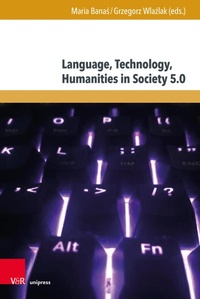
Language, Technology, Humanities in Society 5.0
1st Edition
Published on 18. November 2024
281 pages
978-3-8470-1763-9 (ISBN)
Description

The fusion of technologies blurring distinctions between the physical, digital, and biological worlds has become a significant hallmark of the fourth industrial revolution. One answer to shaping the future in the age of the digital revolution is the concept of Society 5.0.; a super-smart society aims to create an efficient reality, regardless of region, age, gender, language, or other factors. The contributors ask about the place for human beings (exclusion or inclusion) and the communication of natural languages in a reality dominated by big data, artificial intelligence, and robotics. They intend to look at selected problems like humanities vs. technology, new perspectives in education and communication, digital and technological revolution. Thus, contributors' considerations capture philosophical reflection, sociological analysis, discourse and corpus analysis, translatology, business, academic, as well as educational insights into the future of traditional studies.
More details
Other editions
Additional editions
Maria Banas | Grzegorz Wlazlak
Language, Technology, Humanities in Society 5.0
Book
11/2024
1st Edition
Brill Deutschland
€50.00
Shipment within 5-7 days
Content
- Intro
- Title Page
- Copyright
- Table of Contents
- Body
- Introduction
- References
- Acknowledgments
- Part 1: Towards the Society 5.0: preliminary considerations
- Maria Banas / Grzegorz Wlazlak: On the relationship between language, technology and humanities in the Society 5.0
- Part 1: Introducing the context
- Part 2: Various approaches to online technologies in academic practice
- Part 3: On technology and education in Society 5.0
- Conclusions
- References
- Mariusz Wojewoda: Society 5.0: in search of a technological utopia
- 1. Technological Imaginarium
- 2. Society 5.0 and artificial intelligence
- 3. Questions about the future and the conclusions
- References
- Mikolaj Wozniak: The art of words and artificial intelligence. Analysis of opportunities and threats for content creation sector in relation to the emergence of ChatGPT.
- 1. Introduction
- 2. Setting the scene
- 2.1 Definitions and key terms
- 2.2 Literature review
- 3. ChatGPT
- 3.1 Applications
- 3.2 Examples of influence so far
- 4. Research
- 4.1 Copywriting
- 4.2 Novel writing
- 4.3 Analysis of threats and opportunities for wordsmiths
- 4.4 Next steps
- 5. Conclusion
- References
- Tomasz Burzynski: The patient 5.0. Discourses and practices of self-embodiment in the digitalized society
- Introduction: A tale of progress
- 1. The biomedicalization of society
- 2. A new form of self-embodiment
- 3. The Patient 5.0
- 4. Conclusions
- References
- Agnieszka Gwiazdowska: Beyond a text: A Cyberpragmatics approach to multimodality (image-text relation) in instant messaging communication in the age of Society 5.0
- 1. Introduction
- 2. Beyond the text: the concept of digital discourse and its multimodal nature
- 3. The image-text relationship in digital discourse
- 4. Visual component in instant messaging: the role of emoji, GIFs and images in digital communication
- I. To signal the propositional attitude that underlies the utterance and which would be difficult to identify without the aid of the emoji
- II. To communicate a higher intensity of a propositional attitude which has already been coded verbally
- III. To strengthen/mitigate the illocutionary force of a speech act
- IV. To contradict the explicit content of the utterance: (a) Joking
- V. To contradict the explicit content of the utterance: Irony
- VI. To add a feeling or emotion towards the propositional content of the utterance (affective attitude towards the utterance)
- VII. To communicate the intensity of a feeling or emotion that has been coded verbally
- 5. Conclusions
- References
- Web pages
- Iwona Dronia: "Born to be digital": communication preferences of Society 5.0 and their Generation Z members - findings from the diaries study pilot
- 1. Society 5.0
- 2. Generation Z and their communication preferences
- 3. The study
- 3.1 Objectives of the study
- 3.2 The sample and context of the study
- 3.3 Research methodology
- 4. The analysis - results
- Example 1
- Example 2
- Example 3
- Example 4
- Example 5
- Example 6
- 5. Conclusions
- References
- Webgraphy
- Melanie Ellis: The road to hell is paved with good intentions? Tracking how Chat GPT was used over a seven-month period: a corpus-assisted discourse analysis
- 1. Introduction
- 2. Previous studies on uses of ChatGPT
- 3. The study
- 3.1 Methodology and corpus
- 3.2 Data preparation and analysis
- 3.3 Findings
- December
- January
- February
- March
- April
- May
- June
- 4. Discussion
- 5. Conclusions
- References
- Part 2: Various approaches to online technology: AI, ChatGPT in Society 5.0
- Anna Nowakowska-Gluszak: Who are you, ChatGPT? Conceptualization of AI in non-specialized discourse
- 1. Introduction
- 2. Concept of arificial inteligence
- 3. What is ChatGPT?
- 4. Polish language perspective
- 5. Conclusion
- References
- Ariadna Strugielska / Dorota Guttfeld: Hyperlinks in online abstracts of research articles: disciplines in the 5.0 academic community
- 1. Introduction
- 2. Basic and elaborated abstracts of research articles
- 3. Interconnectedness and interactivity in online genres
- 4. Tracing interconnectedness and interactivity in abstracts of research articles in law, linguistics and literary studies
- 4.1 Research material: abstracts in Pdf articles
- 4.2 The procedure of data selection and classification
- 4.3 Results
- 4.3.1 Web links and interconnectedness in elaborated abstracts
- 4.3.2 Mailto links and interactivity in elaborated abstracts
- 4.3.3 Web and mailto links in basic abstracts
- 4.4 Discussion
- 5. Conclusions
- References
- Marianna Dilai / Iryna Dilai: AI vs humans: a corpus-based study of English academic writing
- 1. Introduction
- 2. Research background
- 3. Research methods and data
- 4. Results and discussion
- 5. Conclusions
- References
- Joanna Czogala-Kielbon / Agnieszka Frycz: Human translation versus machine translation: co-existence and cooperation rather than competition
- 1. Introduction
- 2. AI in the work of human translators
- 3. The role of neural machine translation tools (NMT) versus human translation
- 4. DeepL as the neural translation machine of choice
- 5. The research material and the objectives of the study
- 6. Translation as a process and a product
- 7. Strategic decisions and decisions of detail
- 8. Proper names in translation
- 9. The analysis and results
- 10. Concluding remarks
- References
- Anna Szkonter-Bochniak / Joanna Warmuzinska-Rogóz: Technology that serves translation. A teaching perspective
- 1. A brief history of technology in service of translation
- 2. 'Pandemic breakthrough' and new tools
- 3. Overview of curricula - current status
- 4. Analysis of the student surveys
- 5. Conclusion: from the past straight to the future
- References
- Konrad Klimkowski: Students of education on online machine translation for non-specialist purposes
- 1. Introduction
- 2. Literature review
- 3. Respondent group
- 4. Method and objectives
- 5. Results
- 6. Discussion
- 7. Conclusions
- References
- Part 3: On technology and education in Society 5.0
- Kinga Stecula / Jacek Pradela: Virtual Reality in language education in the context of technology development
- 1. Introduction
- 2. Technology development in foreign language education
- 3. The profile of a contemporary man
- 4. Virtual reality in language education
- 5. Conclusions
- References
- Internet sources
- Miguel Luis Poveda-Balbuena: The digital language learning platform Duolingo as an effective and motivational tool at initial stages of face-to-face instruction
- 1. Overview
- 2. Objectives
- 3. Methodology, context and participants
- 4. Results
- 5. Discussion and conclusions
- References
- Susan Ross-Zólkiewicz: Foreign language teachers' attitudes to smartphone use for language learning purposes in the post-lockdown period
- 1. Introduction
- 2. The context of the study: Looking back at lockdown lessons
- 2.1 Mobile-assisted language learning: a short overview
- 2.2 Attitudes conducive to Society 5.0 concepts
- 3. The questionnaire
- 3.1 Structure
- 3.2 Data presentation: key questions, and respondents' years of experience compared to degree of change in attitude
- 4. Interpretation of the findings
- 4.1 Attitude markers
- 5. Conclusions and future implications
- References
- Slawomira Kolsut: Task-based foreign language learning from the view of inclusive education
- 1. Introduction
- 2. Inclusive education (foreign language teaching)
- 3. Task-based-learning as an example of successful implementation of inclusive language education
- 3.1 Tasks and interactions
- 3.2 Project work in a team and cooperation
- 3.3 Emotions and well-being in the classroom as a learning aid
- 3.4 Support from the teacher and tutors
- 3.4.1 The role of the teacher
- 3.4.2 The role of tutors
- 4. Conclusion
- References
- Elzbieta Kempny / Magdalena Szymura: Internships of students of applied linguistics in Society 5.0: benefits, challenges and needs in the light of student testimonials
- 1. Introduction - The era of digital transformation
- 2. Labour market requirements in Society 5.0
- 3. Student internships as part of translator training
- 4. Internships for students of applied linguistics at the Faculty of Organization and Management of the Silesian University of Technology
- 5. The adopted research perspective and methodology
- 6. Analysis of the obtained research material
- 7. Conclusions and possible further research
- References
- Rafal Krzysztof Matusiak: Knowledge of a foreign language in Society 5.0: career planning process by students of applied linguistics
- 1. Introduction and theoretical framework
- 2. Goals, research questions and method
- 3. The demographics of the respondents
- 4. Results
- 5. Conclusions
- References
