

Dis:connectivity and Globalisation
Description
Alles über E-Books | Antworten auf Fragen rund um E-Books, Kopierschutz und Dateiformate finden Sie in unserem Info- & Hilfebereich.
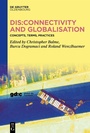
Globalisation is one of the most contested concepts of our time. From its promise of borderless flows of people, goods, and finance in the 1990s, it embodies today almost the opposite: deglobalisation, as tariffs are erected, borders heavily policed, anti-migration regimes enforced and sanctions levied. This 'disconnect' between promise and realisation is the subject of Dis:connectivity and Globalisation: Concepts, Terms, Practices. In almost forty short essays and an introduction, it explores key concepts that illuminate processes of globalisation from a dis:connective perspective, which highlights the role of delays and detours, interruptions, resistances and absences as constitutive of globalisation. The volume proposes rethinking globalisation by redefining the terminology we use to describe and analyse it.
More details
Other editions
Additional editions

Persons
System requirements
File format: ePUB
Copy protection: Watermark-DRM (Digital Rights Management)
System requirements:
- Computer (Windows; MacOS X; Linux): Use a reading software that can process the file format ePUB: e.g., Adobe Digital Editions or FBReader – both free (see eBook Help).
- Tablet/Smartphone (Android; iOS): Before downloading, install the free app Adobe Digital Editions (see eBook Help).
- E-reader: Bookeen, Kobo, Pocketbook, Sony, Tolino and many more (not Kindle).
The file format ePUB works well for novels and non-fiction books – i.e., „flowing” text without complex layout. On an e-reader or smartphone, line and page breaks automatically adjust to fit the small displays.
This eBook uses Watermark-DRM, a „soft” copy protection. This means that there are no technical restrictions to prevent illegal distribution. However, there is a personalised watermark embedded in the eBook that can be used to identify the purchaser of the eBook in the event of misuse and to provide evidence for legal purposes.
For more information, see our eBook Help page.