

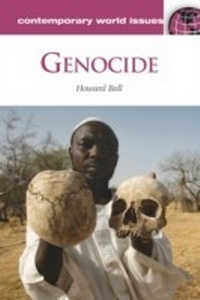
Genocide
A Reference Handbook
1st Edition
Published on 18. November 2010
296 pages
978-1-59884-489-4 (ISBN)
Description

This book presents the background and history of genocide, the key issues associated with this worldwide crime, and the problems inherent in preventing its occurrence.
In 1948, the UN General Assembly adopted the Convention on the Prevention and Punishment of the Crime of Genocide (CPPCG), legally defining the crime of genocide for the first time. Amazingly, the United States did not ratify this international agreement until nearly 40 years later, when President Reagan finally signed the genocide convention bill. Attempts to enforce international law against genocide did not begin until the 1990s.
Genocide: A Reference Handbook examines the antecedents of the term "genocide" in the mid-19th century and explains the current challenges of preventing or even stopping genocide, including the nation-state system and principles of state sovereignty. The author documents how crimes of genocide have continued unchecked, and asserts that a collective commitment to humanitarian intervention is the only way to address this ongoing problem.
In 1948, the UN General Assembly adopted the Convention on the Prevention and Punishment of the Crime of Genocide (CPPCG), legally defining the crime of genocide for the first time. Amazingly, the United States did not ratify this international agreement until nearly 40 years later, when President Reagan finally signed the genocide convention bill. Attempts to enforce international law against genocide did not begin until the 1990s.
Genocide: A Reference Handbook examines the antecedents of the term "genocide" in the mid-19th century and explains the current challenges of preventing or even stopping genocide, including the nation-state system and principles of state sovereignty. The author documents how crimes of genocide have continued unchecked, and asserts that a collective commitment to humanitarian intervention is the only way to address this ongoing problem.
More details
Series
Language
English
Place of publication
New York
United States
Publishing group
Bloomsbury Publishing Plc
ISBN-13
978-1-59884-489-4 (9781598844894)
Copyright in bibliographic data and cover images is held by Nielsen Book Services Limited or by the publishers or by their respective licensors: all rights reserved.
Schweitzer Classification
Other editions
Additional editions
Person
Howard Ball, PhD, is professor emeritus of political science and university scholar at the University of Vermont, Burlington, VT.
Content
- Cover
- Title Page
- Copyright Page
- Table of Contents
- Preface
- 1: Background and History
- A Brief History of the Events of the 20th Century That Led to the Conceptof Genocide
- The Sovereign Nation-State and Genocide
- Treaties and Conventions to Restrain Military Actions during Wars
- The Definition of Genocide, 1933-1948
- Early 20th-Century "Genocides"
- International Military Tribunals in Germanyand Japan, 1945-1948
- Key Issues Associated with Genocide
- Why Do People Kill Other People?
- Perpetrators, Victims, and Bystanders
- The Stages Leading to Genocide
- References
- 2: Problems, Controversies, and Solutions
- Fifty Years of Nonuse of the 1948 Genocide Convention, 1948-1998
- Critics of the Genocide Convention
- No Enforcement Mechanism to Intervene to Stop Genocide or Apprehend Genocidists
- Lack of Political and Diplomatic Will by the UN and Major Western Powers
- Possible Solutions to the Weaknesses Associated with Enforcement of the 1948 Genocide Convention
- Amnesty
- Truth and Reconciliation Commissions
- Replace the UN with a Collective Humanitarian Intervention Organization
- National Legal Tribunals to Try Indicted Genocidists
- Ad Hoc ICTs
- Hybrid ICCs to Deal with Genocidists
- Mediation between Warring Parties
- The Permanent ICC, 1998, 2002
- The Gacaca Trials in Rwanda
- The Critical Role of International Nongovernmental Organizations in Encouraging and Drafting International Human Rights Conventions and Taking Actions to Prevent Genocide
- Operational and Campaigning NGOs
- Other Categories of NGOs
- The Perennial Clash between Justice and Sovereignty
- References
- 3: Special U.S. Issues: The United States and the Creation of an International Criminal Court
- American Antipathy toward the Idea of an ICC, 1918-2010
- The "Two Roads Taken" by the United States before and during the Drafting of the Rome Treaty of the ICC, 1998: the Bill Clinton Years
- America's Position after the Signing of the Rome Treaty, 2001-2009: the George W. Bush Years
- President Bush's "Unsigning" of the Rome Statute, May 2002, and Other Actions in Response to the "Entry into Force" of the ICC, July 2002-2009
- The March toward Passage of the American Servicemen's Protection Act (ASPA), 2001-2002
- The Bilateral Immunity Agreement (BIA) as Another Strategy of the Bush Administration to Weaken the ICC
- Another Strategy of the Bush Administration to Weaken the ICC
- The Status of U.S. Policy Regarding the ICC after the 2008 Election of Democratic President Barack Obama, 2009-2012
- The Future of International Law in the Nation-State Universe
- References
- 4: Chronology
- 1904-1907-German South West Africa, Herreros
- 1915-1923-Ottoman Turkey, Armenians, 1.5-2 Million Dead
- 1932-1933-USSR, Ukraine' s Forced Famine: 7 Million Dead
- 1937-Japan, The Rape of Nanking, China: 300,000 Dead Chinese
- 1941-1945-The Nazi Holocaust: Approximately 6 Million Dead Jews, as well as Other Ethnic Groups and Nationalities: Roma-Sinti, Russians, and Poles
- 1945-1948-International Military Tribunals Created in Germany and Japan at the Conclusion of the War
- 1947-1948-UN: International Convention on Genocide Established
- 1949-Communist China' s Great Leap Forward: 27 Million Die of Starvation
- 1951-Genocide Convention in Force
- 1967-1970-Biafran War, Nigeria
- 1971-East Pakistan, East Bengal
- 1971-1979, Uganda's Killing Fields
- 1972-Burundi, 150,000 Hutus Executed in Two Months
- 1975-1979-Cambodian Khmer Rouge:2 Million Dead Cambodians
- 1977-1978-Ethiopian Red Terror
- 1981-1983-Guatemala, Murder of the Indigenous Maya
- 1987-1991-Iraq, Anfal Campaign against the Kurds
- 1992-1995-Serbia, 200,000 Bosnian Muslims Killed
- 1993-UN Resolution 827 Creates International Criminal Tribunal, Yugoslavia
- 1994-Rwanda, 800,000 Tutsis Killed by Hutu Militias in Three Months
- 1994-UN: Resolution 955, International Criminal Tribunal for Rwanda Created
- 1998-2007-Democratic Republic of the Congo
- 2003-Present-Sudan, Darfur:400,000 Black Arabs Killed
- 5: Biographical Sketches
- Hafez al-Assad
- Omar Hassan al-Bashir
- Idi Amin
- Ion Antonescu
- Col. Theoneste Bagosora
- Ismail Enver
- Gen. Romeo Lucas Garcia
- Adolf Hitler
- Saddam Hussein
- Shiro Ishii
- Radovan Karadzic
- Haile Mariam Mengistu
- Slobodan Milosevic
- Gen. Ratko Mladic
- Jose Efrain Rios Montt
- Anton Pavelic
- Gen. Augusto Pinochet
- Pol Pot
- Joseph Stalin
- Haji Suharto
- Pasha Mehmat Talat
- Father Joseph Tiso
- Mao Tse-Tung
- Gen. Jorge Raphael Videla
- Lothar Von Trotha
- 6: Documents
- Documents
- General Orders No. 100: Instructions for the Governmentof Armies of the United States in the Field by FrancisLieber: April 24, 1863
- The Hague Peace Conference, 1899
- The Kellogg-Briand Pact, 1928, Excerpts
- Raphael Lemkin, Axis Rule in Occupied Europe: Laws of Occupation, Analysis of Government, and Proposals for Redress, 1944
- Constitution of the International Military Tribunal (TheNuremberg Charter), 1945, Excerpts
- Universal Declaration of Human Rights, December 10,1948
- Convention on the Prevention and Punishment of the Crime of Genocide, December 9, 1948
- Summary of Geneva Conventions, 1949
- Statute of the International Tribunal for the Former Yugoslavia, May 1993, Amended May 1998, 2000, Excerpts
- Statute of the International Criminal Tribunal for the Prosecution of Persons Responsible for Genocide and Other Serious Violations of International Humanitarian Law Committed in the Territory of Rwanda and Rwandan Citizens Responsible for Genocide and Other Such Violations Committed in the Territory of Neighbouring States, between Janaury 1, 1994 and December 31, 1994
- Preamble and Selected Articles, Rome Statute of the International Criminal Court, July 17, 1998
- Proposed Text of Article 98 Agreements with the United States, July 2002
- Article 98 Waivers Signed by the United States and a Second Nation-State, 2002-2008
- Nongovernmental Organization Coalition Letter to Congress Regarding Bilateral Immunity Agreements, May 30, 2008
- Chapter 7, UN Charter, 1945: Action with Respect to Threats to the Peace, Breaches of the Peace, and Acts of Aggression
- 7: Directory of Organizations
- NGOs Working on Genocide and Human RightsIssues
- The NGO Directory
- Intergovernmental Organizations (IGOs) Workingon Genocide Issues
- The UN System
- NGOs Affiliated with the UN and Its Agenciesor Affiliated with Other IGOs
- Intergovernmental Organizations (IGOs), Other Than the UN and Its Agencies, with a Focus on Human Rights and Peacekeeping Operations
- 8: Resources
- Print Resources
- General
- Specifi c Genocides and Mass Murders
- Press Coverage
- Journals/Reports
- Nonprint Resources
- Films
- Documentaries
- Television/Videotapes
- Databases/Web Sites
- Glossary
- Index
- About the Author
