

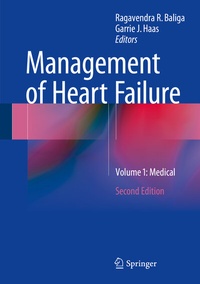
Management of Heart Failure
Volume 1: Medical
2nd Edition
Published on 9. September 2015
XI, 337 pages
978-1-4471-6657-3 (ISBN)
Description

This new edition of Medical Management of Heart Failure will provide the full spectrum of medical options, ICU management and rehabilitation, while also prepare the reader for the second volume of Comprehensive Management of Heart Failure by introducing the surgical options in heart failure from transplant to the more noninvasive procedures in the interventional radiology department. The contributing authors are all key opinion leaders in the medical management of heart failure. This volume is designed to integrate with its sister surgery title, but also alone be the definitive guide to the medical management of heart failure.
Reviews / Votes
"This is a well-written book on all aspects of heart failure management. . The audience includes both medical students and practitioners . . This is a good quality book that offers brief discussions about the main topics in heart failure, starting with physiopathology and moving through to medical treatment and device therapy." (Daniel Garcia, Doody's Book Reviews, December, 2015)
More details
Series
Edition
2nd ed. 2015
Language
English
Place of publication
London
United Kingdom
Publishing group
Springer London
Target group
Professional and scholarly
Product notice
Reflowable
Illustrations
XI, 337 p. 76 illus., 65 illus. in color.
File size
11,76 MB
ISBN-13
978-1-4471-6657-3 (9781447166573)
DOI
10.1007/978-1-4471-6657-3
Schweitzer Classification
Other editions
Additional editions

Book
09/2015
2nd Edition
Springer
€106.99
Shipment within 15-20 days
Previous edition
E-Book
07/2008
1st Edition
Springer
€149.79
Available for download
Persons
Ragavendra Baliga is a previously published author of educational cardiology titles and an experienced cardiology clincian.
Content
- Intro
- Preface
- Contents
- Contributors
- 1: Epidemiology of Heart Failure
- Introduction
- Incidence
- Prevalence
- Lifetime Risk of Heart Failure
- Hospitalizations for Heart Failure
- Cost of Heart Failure
- Heart Failure Prognosis
- Heart Failure with Preserved Ejection Fraction
- Etiology of Heart Failure
- Future Burden of Heart Failure
- References
- 2: Mechanisms of Heart Failure
- Causes of Heart Failure
- Adaptive and Maladaptive Responses to Ventricular Injury
- Adaptive Responses to Myocardial Injury
- Ventricular Remodeling
- Myocardial Changes Associated with Pathological Hypertrophy
- Changes in Excitation Contraction Coupling
- Myocardial Energetics
- Ventricular Wall Interstitium
- Apoptosis and Progression of Disease
- Neurohormonal Activation and the Progression of Heart Failure
- Neurohormonal Hypothesis of Heart Failure Progression
- Adrenergic Signaling
- Autonomic Nervous System
- Renin-Angiotensin Aldosterone System
- Inflammatory Signaling/Nitric Oxide Signaling/Oxidative Stress
- Other Neurohormonal Systems
- Ventricular Remodeling and Clinical Manifestations of Disease
- Hemodynamic Consequences of Ventricular Remodeling
- Asymptomatic Left Ventricular Dysfunction
- Exercise Intolerance
- Edema Formation
- Diastolic Heart Failure
- Questions - Mechanisms of Heart Failure
- Answer Guide
- Recommended Reading
- 3: Diagnostic Testing and the Assessment of Heart Failure
- Introduction
- History
- Physical Examination
- Chest Roentgenography
- Electrocardiography
- Laboratory Testing
- Biomarkers
- Natriuretic Peptides
- Cardiac Troponin T or I
- Novel Biomarkers
- Echocardiography
- Cardiovascular Magnetic Resonance (CMR) Imaging
- Computed Tomography
- Radionuclide Imaging
- Cardiac Catheterization and Angiography
- Coronary Angiography
- Right Heart Catheterization
- Endomyocardial Biopsy
- Impedance Cardiography
- Summary
- References
- 4: Digoxin, Diuretics, and Vasodilators in Patients with Heart Failure
- Digoxin
- Mechanism of Action (Fig. 4.1)
- Pharmacokinetics
- Physiologic Effects
- Clinical Efficacy Studies
- The Digitalis Investigator Group Trial
- Digoxin and Acute Heart Failure
- Studies Raising Potential Concerns
- Efficacy in Advanced HF
- Gender Differences
- "Therapeutic" Serum Digoxin Concentration and Mortality
- Clinical Use and Recommendations
- Side Effects
- Digitalis Toxicity
- Anti-digoxin Immunotherapy
- Diuretics
- Classification and Mechanism of Action (Fig. 4.2)
- Loop Diuretics (Fig. 4.3a)
- Mechanism of Action
- Furosemide
- Bumetanide
- Torsemide
- Ethacrynic Acid
- Thiazide Diuretics (Fig. 4.3b)
- Major Side Effects
- Loop Diuretic Specific Side Effects
- General Diuretic-Related Side Effects
- Other Metabolic and Electrolytic Disturbances
- Osteoporosis
- Treatment of Resistant Edema
- Diuretic Dose
- Decreased Diuretic Secretion
- Intravenous Infusion
- Infusion with Albumin
- Posture
- Enhanced Tubular Sodium Reabsorption
- Are All Loop Diuretics Equal?
- Diuretic Use and Prognosis
- New Agents
- Arginine Vasopressin Receptor Antagonists
- Adenosine A1 Receptor Antagonists
- Vasodilators
- Rationale for Vasodilator Therapy
- Hydralazine and Isosorbide Dinitrate
- The Veterans Administration Cooperative Vasodilator Heart Failure Trials (V-HeFT I and II)
- The African-American Heart Failure Trial (A-HeFT)
- ACC/AHA Guidelines on the Use of Hydralazine and Nitrate Therapies in Heart Failure
- Calcium Channel Blockers (Fig. 4.4)
- First Generation Calcium Channel Blockers
- Second Generation Calcium Channel Blockers
- ACC/AHA Guidelines on the Use of Calcium Channel Blockers in Heart Failure
- Intravenous Vasodilator Therapies
- Intravenous Nitroglycerin
- Sodium Nitroprusside
- Nesiritide
- Relaxin
- ACC/AHA Guidelines on the Use of Intravenous Vasodilators in Heart Failure
- References
- 5: Neurohormonal Blockade in Heart Failure
- Introduction
- Inhibition of Renin-Angiotensin System
- Systolic Dysfunction
- Angiotensin Converting Enzyme Inhibition
- Hemodynamic Effects [5-7]
- LV Remodeling
- Effect on Exercise Capacity
- Effect on Survival
- HF Due to Systolic Dysfunction
- Asymptomatic Systolic Dysfunction
- Systolic Dysfunction Following Acute MI
- ACE Inhibition, Race and LV Dysfunction [32, 33]
- Cough with ACE-Inhibitors
- Renal Function and ACE-Inhibition
- Pregnancy and ACE-Inhibitors
- Breastfeeding and ACE-Inhibitors
- Diuretics and ACE-Inhibitors
- Angiotensin-Receptor Blockers (ARBs) as Alternatives to Angiotensin-Converting Enzyme Inhibition
- Hemodynamic Effects
- Effect on Exercise Capacity
- Clinical Impact
- Effect on Survival (Table 5.4)
- Angiotensin-Receptor Blockers in Addition to Angiotensin-Converting Enzyme Inhibitors
- Angiotensin-Receptor Blockers as Alternatives to Angiotensin-Converting Enzyme Inhibition in Acute MI
- Diastolic Dysfunction
- ACE-Inhibition
- Angiotensin-Receptor Blockade
- Pooled Data on Angiotensin Receptor Blockade on Systolic and Diastolic Dysfunction
- Aldosterone Antagonists/Mineralocorticoid Receptor Antagonists
- Systolic Dysfunction
- Hemodynamic Effects
- LV Remodeling
- Effect on Survival
- Post MI LV Systolic Dysfunction
- Hyperkalemia in Aldosterone Receptor Blockade
- Diastolic Dysfunction
- Beta-Blockers
- LV Remodeling
- Effect on Survival
- Is Metoprolol Tartrate Superior to Carvedilol?
- Beta-Blockers for Post-MI LV Systolic Dysfunction
- Elderly
- Beta-Blockers and Race
- ACE-Inhibitors or Beta-Blockers First
- Conclusions
- References
- 6: Early Medical Management of Hospitalization for Heart Failure (HHF)
- Introduction
- Prevalence
- Cost
- Patient Profile
- Adverse Events
- Evidence-Based Practice
- General Management Principals
- Identification of Syndrome
- Assessment of Substrate
- Assessment of Precipitants
- Assessment of Amplifiers
- Goals of Treatment
- Location of Management
- Management
- 6 - Axis Initial Assessment Model
- Management
- Immediate Emergency Department (ED) Assessment
- Subjective Assessment - History
- Objective Assessment
- Basic Tests
- Chest X-Ray
- Pulmonary Artery Catheter
- B-Type Natriuretic Peptide
- Echocardiogram
- Bioimpedence
- Lidco Device
- Predictors of Severity
- Hypotension
- B-Type Natriuretic Peptide
- Cardiac Troponin
- Renal Function
- Mild Hyponatremia
- Left-Ventricular Filling Pressure
- Etiology of HF
- Arrhythmias
- Anemia
- Hospital Readmission
- Liver Disease
- Diuretic Resistance
- Quantitative Schemes
- In Hospital Management
- Clinical Phenotypes
- Clinical Based Classification
- Implications of Classification
- Structural Targets for Management
- Congestion
- Coronary Artery Disease
- Acute Coronary Syndrome
- Valvular Disease
- Conduction System
- Left Ventricular Remodeling
- Management of Phenotypes of Acute Heart Failure Syndromes
- Hypertensive Hospitalization for Heart Failure
- Pharmacological Therapy
- Vasodilators
- Nitrates
- Nesiritide
- Acute Decompensation of Left Ventricular Function
- Pharmacologic Therapy
- Diuretic Therapy
- Therapeutic Implications
- Newer Agents
- Cardiorenal Syndrome
- Hospitalization for Heart Failure in Acute Coronary Syndromes (ACS)
- Acute Pulmonary Edema
- Pharmacologic Therapy
- Nitrates and Diuretics
- Non-pharmacological Therapy
- Oxygen Therapy
- Noninvasive Ventilation
- Endotracheal Intubation
- Therapeutic Implications
- Hospitalization for Heart Failure with Preserved Ejection Fraction
- Pharmacological Therapy
- Non-pharmacological Therapy
- Acute Right-Sided Heart Failure Syndrome
- Management
- Cardiogenic Shock
- Arrhythmia Related HHF
- End-Stage HF
- Inotropic Therapy
- Therapeutic Principals
- Specific Agents
- Istaroxime
- Levosimendan
- Milrinone
- Digoxin
- Dobutamine
- Other Agents
- Beta Blockers
- Mineralocorticoid Antagonist Therapy
- Venous Thromboembolism Prophylaxis
- Post-management Classification
- Acute Heart Failure
- Worsening Chronic Heart Failure
- End-Stage or Refractory Heart Failure
- Discharge
- Initiation and Titration of Chronic HF Therapy
- Discharge Endpoints
- Performance Measures
- Conclusions
- References
- 7: Arrhythmias in Heart Failure
- Supraventricular Tachycardias
- Atrial Flutter
- Atrial Fibrillation
- Frequent Ventricular Ectopy
- Ventricular Tachycardia and Ventricular Fibrillation
- Conclusions
- Questions
- References
- 8: Device Therapy in Heart Failure
- ICD Trials
- Secondary Prevention Trials (Table 8.1)
- Primary Prevention Trials (Table 8.2)
- ICD for Primary Prevention in ICM
- ICD for Primary Prevention Early After MI and Revascularization (Table 8.3)
- ICD for Primary Prevention in NICM
- CRT Trials (Tables 8.5 and 8.6)
- CRT in Class I-II HF (Table 8.6)
- CRT in HF Patients with Narrow QRS
- Conclusion
- References
- 9: Pulmonary Hypertension
- Definition of PAH
- Pathobiology of Pulmonary Arterial Hypertension
- Epidemiology and Prognosis
- Diagnostic Evaluation and Clinical Features of Pulmonary Hypertension
- Right Heart Catheterization
- Treatment of PAH: General Considerations
- Treatment of PAH: General Therapy
- Treatment of PAH: Disease Specific Therapies
- Prostacyclin Therapies
- Phosphodiesterase Inhibitors
- Endothelin Receptor Antagonists
- Pharmacologic Treatment Guidelines
- Surgical Treatment PH
- CTEPH
- Non PAH Pulmonary Hypertension
- Combination Therapy
- Novel PAH Treatments
- Conclusion
- ABIM Questions
- References
- 10: Chemotherapy Induced Cardiomyopathy
- Introduction
- Definition
- Common Chemotherapy Agents Associated with Cardiac Dysfunction
- Anthracyclines
- Pathophysiology
- Clinical Presentation/Risk Factors
- Trastuzumab and Other HER2 Based Therapy
- Pathophysiology
- Clinical Presentation/Risk Factors
- Anti-angiogenic Based Chemotherapy
- Clinical Presentation/Risk Factors
- Detection of Cardiac Dysfunction Associated with Chemotherapy
- Treatment and Prevention of Cardiac Dysfunction During Cancer Therapy
- Conclusion
- References
- 11: Heart Failure with Preserved Ejection Fraction
- Introduction
- Epidemiology
- Pathophysiology
- Diastolic Dysfunction
- Systolic Dysfunction
- Ventricular-Arterial Stiffening and Abnormal Coupling
- Other Mechanisms
- Clinical Features
- Diagnosis
- Treatment
- Future Directions
- References
- 12: Management of Non-cardiac Co-morbidities in Chronic Heart Failure
- Epidemiology of Non-cardiac Co-morbidities in CHF
- Management of Specific Non-cardiac Co-morbidities
- Respiratory Disorders
- Obstructive Airways Disease
- Sleep-Disordered Breathing
- Treatment of SDB
- Nocturnal Nasal Continuous Positive Airway Pressure
- Other Treatment Strategies for SDB in CHF
- Renal Dysfunction in CHF
- Heart Failure Therapy in Patients with CHF with Renal Dysfunction
- Anaemia
- Cognitive Dysfunction
- Depression and CHF
- Arthritis
- Obesity
- Comorbidity and Polypharmacy
- Conclusions
- References
- 13: Evaluation of Ventricular Assist Devices and Cardiac Transplantation
- Introduction
- Indications for Heart Transplantation
- Selecting Patients for Heart Transplantation
- Functional Capacity
- Hemodynamics
- Reversibility Tests
- Multivariate Risk Models
- Etiology of Heart Disease
- INTERMACS Classification
- Contraindications to Cardiac Transplantation
- Upper Age Limit
- Co-morbid Conditions
- Malignancy
- Infection
- Pulmonary Disease
- Diabetes
- Renal Dysfunction
- Peripheral Vascular Disease
- Hepatic Dysfunction
- Obesity
- Psychosocial Evaluation
- Congenital Heart Disease
- Patient Enrollment on the Heart Transplant Waiting List
- Mechanical Circulatory Support (MCS) for Patients with Advanced HF
- Indications for MCS
- Hemodynamic Indications for Mechanical Support
- Indications for Short-Term (Temporary) Mechanical Support
- Temporary VADs
- Indications for Long-Term Mechanical Support
- VADs for Long-Term Support
- Patient Size Considerations
- Indications for Single- Versus Biventricular Support
- Outcomes with LVAD Therapy
- Pre-VAD In-Hospital Mortality Risk Stratification Models
- Complications of Long-Term Mechanical Circulatory Support
- Listing Status and LVAD Implantation
- Move to Patients with Less Severe Heart Failure
- Summary
- References
- 14: Review of Heart Failure Management in African-Americans
- Introduction
- Differences in Heart Failure Etiology
- General Management and Differences
- Medication Management
- Genetic Pharmacology
- Beta-Adrenergic Blockers
- Angiotensin-Converting Enzyme (ACE) Inhibitors/Angiotensin II Receptor Blockers (ARB): (Fig. 14.5)
- Isosorbide Dinitrate/Hydralazine
- Aldosterone Antagonists
- Device Therapy/Advanced Therapeutics
- Conclusion
- References
- 15: Overview of Heart Failure in Argentina
- Background
- Epidemiology of Heart Failure in Argentina
- Acute Heart Failure Syndromes
- Chronic Heart Failure
- Special Features
- Anemia, Renal Dysfunction and Heart Failure
- Heart Failure with Preserved Left Ventricular Function
- Chagas' Disease and Heart Failure
- Cardiac Transplantation in Argentina
- Conclusions
- References
- 16: Heart Failure in South Asian Population
- Introduction
- Incidence and Prevalence
- Definition
- Demographics of Heart Disease in South Asians
- Risk Factors
- Coronary Artery Disease (CAD)
- Hypertension
- Other Risk Factors
- Genetic Factors
- Diagnosis
- Electrocardiogram
- Chest X ray
- Echocardiogram
- Other Imaging Modalities
- Biomarkers
- Endomyocardial Biopsy (EMB)
- Management
- Life Style Modification
- Diet
- Exercise Training
- Education and Counseling
- Pharmacological Treatment
- ß Adrenergic Receptor Blockers (ß-blockers)
- Angiotensin Converting Enzyme (ACE) Inhibitors
- Angiotensin Receptor Blockers (ARB)
- Aldosterone Antagonists
- Diuretics
- Digoxin
- Hydralazine and Isosorbide Dinitrate
- Management of Acute Decompensated Heart Failure
- Inotropes
- Natriuretic Peptides
- Ultrafiltration
- Pulmonary Artery Catheter (PA Catheter)
- Device Therapy
- Implantable Cardiac Defibrillator (ICD)
- Cardiac Resynchronization Therapy (CRT)
- Ventricular Assist Devices
- Surgical Options
- Discussion
- References
- 17: Congestive Heart Failure in Nigerians: A Review
- Incidence
- Etiology
- Risk Factors
- Clinical Features
- Laboratory Studies
- Treatment
- Prognosis
- Peripartum Cardiomyopathy (PPM)
- Epidemiology and Etiology
- Treatment
- Endomyocardial Fibrosis (EMF)
- Epidemiology
- Pathology
- Etiology
- Clinical Features
- Diagnosis
- Treatment
- Summary
- References
- Index
