

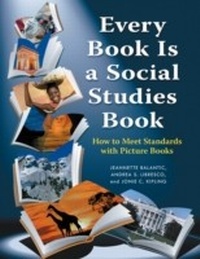
Every Book Is a Social Studies Book
How to Meet Standards with Picture Books, K-6
1st Edition
Published on 1. February 2011
276 pages
978-1-59884-521-1 (ISBN)
Description

This text offers a teacher and student-friendly collection of lessons and activities that help educators use picture books to engage younger students in meaningful social studies activities and bring this critical subject back in elementary schools.
In order for today's children to succeed as adults, they need a solid foundation of life skills inculcated at a young age. Social studies is key to building this critical knowledge, yet less attention is being paid to social studies in elementary schools as this subject becomes more essential. The authors of this text have a solution: use picture books as dual-purpose texts that fulfill more than just language arts needs, and take the time dedicated to those lessons to simultaneously teach social studies.
Each chapter of this text is organized around one of the National Council for the Social Studies' Ten Thematic Strands, covering diverse and engaging topics ranging from community and individuality to science and technology. This book serves as a vital resource for classroom teachers, methods professors, staff developers, and curriculum writers who prioritize keeping social studies a part of the elementary school curriculum.
In order for today's children to succeed as adults, they need a solid foundation of life skills inculcated at a young age. Social studies is key to building this critical knowledge, yet less attention is being paid to social studies in elementary schools as this subject becomes more essential. The authors of this text have a solution: use picture books as dual-purpose texts that fulfill more than just language arts needs, and take the time dedicated to those lessons to simultaneously teach social studies.
Each chapter of this text is organized around one of the National Council for the Social Studies' Ten Thematic Strands, covering diverse and engaging topics ranging from community and individuality to science and technology. This book serves as a vital resource for classroom teachers, methods professors, staff developers, and curriculum writers who prioritize keeping social studies a part of the elementary school curriculum.
More details
Edition
1. Auflage
Language
English
Place of publication
New York
United States
Publishing group
Bloomsbury Publishing Plc
Target group
Professional and scholarly
ISBN-13
978-1-59884-521-1 (9781598845211)
Copyright in bibliographic data and cover images is held by Nielsen Book Services Limited or by the publishers or by their respective licensors: all rights reserved.
Schweitzer Classification
Other editions
Additional editions
Jeannette Balantic | Andrea S. Libresco | Jonie C. Kipling
Every Book Is a Social Studies Book
How to Meet Standards with Picture Books, K-6
Book
02/2011
Libraries Unlimited Inc
€42.80
Shipment within 15-20 days
Persons
Andrea S. Libresco is associate professor of education in the Department of Curriculum and Teaching at Hofstra University, Hempstead, NY.
Jeannette Balantic is social studies curriculum coordinator in the Garden City School District, Garden City, NY.
Jonie C. Kipling is a first grade teacher in the North Shore School District, Sea Cliff, NY, where she also taught for many years at the intermediate level.
Jeannette Balantic is social studies curriculum coordinator in the Garden City School District, Garden City, NY.
Jonie C. Kipling is a first grade teacher in the North Shore School District, Sea Cliff, NY, where she also taught for many years at the intermediate level.
Content
- Cover
- Title Page
- Copyright Page
- Table of Contents
- Chapter 1: Introduction
- Social Studies Is All Around Us
- Integrating Social Studies and Literacy
- Nurturing Citizens
- Organization of Book
- From Our Classroom to Yours
- Recommended Books
- References
- Chapter 2: Culture
- Piggybook by Anthony Browne
- The Sneetches by Dr. Seuss
- Apple Pie 4th of July by Janet S. Wong
- Recommended Books
- References
- Chapter 3: Time, Continuity, and Change
- When Everybody Wore a Hat by William Steig
- A Street Through Time by Anne Millard
- Someday by Alison McGhee and Peter Reynolds
- Recommended Books
- References
- Chapter 4: People, Places, and Environments
- The Wartville Wizard by Don Madden
- My New York by Kathy Jakobsen
- What You Know First by Patricia MacLachlan
- Recommended Books
- Reference
- Chapter 5: Individual Development and Identity
- Seven Blind Mice by Ed Young
- The Araboolies of Liberty Street by Sam Swope
- I've Seen the Promised Land: The Life of Dr. Martin Luther King, Jr. by Walter Dean Myers
- Recommended Books
- Chapter 6: Individuals, Groups, and Institutions
- The Librarian of Basra: A True Story from Iraq by Jeanette Winter
- Freedom on the Menu: The Greensboro Sit-Ins by C. B. Weatherford
- Something Beautiful by Sharon Dennis Wyeth
- Recommended Books
- Reference
- Chapter 7: Power, Authority, and Governance
- ¡Si, Se Puede! Yes We Can! Janitor Strike in L.A. by Diana Cohn
- Bloomers by Rhoda Blumberg
- We the Kids by David Catrow
- Recommended Books
- References
- Chapter 8: Production, Distribution, and Consumption
- Chicken Sunday by Patricia Polacco
- Uncle Jed's Barbershop by Margaree King Mitchell
- Fly Away Home by Eve Bunting
- Recommended Books
- References
- Chapter 9: Science, Technology, and Society
- Starry Messenger: Galileo Galilei by Peter Sis
- Dotty Inventions: And Some Real Ones Too by Roger McGough
- Letting Swift River Go by Jane Yolen
- Recommended Books
- Reference
- Chapter 10: Global Connections
- Encounter by Jane Yolen
- If the World Were a Village: A Book About the World's People by David J. Smith
- Silent Music: A Story of Baghdad by James Rumford
- Recommended Books
- References
- Chapter 11: Civic Ideals and Practices
- Yertle the Turtle by Dr. Seuss
- The Day Gogo Went to Vote by Elinor Batezat Sisulu
- Planting the Trees of Kenya: The Story of Wangari Maathai by Claire A. Nivola
- Recommended Books
- References
- Chapter 12: Conclusion
- Developing a Social Studies State of Mind in Ourselves and Our Students
- Next Steps
- Reference
- Appendix A: Templates for Creating a Book
- Appendix B: Cartoons
- Appendix C: Social Studies Concepts and Discussion Questions Chart
- Appendix D: Documents and Artifacts
- Appendix E: Unit Planning Template
- Index
