

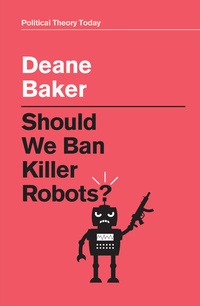
Should We Ban Killer Robots?
Description

Images of killer robots are the stuff of science fiction - but also, increasingly, of scientific fact on the battlefield. Should we be worried, or is this a normal development in the technology of war?
In this accessible volume ethicist Deane Baker cuts through the confusion over whether lethal autonomous weapons - so-called killer robots - should be banned. Setting aside unhelpful analogies taken from science fiction, Baker looks instead to our understanding of mercenaries (the metaphorical 'dogs of war') and weaponized animals (the literal dogs of war) to better understand the ethical challenges raised by the employment of lethal autonomous weapons (the robot dogs of war). These ethical challenges include questions of trust and reliability, control and accountability, motivation and dignity. Baker argues that, while each of these challenges is significant, they do not - even when considered together - justify a ban on this emerging class of weapon systems.
This book offers a clear point of entry into the debate over lethal autonomous weapons - for students, researchers, policy makers and interested general readers.
Deane Baker is Associate Professor at UNSW Canberra and a Senior Visiting Research Fellow at Kings College, London.
More details
Other editions
Additional editions
Person
Content
Introduction
Chapter One: Of War Dogs, Bat Bombs, Mercenaries and Killer Robots
Chapter Two: Trust, Trustworthiness and Reliability
Chapter Three: Control and Accountability
Chapter Four: Motives and Dignity
Conclusion: So Then, Should We Ban Killer Robots?
Bibliography
