

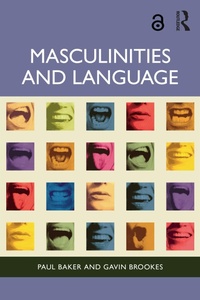
Masculinities and Language
1st Edition
Published on 31. March 2025
238 pages
978-1-040-32564-3 (ISBN)
Description

Today, the topic of gender identity is being discussed more widely than ever before. With the rise of online misogyny and in the wake of #metoo, language around masculinity and toxic masculinity merits closer examination. Accessibly written by two leading linguists, this book provides a comprehensive treatment of the debates around language and masculinity, asking how language is used to perform masculinity and how language is used to represent men.
Including examples of research from a range of international scholars, along with original case studies and engaging examples from popular culture, media, literature, advertising and politics, the authors address a wide range of theoretical and methodological standpoints. The book examines concepts of gender performativity, hegemonic masculinity and queer theory, drawing on disciplines and methods including conversation analysis, phonetics, ethnography, interviews, focus groups, visual analysis, discourse analysis, critical discourse studies and corpus linguistics. Situating male language use in terms of power, dominance and subordination, the book concludes with an examination of the more recent concepts of toxic masculinity and healthy masculinity, exploring critical stances towards and around language used by men.
This book demonstrates the role that linguistic research can play in addressing real-world problems associated with masculinity - problems experienced by people of all genders and the natural world more broadly. Masculinities and Language is vital reading for scholars, researchers and students of language and gender, sexuality, identity, discourse analysis and sociolinguistics within linguistics, English language and related areas.
The Open Access version of this book, available at http://www.taylorfrancis.com, has been made available under a Creative Commons Attribution-Non Commercial-No Derivatives (CC BY-NC-ND) 4.0 license.
Including examples of research from a range of international scholars, along with original case studies and engaging examples from popular culture, media, literature, advertising and politics, the authors address a wide range of theoretical and methodological standpoints. The book examines concepts of gender performativity, hegemonic masculinity and queer theory, drawing on disciplines and methods including conversation analysis, phonetics, ethnography, interviews, focus groups, visual analysis, discourse analysis, critical discourse studies and corpus linguistics. Situating male language use in terms of power, dominance and subordination, the book concludes with an examination of the more recent concepts of toxic masculinity and healthy masculinity, exploring critical stances towards and around language used by men.
This book demonstrates the role that linguistic research can play in addressing real-world problems associated with masculinity - problems experienced by people of all genders and the natural world more broadly. Masculinities and Language is vital reading for scholars, researchers and students of language and gender, sexuality, identity, discourse analysis and sociolinguistics within linguistics, English language and related areas.
The Open Access version of this book, available at http://www.taylorfrancis.com, has been made available under a Creative Commons Attribution-Non Commercial-No Derivatives (CC BY-NC-ND) 4.0 license.
Reviews / Votes
"Sifting incisively through thirty years of scholarship, the authors of Masculinities and Language distil abundant insights before engaging in their own analyses of state-of-the-art questions and discourses in the 2020s. It's both sobering and inspiring to ponder and most rewarding to read."Brian W. King, University of Hong Kong
"Masculinities and Language is an indispensable resource for students and scholars interested in exploring the intersection of gender, language, and sexuality. Paul Baker and Gavin Brookes masterfully weave together a range of theories and methodologies, grounding their exploration in rich, illustrative case studies. Their treatment of methodologies - among others, conversation analysis, ethnography, discourse analysis, critical discourse studies and corpus linguistics - offers both depth and breadth, making the book an accessible and engaging entry point into the evolving field of study regarding the discursive investigation of masculinities. The book is therefore a must-read for anyone seeking to understand the complex relationship between masculinity and language in contemporary society."
Giuseppe Balirano, University of Naples L'Orientale, Italy
"This book offers a fresh take on the relationship between masculinities and language, offering students a clear introduction to key theoretical frameworks underpinning research in this area. Baker and Brookes embed queer theory and intersectionality throughout their discussion, demonstrating through useful examples the need for critical analyses of contemporary masculinities."
Lucy Jones, University of Nottingham, UK
More details
Edition
1. Auflage
Language
English
Place of publication
London
United Kingdom
Publishing group
Taylor & Francis Ltd
Target group
College/higher education
Professional and scholarly
Illustrations
2 Tables, black and white; 11 Halftones, black and white; 11 Illustrations, black and white
File size
4,74 MB
ISBN-13
978-1-040-32564-3 (9781040325643)
Copyright in bibliographic data and cover images is held by Nielsen Book Services Limited or by the publishers or by their respective licensors: all rights reserved.
Schweitzer Classification
Other editions
Additional editions

Paul Baker
Masculinities and Language
Book
04/2025
Routledge
Unfortunately, price unknown
Available (delivery time upon request)
Paul Baker | Gavin Brookes
Masculinities and Language
Book
03/2025
1st Edition
Routledge
€63.30
Shipment within 10-20 days
Paul Baker | Gavin Brookes
Masculinities and Language
Book
03/2025
1st Edition
Routledge
€206.40
Shipment within 10-20 days
Persons
Paul Baker is Professor of English Language at Lancaster University, UK, and Commissioning Editor of the journal Corpora. He has written 26 books, including Using Corpus Methods to Triangulate Linguistic Analysis, The Language of Patient Feedback and Using Corpora to Analyse Gender.
Gavin Brookes is Reader and UKRI Future Leader Fellow in the Department of Linguistics and English Language at Lancaster University, UK. He is Co-Editor of the Corpus and Discourse book series and of Cambridge Elements in Critical Discourse Studies, and he is Associate Editor of the International Journal of Corpus Linguistics.
Gavin Brookes is Reader and UKRI Future Leader Fellow in the Department of Linguistics and English Language at Lancaster University, UK. He is Co-Editor of the Corpus and Discourse book series and of Cambridge Elements in Critical Discourse Studies, and he is Associate Editor of the International Journal of Corpus Linguistics.
Content
List of Figures
List of Tables
Acknowledgements
Chapter 1 Introduction
Chapter 2 Performances of Masculinity
Chapter 3 Representations of Men and Masculinities
Chapter 4 Hegemonic Masculinity
Chapter 5 Subordinated and Marginalised Masculinities
Chapter 6 Toxic Masculinity
Chapter 7 Healthy Masculinity
Chapter 8 Conclusion
References
Index
List of Tables
Acknowledgements
Chapter 1 Introduction
Chapter 2 Performances of Masculinity
Chapter 3 Representations of Men and Masculinities
Chapter 4 Hegemonic Masculinity
Chapter 5 Subordinated and Marginalised Masculinities
Chapter 6 Toxic Masculinity
Chapter 7 Healthy Masculinity
Chapter 8 Conclusion
References
Index
